Activism without proxy fights is like ‘Catholicism without hell’: Loeb

An older, wiser Dan Loeb reckons his activist approach has changed, but the Wall Street icon will never put away the big stick.
Picture: Katje Ford

Anthony Macdonald

Activism without proxy fights is like ‘Catholicism without hell’: Loeb

November 14, 2025
An older, wiser Dan Loeb reckons his activist approach has changed, but the Wall Street icon will never put away the big stick.
Read Transcript

Renowned activist investor Dan Loeb is older, wiser and changed when it comes to the types of companies he targets and how he goes about it.

He’s friendlier, more constructive and much less public in his campaigns, he says. He’s chasing bigger targets – a necessity when you’re running much more money – is more focused on capital allocation and reckons he’s even welcomed by CEOs who may need an outsider to nudge a reluctant board.

Dan Loeb’s letters are the stuff of investing legend.  David Rowe

“They actually encourage us to write the letter,” he says.

Loeb says he has discovered that this activism – a less public version – can be very influential. He says he’s getting traction by going after companies’ margins, expenditure and strategies, making the scathing letters and public campaigns much less common.

“What we do is mostly behind the scenes,” the headline act at this year’s Sohn Hearts & Minds conference said on Friday.

‘Our little trade secret’

It struck us as a maturing of a Wall Street spear thrower.

But there’s one part of the activist toolkit he says he will never put away: the proxy fight.

“Corporations without bankruptcy [are] like Catholicism without hell,” he said. “I’d say the same thing about activism.

“Activism without the potential of a proxy contest doesn’t work, so we keep that in our back pocket, our little trade secret.”

So, Loeb says he’s firing in these proxy requests, but now often quietly. He cites new Domain-owner CoStar as an example – no one knew there was an activism campaign under way until the company announced a standstill between Third Point and DE Shaw and two new directors for its board.

Loeb’s letters are the stuff of investing legend; they were often personal, aimed at specific directors or executives, and used colourful language including “CVD” or chief value destroyer and “LSC” or “lucky sperm club”.

It’s interesting because what happens on Wall Street eventually makes its way into Australian capital markets.

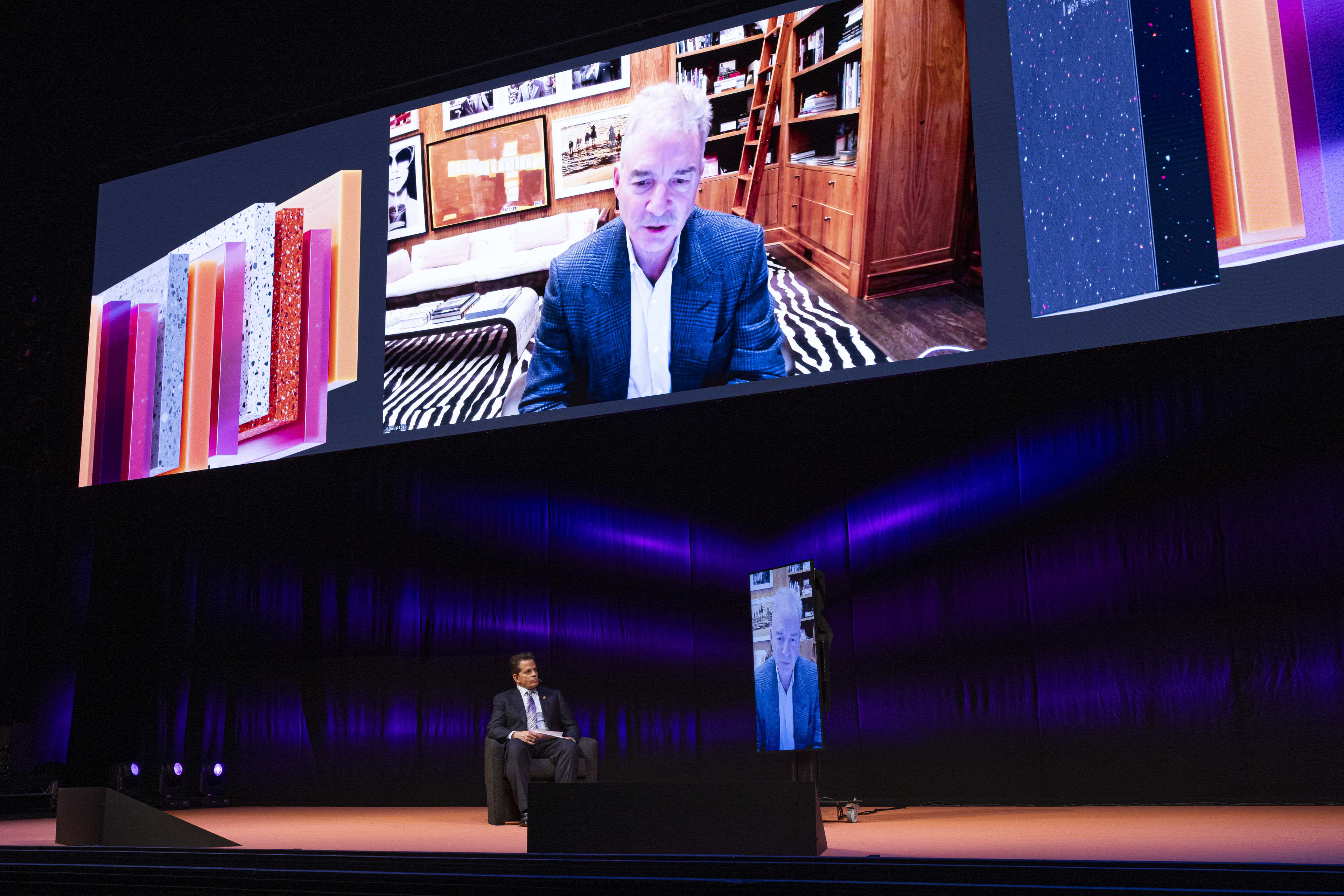
Anthony Scaramucci (left) and Dan Loeb at the Sohn Hearts & Minds conference in Sydney on Friday.  Renee Nowytarger

Bankers for years have told us to expect large-scale activism and although it didn’t really come – except Grok’s run against AGL Energy’s demerger and board, which was unlike anything seen in this market since – there’s plenty of behind-closed-doors activism bubbling away.

Look at James Hardie Industries and its protest votes.

Look at Ramsay Health Care and Aurizon Holdings’ potential asset sales.

Look at Orora backing a change to its constitution to prevent a large scrip M&A deal.

Look at Macquarie Group’s first strike, CSL’s second strike and all the other mini proxy battles that are a feature of this AGM season.

Upbeat on US economy

What we haven’t seen – and why we’d argue Australian directors don’t realise how good they’ve got it – is a proper proxy fight complete with boardroom change.

The closest we have is James Hardie, where a stunning three directors, including the chair, were not re-elected at last month’s annual general meeting. Investors are suggesting replacements, though it remains to be seen whether they get their way, too.

Loeb’s address was the highlight of a full day of stock pitches and thematic panels at Sohn. The organisers kept Loeb until after lunch, and he didn’t disappoint.

He gave a pretty upbeat view of the US economy and even the AI sector, saying there was a bubble but at the neocloud/provider level (he called out CoreWeave, for example) rather than the Microsoft/Amazon/Nvidia end of town.

He seemed less fiery than his address at the same conference two years ago, perhaps showing how his activism approach has changed.

He spoke about company and management culture (he likes CEOs “willing to roll up their sleeves” and is worried by any chief executive who has their own elevator) and taking his business back into credit, where it all began.

The lesson, though, was his point about activism. Just because the nasty letters and public campaigns have vanished from the headlines, don’t think battles are not brewing below the surface.

This article was originally posted by The Australian Financial Review here.

Licensed by Copyright Agency. You must not copy this work without permission.

Renowned activist investor Dan Loeb is older, wiser and changed when it comes to the types of companies he targets and how he goes about it.

He’s friendlier, more constructive and much less public in his campaigns, he says. He’s chasing bigger targets – a necessity when you’re running much more money – is more focused on capital allocation and reckons he’s even welcomed by CEOs who may need an outsider to nudge a reluctant board.

Dan Loeb’s letters are the stuff of investing legend.  David Rowe

“They actually encourage us to write the letter,” he says.

Loeb says he has discovered that this activism – a less public version – can be very influential. He says he’s getting traction by going after companies’ margins, expenditure and strategies, making the scathing letters and public campaigns much less common.

“What we do is mostly behind the scenes,” the headline act at this year’s Sohn Hearts & Minds conference said on Friday.

‘Our little trade secret’

It struck us as a maturing of a Wall Street spear thrower.

But there’s one part of the activist toolkit he says he will never put away: the proxy fight.

“Corporations without bankruptcy [are] like Catholicism without hell,” he said. “I’d say the same thing about activism.

“Activism without the potential of a proxy contest doesn’t work, so we keep that in our back pocket, our little trade secret.”

So, Loeb says he’s firing in these proxy requests, but now often quietly. He cites new Domain-owner CoStar as an example – no one knew there was an activism campaign under way until the company announced a standstill between Third Point and DE Shaw and two new directors for its board.

Loeb’s letters are the stuff of investing legend; they were often personal, aimed at specific directors or executives, and used colourful language including “CVD” or chief value destroyer and “LSC” or “lucky sperm club”.

It’s interesting because what happens on Wall Street eventually makes its way into Australian capital markets.

Anthony Scaramucci (left) and Dan Loeb at the Sohn Hearts & Minds conference in Sydney on Friday.  Renee Nowytarger

Bankers for years have told us to expect large-scale activism and although it didn’t really come – except Grok’s run against AGL Energy’s demerger and board, which was unlike anything seen in this market since – there’s plenty of behind-closed-doors activism bubbling away.

Look at James Hardie Industries and its protest votes.

Look at Ramsay Health Care and Aurizon Holdings’ potential asset sales.

Look at Orora backing a change to its constitution to prevent a large scrip M&A deal.

Look at Macquarie Group’s first strike, CSL’s second strike and all the other mini proxy battles that are a feature of this AGM season.

Upbeat on US economy

What we haven’t seen – and why we’d argue Australian directors don’t realise how good they’ve got it – is a proper proxy fight complete with boardroom change.

The closest we have is James Hardie, where a stunning three directors, including the chair, were not re-elected at last month’s annual general meeting. Investors are suggesting replacements, though it remains to be seen whether they get their way, too.

Loeb’s address was the highlight of a full day of stock pitches and thematic panels at Sohn. The organisers kept Loeb until after lunch, and he didn’t disappoint.

He gave a pretty upbeat view of the US economy and even the AI sector, saying there was a bubble but at the neocloud/provider level (he called out CoreWeave, for example) rather than the Microsoft/Amazon/Nvidia end of town.

He seemed less fiery than his address at the same conference two years ago, perhaps showing how his activism approach has changed.

He spoke about company and management culture (he likes CEOs “willing to roll up their sleeves” and is worried by any chief executive who has their own elevator) and taking his business back into credit, where it all began.

The lesson, though, was his point about activism. Just because the nasty letters and public campaigns have vanished from the headlines, don’t think battles are not brewing below the surface.

This article was originally posted by The Australian Financial Review here.

Licensed by Copyright Agency. You must not copy this work without permission.

Disclaimer: This material has been prepared by Australian Financial Review, published on Nov 14, 2025. HM1 is not responsible for the content of linked websites or content prepared by third party. The inclusion of these links and third-party content does not in any way imply any form of endorsement by HM1 of the products or services provided by persons or organisations who are responsible for the linked websites and third-party content. This information is for general information only and does not consider the objectives, financial situation or needs of any person. Before making an investment decision, you should read the relevant disclosure document (if appropriate) and seek professional advice to determine whether the investment and information is suitable for you.

facebook
linkedin
All
Thank you! Your submission has been received!
Oops! Something went wrong while submitting the form.
November 14, 2022

Think outside the box for green investment opportunities

James Miller, Portfolio Manager at Firetrail Investments, believes investors need to stop seeing the global decarbonisation push as a risk – and start seeing it as an opportunity.

Read More
October 30, 2022

Why this fundie is betting big on two losing companies

Speaking to the AFR before the SH&M conference, Sandler named global on-demand ride-sharing and food delivery service Uber Technologies among his top picks, alongside real estate marketplace Zillow.

Read More
October 13, 2022

It’s Trump I fear, says Putin’s nemesis

Bill Browder, once the largest foreign investor in Russia and the man behind the global Magnitsky justice campaign, says the US is the weakest link in the war in Ukraine.

Read More
October 13, 2022

This fundie fought Vladimir Putin. He says there can be no peace deal

Bill Browder, the fund manager who has become one of Vladimir Putin’s fiercest critics, says the Russian leader is increasingly desperate, but no less dangerous.

Read More
August 31, 2022

‘Putin’s number one foreign enemy’ to address Aussie finance event

Bill Browder, who is viewed as a key enemy of Russia’s government will address Australian investors on the war in Ukraine at this year’s Sohn Hearts & Minds conference.

Read More
August 31, 2022

Putin critic and author Bill Browder to headline Sohn investor conference

Bill Browder, one of Putin's fiercest critics, the founder of Hermitage Capital and the man behind the Magnitsky Law, will headline this year's Sohn Hearts & Minds investor conference.

Read More
August 31, 2022

Sohn Hearts & Minds looks beyond tech ahead of Hobart event

Keynote speaker Bill Browder is the former Hermitage Capital hedge fund manager who has lobbied governments to black-list senior Russian officials attempting to shift their assets offshore.

Read More
December 3, 2021

Hamish Corlett picks Spotify as his top stock again at Sohn Hearts & Minds Conference

Hamish Corlett is the only stock picker in the history of the Sohn Hearts & Minds Investment Conference to pitch exactly the same company twice.

Read More
December 3, 2021

Sohn Hearts and Minds: The Australian Fund Manager Coverage

Leading fund managers reveal their top stock picks for the year ahead at the Sohn Hearts & Minds Conference. Read The Australian live coverage.

Read More
December 2, 2021

Here comes the Sohn: big names battle over conference music

For all that heavyweight finance names Michael Walsh, David ­Paradice, Matthew Grounds and Gary Weiss have in common professionally, one thing they can’t seem to find consensus on is music.

Read More