An Australian fund manager finds redemption in the copper boom

Bond is in hot demand. He’s one of only a handful of speakers invited to return to the Sohn Hearts and Minds charity stockpicking conference, which is being held this year in Queenstown.
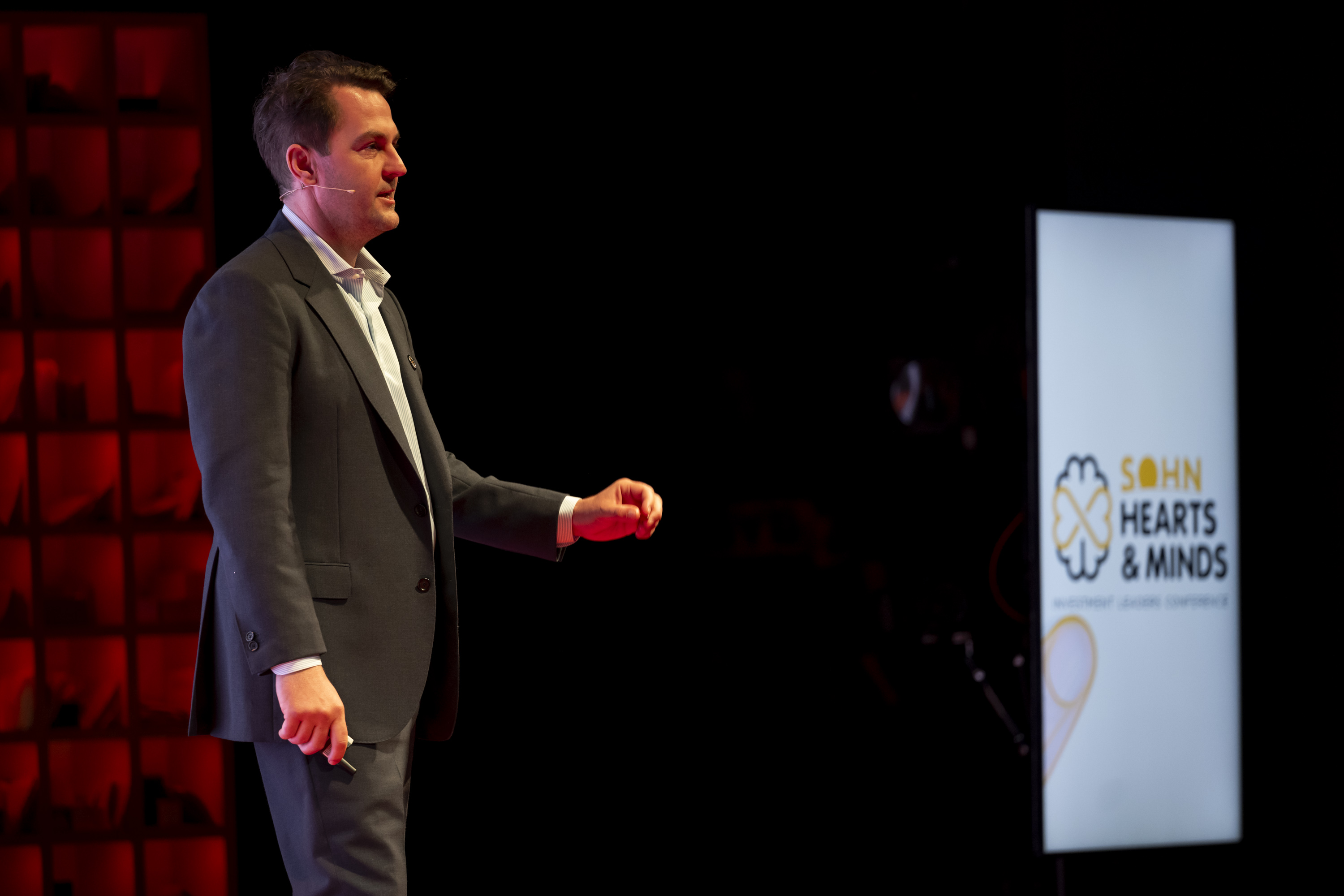
Jeremy Bond presenting at 2023 Sohn Hearts & Minds Conference

Lea Jurkovic

An Australian fund manager finds redemption in the copper boom

September 21, 2026
Bond is in hot demand. He’s one of only a handful of speakers invited to return to the Sohn Hearts and Minds charity stockpicking conference, which is being held this year in Queenstown.
Read Transcript

Jeremy Bond insists there was a time when being a mining investor made him an unpopular man.

“There were definitely times in the past 16 years when no one wanted to speak to you. Everyone hated mining,” the Terra Capital founder says. “There were certain times you questioned your life choices.”

Bond is particularly scarred by the hangover of the mining boom, when resources indexes on the ASX tumbled as commodity prices spent a decade in the doldrums. He says investors wanted little to do with the sector.

“No one really wanted to meet you. No one wanted to invest, and so there were times you felt like you could have taken an easier career path,” he says.

But now, Bond is in hot demand. He’s one of only a handful of speakers invited to return to the Sohn Hearts and Minds charity stockpicking conference, which is being held this year in Queenstown.

The money manager’s $235 million Natural Resources fund returned 45.9 per cent over the 12 months to August. Helping performance has been the fact that commodities are back at the centre of some of the market’s biggest trades, as the artificial intelligence boom and rising geopolitical tensions collide with years of underinvestment in new mines, says Bond.

“You tend to get long bear markets and long bull markets in commodities,” he says. “We would say we’re at the start of the cycle.”

Copper is leading the charge, according to Bond. About a third of the fund is invested in the red metal, the price of which has surged by about 40 per cent over the past year as the construction of data centres, the need to upgrade ageing electricity grids, and a push by Western governments to re-industrialise has increased demand for the commodity.

The fund’s largest holdings in copper are Faraday, a Canadian explorer listed on the Toronto Stock Exchange, and Solstice Minerals, a local player.

Bond is particularly excited by Solstice, which has soared more than 520 per cent since the start of the year after making new copper and gold finds in Western Australia. Large copper discoveries are a rare event at home – and in politically stable jurisdictions, Bond says.

“Copper discoveries just don’t come around in Australia very often and the scarcity is appealing. And people would rather build a copper mine in Australia than some other places where there’s more political risk,” he adds.

Geopolitics is an increasingly important variable in the world of commodities as the United States and other major economies scramble to unwind decades of dependence on Chinese producers for the minerals needed for everything from electric vehicles to defence equipment.

Recycling opportunities

“China’s got leverage over the US that I don’t think the US really appreciated until more recently. They also spent 20 years spending a lot of money on R&D into how to perfect processing,” Bond says “The West was happy to let China do that. And now we’re seeing that’s an issue. We’re 20 years behind.”

To profit from the catch-up, Bond has become a keen investor in early-stage recycling and processing companies – especially if they also have a mining asset. It has invested in titanium processor IperionX – down 53 per cent this year – which has a titanium mining asset in the US, and MTM Critical Metals – down 64 per cent – which also mines in Western Australia.

But Bond highlights Iondrive, a critical minerals recycling business that recovers copper and silver from electronic waste such as old circuit boards and phones. It’s up 200 per cent since the start of the year, and doesn’t engage in any mining itself.

The forces reshaping the copper and critical minerals supply chain are part of a broader change Bond has noticed in resources: macro matters again.

“Before, when commodities were pretty dead, macro was pretty dead too. It’s more volatile now, but it’s more fun. Macro’s back,” he says.

Few commodities have put the new macro regime on display like gold, which makes up 15 per cent of the fund’s commodity exposure. Despite facing recent headwinds in higher inflation and the Fed’s first rate rise in three years, the price of the precious metal has surged on persistent central bank buying, geopolitical uncertainty and rising government debt levels.

Bond thinks the so-called debasement trade – buying gold on the expectation that persistent deficits and rising debt will erode the US dollar over time – will continue to be a theme.

“America’s deficits are only going to go up. There’s no political will to cut spending, and there’s no real will to do anything meaningful about the deficit. How front and centre the trade is in market participants’ views will ebb and flow, but it feels like it’s back on again,” he says.

Closer to home, Bond says another resource industry bet that’s back on again is the one on Nathan Tinkler, who shot to fame around 2011 on the back of multiple debt-funded coal mine acquisitions, but fell into bankruptcy in 2016. Earlier this year Terra bought a 14.9 per cent stake in Tinkler’s private company Oceltip Coal 2, giving it a foothold in the former billionaire’s return to coal with the acquisition by ASX-listed White Energy.

“Nathan’s hungry and he knows coal really well. There’s not many coal companies out there. There used to be 40-something. Now there are about six. There’s really no junior mid-tier coal companies,” Bond says, brushing off suggestions that Tinkler’s history might make investors wary.

Coal no longer on the nose

He was quick to point out that White Energy’s capital raising earlier this year was struck at 6¢ a share – an unusual move given shares at the time were trading at 4¢ – with the stock now trading at about 30¢.

“There are clearly enough people who like the story and want to back him, including ourselves. That’s part of the opportunity as well – if he really does put runs on the board, some of that scepticism can disappear,” he says.

“And I’m not saying it’s the same as [Fortescue executive chairman Andrew Forrest]. But people were sceptical of Twiggy at one point. Australians have tall poppy [syndrome], but we do also like an underdog as well.”

More broadly, Bond says coal has become easier for investors to own.

“I don’t think coal is as dirty a word as it used to be. AustralianSuper owns Whitehaven. So the super funds seem to be okay with it,” he adds.

Bond’s fund has positions in Whitehaven and Hancock. But after the recent strength in coal prices, he halved the fund’s exposure to the commodity.

“The coal price has run. It’s a cyclical commodity, so you want to manage it. It’s not like a copper name where we just sort of take that as a 10-year thematic. It’s a bit more opportunistic, the way we trade our coal,” he says.

Bond is less enthused about one recent development in the resources market – the Albanese government’s changes to the capital gains tax discount. He says the new regime discourages retail investing, which is an important source of capital and liquidity for junior miners.

“You can see at the small end of the market it’s had an impact in a negative way. Looking at that part of the market, it feels like the volume’s dried up. And maybe some of the heat’s gone out of the small end a little bit,” he says.

“Every mining company would have had to start as a small company somewhere and find more deposits. So unfortunately, I think it’s going to have a negative impact on what is a lifeblood of the sector.”

Still, Bond says volatility in the resources sector – politically driven or otherwise – is part of the game. “For some people commodity investing can be quite stomach churning. But if you take a longer-term view, you make seven times your money in a decade. It’s a pretty good return,” he says.

The Australian Financial Review is a media partner of Sohn Hearts & Minds.

This article was originally posted by The Australian Financial Review here.

Licensed by Copyright Agency. You must not copy this work without permission.

Jeremy Bond insists there was a time when being a mining investor made him an unpopular man.

“There were definitely times in the past 16 years when no one wanted to speak to you. Everyone hated mining,” the Terra Capital founder says. “There were certain times you questioned your life choices.”

Bond is particularly scarred by the hangover of the mining boom, when resources indexes on the ASX tumbled as commodity prices spent a decade in the doldrums. He says investors wanted little to do with the sector.

“No one really wanted to meet you. No one wanted to invest, and so there were times you felt like you could have taken an easier career path,” he says.

But now, Bond is in hot demand. He’s one of only a handful of speakers invited to return to the Sohn Hearts and Minds charity stockpicking conference, which is being held this year in Queenstown.

The money manager’s $235 million Natural Resources fund returned 45.9 per cent over the 12 months to August. Helping performance has been the fact that commodities are back at the centre of some of the market’s biggest trades, as the artificial intelligence boom and rising geopolitical tensions collide with years of underinvestment in new mines, says Bond.

“You tend to get long bear markets and long bull markets in commodities,” he says. “We would say we’re at the start of the cycle.”

Copper is leading the charge, according to Bond. About a third of the fund is invested in the red metal, the price of which has surged by about 40 per cent over the past year as the construction of data centres, the need to upgrade ageing electricity grids, and a push by Western governments to re-industrialise has increased demand for the commodity.

The fund’s largest holdings in copper are Faraday, a Canadian explorer listed on the Toronto Stock Exchange, and Solstice Minerals, a local player.

Bond is particularly excited by Solstice, which has soared more than 520 per cent since the start of the year after making new copper and gold finds in Western Australia. Large copper discoveries are a rare event at home – and in politically stable jurisdictions, Bond says.

“Copper discoveries just don’t come around in Australia very often and the scarcity is appealing. And people would rather build a copper mine in Australia than some other places where there’s more political risk,” he adds.

Geopolitics is an increasingly important variable in the world of commodities as the United States and other major economies scramble to unwind decades of dependence on Chinese producers for the minerals needed for everything from electric vehicles to defence equipment.

Recycling opportunities

“China’s got leverage over the US that I don’t think the US really appreciated until more recently. They also spent 20 years spending a lot of money on R&D into how to perfect processing,” Bond says “The West was happy to let China do that. And now we’re seeing that’s an issue. We’re 20 years behind.”

To profit from the catch-up, Bond has become a keen investor in early-stage recycling and processing companies – especially if they also have a mining asset. It has invested in titanium processor IperionX – down 53 per cent this year – which has a titanium mining asset in the US, and MTM Critical Metals – down 64 per cent – which also mines in Western Australia.

But Bond highlights Iondrive, a critical minerals recycling business that recovers copper and silver from electronic waste such as old circuit boards and phones. It’s up 200 per cent since the start of the year, and doesn’t engage in any mining itself.

The forces reshaping the copper and critical minerals supply chain are part of a broader change Bond has noticed in resources: macro matters again.

“Before, when commodities were pretty dead, macro was pretty dead too. It’s more volatile now, but it’s more fun. Macro’s back,” he says.

Few commodities have put the new macro regime on display like gold, which makes up 15 per cent of the fund’s commodity exposure. Despite facing recent headwinds in higher inflation and the Fed’s first rate rise in three years, the price of the precious metal has surged on persistent central bank buying, geopolitical uncertainty and rising government debt levels.

Bond thinks the so-called debasement trade – buying gold on the expectation that persistent deficits and rising debt will erode the US dollar over time – will continue to be a theme.

“America’s deficits are only going to go up. There’s no political will to cut spending, and there’s no real will to do anything meaningful about the deficit. How front and centre the trade is in market participants’ views will ebb and flow, but it feels like it’s back on again,” he says.

Closer to home, Bond says another resource industry bet that’s back on again is the one on Nathan Tinkler, who shot to fame around 2011 on the back of multiple debt-funded coal mine acquisitions, but fell into bankruptcy in 2016. Earlier this year Terra bought a 14.9 per cent stake in Tinkler’s private company Oceltip Coal 2, giving it a foothold in the former billionaire’s return to coal with the acquisition by ASX-listed White Energy.

“Nathan’s hungry and he knows coal really well. There’s not many coal companies out there. There used to be 40-something. Now there are about six. There’s really no junior mid-tier coal companies,” Bond says, brushing off suggestions that Tinkler’s history might make investors wary.

Coal no longer on the nose

He was quick to point out that White Energy’s capital raising earlier this year was struck at 6¢ a share – an unusual move given shares at the time were trading at 4¢ – with the stock now trading at about 30¢.

“There are clearly enough people who like the story and want to back him, including ourselves. That’s part of the opportunity as well – if he really does put runs on the board, some of that scepticism can disappear,” he says.

“And I’m not saying it’s the same as [Fortescue executive chairman Andrew Forrest]. But people were sceptical of Twiggy at one point. Australians have tall poppy [syndrome], but we do also like an underdog as well.”

More broadly, Bond says coal has become easier for investors to own.

“I don’t think coal is as dirty a word as it used to be. AustralianSuper owns Whitehaven. So the super funds seem to be okay with it,” he adds.

Bond’s fund has positions in Whitehaven and Hancock. But after the recent strength in coal prices, he halved the fund’s exposure to the commodity.

“The coal price has run. It’s a cyclical commodity, so you want to manage it. It’s not like a copper name where we just sort of take that as a 10-year thematic. It’s a bit more opportunistic, the way we trade our coal,” he says.

Bond is less enthused about one recent development in the resources market – the Albanese government’s changes to the capital gains tax discount. He says the new regime discourages retail investing, which is an important source of capital and liquidity for junior miners.

“You can see at the small end of the market it’s had an impact in a negative way. Looking at that part of the market, it feels like the volume’s dried up. And maybe some of the heat’s gone out of the small end a little bit,” he says.

“Every mining company would have had to start as a small company somewhere and find more deposits. So unfortunately, I think it’s going to have a negative impact on what is a lifeblood of the sector.”

Still, Bond says volatility in the resources sector – politically driven or otherwise – is part of the game. “For some people commodity investing can be quite stomach churning. But if you take a longer-term view, you make seven times your money in a decade. It’s a pretty good return,” he says.

The Australian Financial Review is a media partner of Sohn Hearts & Minds.

This article was originally posted by The Australian Financial Review here.

Licensed by Copyright Agency. You must not copy this work without permission.

Disclaimer: This material has been prepared by Australian Financial Review, published on September 21, 2026. HM1 is not responsible for the content of linked websites or content prepared by third party. The inclusion of these links and third-party content does not in any way imply any form of endorsement by HM1 of the products or services provided by persons or organisations who are responsible for the linked websites and third-party content. This information is for general information only and does not consider the objectives, financial situation or needs of any person. Before making an investment decision, you should read the relevant disclosure document (if appropriate) and seek professional advice to determine whether the investment and information is suitable for you.

facebook
linkedin
All
Thank you! Your submission has been received!
Oops! Something went wrong while submitting the form.
December 19, 2024

Rikki Bannan – Don’t get caught up in momentum

Conference Fund Manager Rikki Bannan, Executive Director at IFM Investors, joins Equity Mates to discuss her standout 2023 stock pick, Telix, and explore what opportunities lie ahead.

Read More
November 20, 2024

Trump unifies top investors in decade-long bullish outlook for US

Nick Moakes, CIO of the $72 billion Wellcome Trust, told the conference that too many investors were banking on a return to the ultra-low interest rates that prevailed over the past decade.

Read More
Wall Street legend Howard Marks told the Sohn event that US exceptionalism would endure. Picture: Ben SearcyWall Street legend Howard Marks told the Sohn event that US exceptionalism would endure. Picture: Ben SearcyWall Street legend Howard Marks told the Sohn event that US exceptionalism would endure. Picture: Ben SearcyWall Street legend Howard Marks told the Sohn event that US exceptionalism would endure. Picture: Ben Searcy
November 17, 2024

Is anyone brave or stupid enough to bet against America?

Stock pickers have been punished for betting against the US. The choice between consensus and contrarianism on American exceptionalism is now harder than ever.

Read More
Ellerston Capital's Chris Kourtis says things will improve at embattled fund manager Perpetual. Picture: Ben Searcy PhotographyEllerston Capital's Chris Kourtis says things will improve at embattled fund manager Perpetual. Picture: Ben Searcy PhotographyEllerston Capital's Chris Kourtis says things will improve at embattled fund manager Perpetual. Picture: Ben Searcy PhotographyEllerston Capital's Chris Kourtis says things will improve at embattled fund manager Perpetual. Picture: Ben Searcy Photography
November 15, 2024

Eleven stock tips from Sohn to get you through 2025

“There’s no finer place for the finance festival than in the festival city,” said Matthew Grounds. He, along with fellow Barrenjoey co-executive chairman Guy Fowler and investor Gary Weiss, is one of Sohn’s driving forces.

Read More
November 15, 2024

Howard Marks and Sohn’s big stars reveal seven rules for investing

Among the stock picks and stunts at the Sohh Hearts & Minds event, Howard Marks and Nick Moakes provided investors with long-term rules for playing markets.

Read More
November 15, 2024

Sohn ASX stock pick: Ellerston Capital’s Chris Kourtis backs Perpetual

Chris Kourtis has put his biggest bet on embattled Perpetual – picking one of the most hated stocks on the ASX – that he believes will soon be the ‘cheapest listed asset manager of scale in the universe’.

Read More
November 15, 2024

Sohn investors position for bullish but bumpy Trump ride

Australia and the rest of the world must adjust to a new Trump presidency that will deliver an expected bull market but also disruption, with the leader in waiting prepared to “create pain” to get his way.

Read More
November 15, 2024

Sohn stock picker experts name best shares to invest in for year ahead

‍Don’t overlook down and out silver miners, legacy skincare brands ready for a revival and a big financial company suffering from a severe case of shareholder wealth destruction.

Read More
November 15, 2024

Sohn: NYSE-listed Estee Lauder’s Northcape Capital pick

Northcape Capital’s Fleur Wright this gives a rare opportunity to buy a high quality company at an attractive price.

Read More
November 6, 2024

Why this New York hedge fund manager sees opportunity in European stocks

Influential New York-hedge fund manager Ricky Sandler will turn to Europe for his next stock pick.

Read More
November 5, 2024

Antipodes’ Ross says short-term wealth hinges on US election

The portfolio manager says defensive stocks pose a bigger risk than the magnificent seven for investors that are overexposed to the American sharemarket.

Read More
November 5, 2024

Concentration risk key for investors: Antipodes Partners’ Vihari Ross

The concentration risk in global stock indexes that has built up during the strong rise over the past year must now be a key consideration for global investors, according to Vihari Ross.

Read More
November 5, 2024

The fundie betting big on China – with help from AI

Mr Mehta is sticking to his well-worn strategy: he’s hunting for companies across Asia that aren’t battling intense competition and have management teams focused on costs, cash generation and high payouts to shareholders.

Read More
Beeneet Kothari is ready to shock the Sohn Hearts & Minds event.Beeneet Kothari is ready to shock the Sohn Hearts & Minds event.Beeneet Kothari is ready to shock the Sohn Hearts & Minds event.Beeneet Kothari is ready to shock the Sohn Hearts & Minds event.
October 29, 2024

Why this fundie wants you to ‘wince’ at his stock picks

When fund managers come to pitch their favourite stock at the annual Sohn Hearts & Minds conference, there are two ways they can go: they can play it safe, or they can take a risk and shock the room.

Read More
October 27, 2024

IFM Investors’ Rikki Bannan backs small cap investments to rebound after mixed performance

IFM Investors executive director Rikki Bannan believes this year could be a good one to invest in some select small cap stocks.

Read More