Artificial intelligence gives new hope for sufferers of severe heart problem

New AI software can improve the diagnosis of severe aortic stenosis by 72% and could potentially change the lives of about 50,000 Australians with the life-threatening condition.

Remy Varga

Artificial intelligence gives new hope for sufferers of severe heart problem

April 20, 2023
New AI software can improve the diagnosis of severe aortic stenosis by 72% and could potentially change the lives of about 50,000 Australians with the life-threatening condition.
Read Transcript

New artificial intelligence software can improve the diagnosis of severe aortic stenosis by 72 per cent and could potentially change the lives of about 50,000 Australians with the life-threatening condition who are misdiagnosed each year.

The EchoSolv diagnostic software identified more than twice as many cases of the disease, a narrowing of the heart valve, than humans, according to research conducted by St Vincent’s hospitals in Sydney and Melbourne that compiled more than 9000 studies.

St Vincent‘s Hospital Cardiology and Heart Lung Program director Michael Feneley said the research found 218 human-found patients with the condition compared to 442. “It turns out we humans only found about half of the patients with severe aortic stenosis in the sample and the AI found the rest,” he said.

Currently cardiologists diagnose severe aortic stenosis by manually reviewing dozens of echocardiograms, which are pictures of the heart, to identify about a dozen common problems.

About half of severe conditions and more than two-thirds of cases in women are missed under current diagnostic methods.

University of Notre Dame professor Geoff Strange, the principal investigator on the research, said in Australia there were about 100,000 patients with a treatable form of the disease and about a quarter of a million with some kind of valvular disease. “We’re treating about 10,000 – that’s a big deficit of patients,” he said.

Prof Strange said the EchoSolv addressed misdiagnosis by reviewing measurements collected during a cardiac ultrasound, the most common procedure to detect valvular heart disease, and painting a picture of the condition of the heart.

“It gives a probability output in about 1.5 seconds for the clinician to know whether the patient in front of them has a high probability of severe aortic stenosis,” he said.

Prof Strange said the study had identified a number of biases in diagnosis including around symptoms and gender, with the condition going undetected in women compared to men.

“The reason this is overcome by artificial intelligence is because it doesn’t have any unconscious bias,” he said.

Merilyn Oaks, 81, was diagnosed with severe aortic stenosis in December 2020 and last week had her aortic valve replaced with a catheter.

Use of the EchoSolve technology could have detected her condition earlier but Ms Oaks said she was grateful for technological advancements that allowed her more time with her seven grandkids.

“Only a few of the older ones actually know I’ve had this procedure but they’re very keen for me to be around for as long as I possibly can,” she said.

“For me that’s a very good thing.”

Prof Feneley has been treating Ms Oaks and said she was the type of patient who could benefit from the EchoSolve and save her from undergoing invasive diagnostic procedures.

“I had to do quite an invasive procedure on her,” he said.

“I put an ultrasound probe down the oesophagus so I could get closer to the heart valve and managed to get an image of the valve where I can actually measure how narrow it was directly with an image.”


This article was originally posted by The Australian here.

Licensed by Copyright Agency. You must not copy this work without permission.

Disclaimer: This material has been prepared by The Australian, published on 20 April 2023. HM1 is not responsible for the content of linked websites or content prepared by third party. The inclusion of these links and third-party content does not in any way imply any form of endorsement by HM1 of the products or services provided by persons or organisations who are responsible for the linked websites and third-party content. This information is for general information only and does not consider the objectives, financial situation or needs of any person. Before making an investment decision, you should read the relevant disclosure document (if appropriate) and seek professional advice to determine whether the investment and information is suitable for you.
New artificial intelligence software can improve the diagnosis of severe aortic stenosis by 72 per cent and could potentially change the lives of about 50,000 Australians with the life-threatening condition who are misdiagnosed each year.

The EchoSolv diagnostic software identified more than twice as many cases of the disease, a narrowing of the heart valve, than humans, according to research conducted by St Vincent’s hospitals in Sydney and Melbourne that compiled more than 9000 studies.

St Vincent‘s Hospital Cardiology and Heart Lung Program director Michael Feneley said the research found 218 human-found patients with the condition compared to 442. “It turns out we humans only found about half of the patients with severe aortic stenosis in the sample and the AI found the rest,” he said.

Currently cardiologists diagnose severe aortic stenosis by manually reviewing dozens of echocardiograms, which are pictures of the heart, to identify about a dozen common problems.

About half of severe conditions and more than two-thirds of cases in women are missed under current diagnostic methods.

University of Notre Dame professor Geoff Strange, the principal investigator on the research, said in Australia there were about 100,000 patients with a treatable form of the disease and about a quarter of a million with some kind of valvular disease. “We’re treating about 10,000 – that’s a big deficit of patients,” he said.

Prof Strange said the EchoSolv addressed misdiagnosis by reviewing measurements collected during a cardiac ultrasound, the most common procedure to detect valvular heart disease, and painting a picture of the condition of the heart.

“It gives a probability output in about 1.5 seconds for the clinician to know whether the patient in front of them has a high probability of severe aortic stenosis,” he said.

Prof Strange said the study had identified a number of biases in diagnosis including around symptoms and gender, with the condition going undetected in women compared to men.

“The reason this is overcome by artificial intelligence is because it doesn’t have any unconscious bias,” he said.

Merilyn Oaks, 81, was diagnosed with severe aortic stenosis in December 2020 and last week had her aortic valve replaced with a catheter.

Use of the EchoSolve technology could have detected her condition earlier but Ms Oaks said she was grateful for technological advancements that allowed her more time with her seven grandkids.

“Only a few of the older ones actually know I’ve had this procedure but they’re very keen for me to be around for as long as I possibly can,” she said.

“For me that’s a very good thing.”

Prof Feneley has been treating Ms Oaks and said she was the type of patient who could benefit from the EchoSolve and save her from undergoing invasive diagnostic procedures.

“I had to do quite an invasive procedure on her,” he said.

“I put an ultrasound probe down the oesophagus so I could get closer to the heart valve and managed to get an image of the valve where I can actually measure how narrow it was directly with an image.”


This article was originally posted by The Australian here.

Licensed by Copyright Agency. You must not copy this work without permission.

Disclaimer: This material has been prepared by The Australian, published on 20 April 2023. HM1 is not responsible for the content of linked websites or content prepared by third party. The inclusion of these links and third-party content does not in any way imply any form of endorsement by HM1 of the products or services provided by persons or organisations who are responsible for the linked websites and third-party content. This information is for general information only and does not consider the objectives, financial situation or needs of any person. Before making an investment decision, you should read the relevant disclosure document (if appropriate) and seek professional advice to determine whether the investment and information is suitable for you.

Disclaimer: This material has been prepared by The Australian, published on April 20, 2023. HM1 is not responsible for the content of linked websites or content prepared by third party. The inclusion of these links and third-party content does not in any way imply any form of endorsement by HM1 of the products or services provided by persons or organisations who are responsible for the linked websites and third-party content. This information is for general information only and does not consider the objectives, financial situation or needs of any person. Before making an investment decision, you should read the relevant disclosure document (if appropriate) and seek professional advice to determine whether the investment and information is suitable for you.

facebook
linkedin
All
Thank you! Your submission has been received!
Oops! Something went wrong while submitting the form.
July 1, 2026

Improving care for adults with motor neuron diseases

Building better care for adults living with Motor Neuron Disease and Spinal Muscular Atrophy.

Read More
July 1, 2026

Understanding fatigue in young people with Charcot-Marie-Tooth disease

Developing a tool to improve understanding, research and care.

Read More
Picture: Professor Gina Ravenscroft and her teamPicture: Professor Gina Ravenscroft and her teamPicture: Professor Gina Ravenscroft and her teamPicture: Professor Gina Ravenscroft and her team
July 1, 2026

Giving families living with rare diseases the answers they need

Supporting research to improve the diagnosis of rare genetic neuromuscular diseases and build the foundations for future treatments.

Read More
Picture: Dr Laura Grice, Lead Researcher Picture: Dr Laura Grice, Lead Researcher Picture: Dr Laura Grice, Lead Researcher Picture: Dr Laura Grice, Lead Researcher
July 1, 2026

Understanding spinal cord injury recovery

The world's first molecular map of spinal cord injury across time and injury levels

Read More
Picture: Professor Lindy Jeffree, Neurosurgeon and Chair, Brain Cancer Australia National Consortium Picture: Professor Lindy Jeffree, Neurosurgeon and Chair, Brain Cancer Australia National Consortium Picture: Professor Lindy Jeffree, Neurosurgeon and Chair, Brain Cancer Australia National Consortium Picture: Professor Lindy Jeffree, Neurosurgeon and Chair, Brain Cancer Australia National Consortium
July 1, 2026

Building the foundations for faster progress against brain cancer

Uniting researchers, clinicians and patients to accelerate research and improve patient care.

Read More
July 1, 2026

Accelerating CAR-T cell therapies for patients in need 

Bringing innovative cancer therapies closer to patients.

Read More
July 1, 2026

Supporting babies at high risk of cerebral palsy from the very beginning

Testing a family-centred early intervention program to improve outcomes for infants and support parents during the first critical months of life.

Read More
July 1, 2026

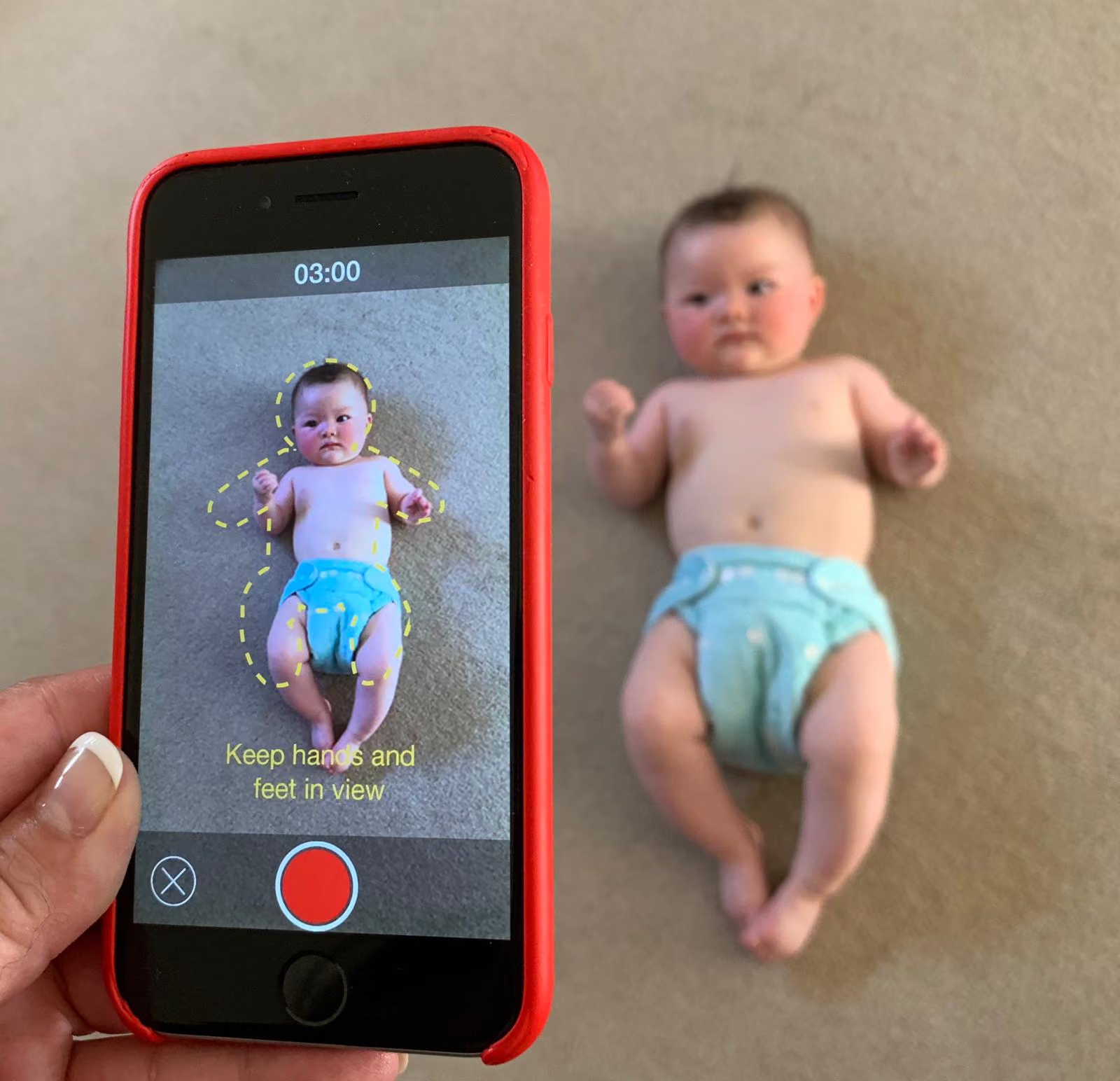
Making early cerebral palsy screening more accessible

Exploring new ways to identify babies at risk of cerebral palsy sooner and support better outcomes.

Read More
December 5, 2023

Prof Daniel MacArthur | 2023 Sohn Hearts & Minds Conference

At the 2023 Sohn Hearts & Minds Conference, we heard from Prof Daniel MacArthur, the Director of the Centre for Population Genomics.

Read More
December 5, 2023

Prof Michelle Simmons AO | Sohn Hearts & Minds Conference

At this year's Sohn Hearts & Minds Conference, we heard from Prof Michelle Simmons, the CEO and Founder of Silicon Quantum Computing.

Read More
December 5, 2023

Prof Misty Jenkins AO | 2023 Sohn Hearts & Minds Conference

At the 2023 Sohn Hearts & Minds Conference, we heard from Prof Misty Jenkins. Misty is a NHMRC fellow and laboratory head of the Immunology Division at the Walter and Eliza Hall Institute.

Read More
Daniel MacArthur speaking at the 2023 Sohn Hearts & Minds Conference in Sydney.Daniel MacArthur speaking at the 2023 Sohn Hearts & Minds Conference in Sydney.Daniel MacArthur speaking at the 2023 Sohn Hearts & Minds Conference in Sydney.Daniel MacArthur speaking at the 2023 Sohn Hearts & Minds Conference in Sydney.
November 15, 2023

Advancing Medicine Is In Daniel MacArthur’s DNA

When genomic scientist Daniel MacArthur had the opportunity to set up a new Centre for Population Genomics in Australia in 2019, he jumped at the chance to return home after 12 years living overseas.

Read More
November 10, 2023

Big thinkers in hunt for brain cancer cure

“Brain cancer is rare, but for people who do get it the prognosis is not good,” Assistant Professor Jenkins tells The Australian.

Read More
February 14, 2023

Bringing Equity and Diversity to Genomic Medicine

Professor Daniel MacArthur, Director of the Centre for Population Genomics has big goals to bring equity and diversity into genomic medicine in Australia, something surprisingly inadequate presently.

Read More
September 6, 2022

VCCRI: 'Heart in a Box'

An Australian method of preserving donated hearts has boosted the number of successful transplants across the world, with new research demonstrating similar survival rates to traditional transplants.

Read More