‘Critically underpriced’

Robert Mullin tips resources surge as AI forces energy market reset

David Rogers

‘Critically underpriced’

October 18, 2026
Robert Mullin tips resources surge as AI forces energy market reset
Read Transcript

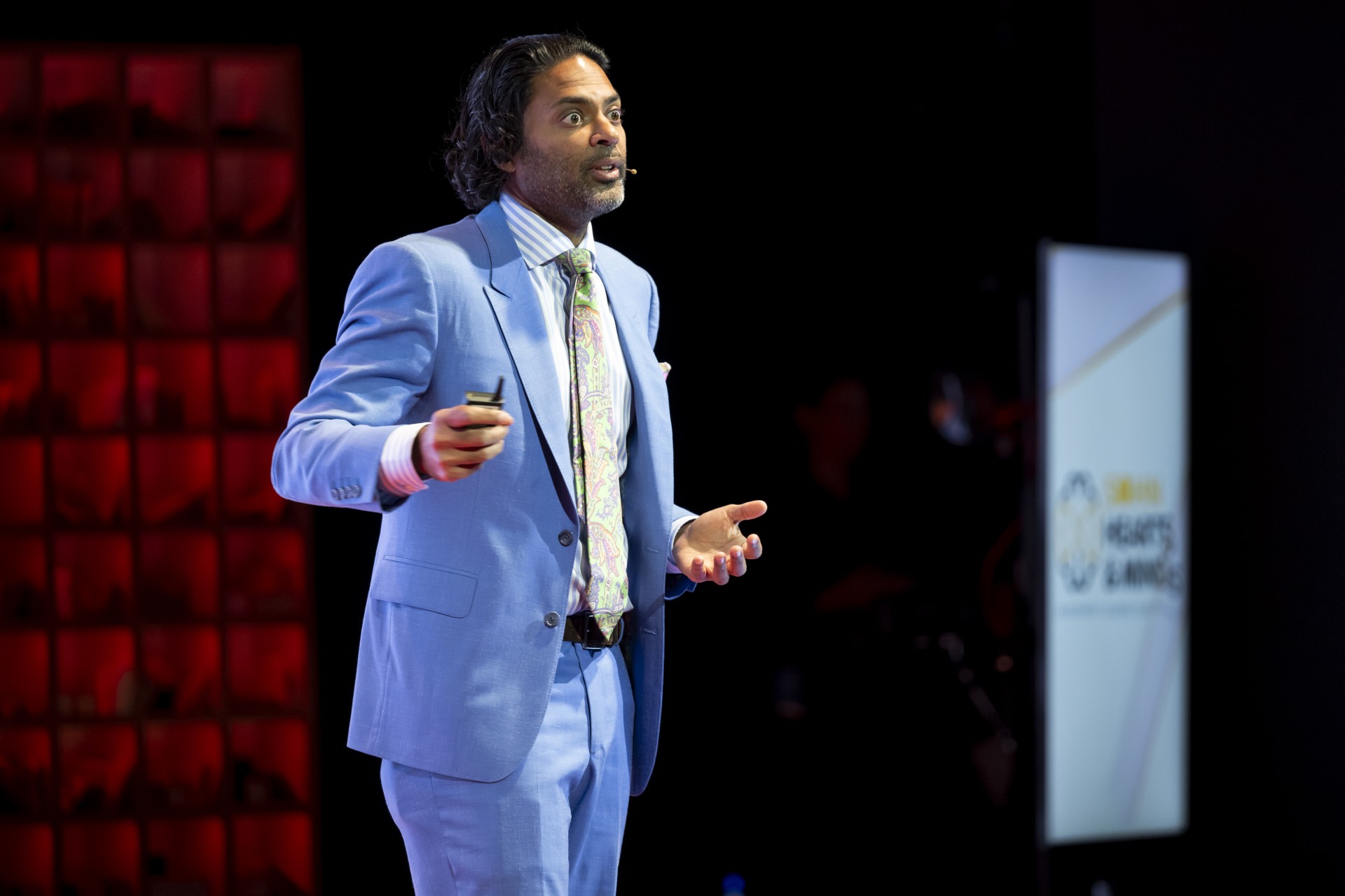
San Francisco-based Marathon Resource Advisors founder and chief investment officer Robert Mullin would happily tip SLB again at Sohn Hearts & Minds 2026 if that were possible.

‍

The company formerly known as Schlumberger rose 87 per cent by August and Mullin says it is still a great buy after a recent pullback. But the rules say he must find something new.

‍

Mullin has been investing in the energy and natural resource sector for more than three decades.

‍

His interest in the sector is partly historical. His mum grew up on a 100-year-old West Texas cattle ranch which is where Marathon – the name of the firm – comes from. But he also prefers to value companies based on the net present value of the cashflows they generate.

‍

“There are so many places in the market where you can’t do that,” Mullin tells The Australian. “The resource markets consistently are ones where you still can.”

‍

Valuing tech companies as a discount of their cashflow hasn’t worked for decades.

‍

“I’d actually argue most sectors of the market bear little or no relationship to the value of the cash the underlying businesses generate,” Mullin says. “I like the resource sector because those stocks do tend to have some modest relationship with the quality and cashflow capacity of the businesses.”

‍

Of course, the tech sector faces reality checks and resets at times – as was the case in South Korea when the high-flying KOSPI stock index fell about 40 per cent in six weeks, mostly due to a couple of AI chip stocks falling back to earth. Last week the KOSPI fell back to its July lows.

‍

“There’s the concept of ‘over-earning’ – where you’re making significantly higher margins today relative to what you’ll get over the full cycle,” Mullin says. “That happens in tech, and it also happens in resources; there are distortions out there we all have to account for.”

‍

As for his take on the global energy sector versus 10 years ago, he says it is in great shape.

‍

“Everyone wants to think of the sector as binary; if the Strait of Hormuz closes, everything’s good (but) if it opens, everything’s bad,” Mullin says. “What I’ve tried to do is step back and ask: what are the fundamental underlying drivers of the global energy markets?”

‍

The first is underinvestment. Global energy and mining capex is down about 50 per cent over the past decade on a nominal basis. On an inflation-adjusted basis it’s down about 75 per cent.

‍

He says that starvation of capital doesn’t bite immediately, but it “really starts to hurt once you get far enough down the road from these projects which take around a decade to complete”.

‍

“Most of the capital that should have been spent to significantly increase global resource capacity in 2025 through 2029 really needed to be spent between 2017 and 2022, and it just wasn’t,” he says.

‍

“I think it’s particularly acute in energy, but it’s true across the resource spectrum.

‍

“The main driver from around 2015 through 2019 was the fact that historically, every time you handed these guys money, they blew it.”

‍

Quantitative easing and massive financial stimulus after the GFC resulted in a lot of misallocated capital, overpriced acquisitions and massive projects brought on exactly when commodities were peaking.

‍

The second leg of underinvestment was caused by the ESG, decarbonisation, and green mandates that hit from about 2020. The third is the “giant sucking sound” of AI and its power demands.

‍

“Ironically, it’s the first technology boom that’s been massively energy and materials intensive,” Mullin says. “The dotcom cycle wasn’t. It was a software boom; all you had to do was hit a button to replicate it endlessly. This is the first tech bull market that’s genuinely intensive in energy and materials, because of the need to process data and build out the physical infrastructure.”

‍

Another irony is although the AI boom has sucked the oxygen out of the room, it’s now going to have to drag conventional energy and resources along with it, because it needs them.

‍

“You can’t have a continuation of the AI technology boom, or whatever it turns out to be, without dragging the energy and materials companies along behind it,” Mullin says.

‍

The two decades to 2020 were also a very deflationary environment.

‍

“You were happy to source raw materials anywhere in the world because everyone got along,” he says. “You never had to question whether you could get supply whenever you wanted it.

‍

“I think it’s become pretty clear we’re not in that world anymore.”

‍

Together with security of supply, national and corporate redundancy and resilience are now live topics.

‍

“You’ve gone from a period where you didn’t need to hold inventories, happy to source from anywhere, to one where you need to do some of this yourself and probably hold more of it than you have historically,” Mullin says.

‍

The world has transitioned from a period when global stability was the default setting and conflict was the occasional interloper, to one where conflict is now the base case, and periods where everyone gets along, or ceasefires hold, are the exception rather than the rule.

‍

“Everyone was slapped around the head with that in 2022 when Russia invaded Ukraine, and then promptly forgot it as soon as the disruption turned out to be smaller than expected,” he says.

‍

“There was very little actual disruption from that event, and then the shiny swirl of AI took off and grabbed everyone’s attention.

‍

“So now the market is being dragged back, kicking and screaming, to pay attention to the fact that resources are critical – that nothing in the bigger market themes works without them – and that at something around 3 or 4 per cent of global equity market cap, the sector is underpriced relative to its importance to the global economy.”

‍

The 2026 Sohn Hearts & Minds Investment Leaders Conference will be held in Queenstown, New Zealand on Friday November 6, which is the first time the event has been staged outside of Australia.

‍

The Australian is a media partner and tickets can be purchased at sohnheartsandminds.com.au

‍

This article was originally posted by The Australian here. Licensed by Copyright Agency. You must not copy this work without permission.

‍

San Francisco-based Marathon Resource Advisors founder and chief investment officer Robert Mullin would happily tip SLB again at Sohn Hearts & Minds 2026 if that were possible.

‍

The company formerly known as Schlumberger rose 87 per cent by August and Mullin says it is still a great buy after a recent pullback. But the rules say he must find something new.

‍

Mullin has been investing in the energy and natural resource sector for more than three decades.

‍

His interest in the sector is partly historical. His mum grew up on a 100-year-old West Texas cattle ranch which is where Marathon – the name of the firm – comes from. But he also prefers to value companies based on the net present value of the cashflows they generate.

‍

“There are so many places in the market where you can’t do that,” Mullin tells The Australian. “The resource markets consistently are ones where you still can.”

‍

Valuing tech companies as a discount of their cashflow hasn’t worked for decades.

‍

“I’d actually argue most sectors of the market bear little or no relationship to the value of the cash the underlying businesses generate,” Mullin says. “I like the resource sector because those stocks do tend to have some modest relationship with the quality and cashflow capacity of the businesses.”

‍

Of course, the tech sector faces reality checks and resets at times – as was the case in South Korea when the high-flying KOSPI stock index fell about 40 per cent in six weeks, mostly due to a couple of AI chip stocks falling back to earth. Last week the KOSPI fell back to its July lows.

‍

“There’s the concept of ‘over-earning’ – where you’re making significantly higher margins today relative to what you’ll get over the full cycle,” Mullin says. “That happens in tech, and it also happens in resources; there are distortions out there we all have to account for.”

‍

As for his take on the global energy sector versus 10 years ago, he says it is in great shape.

‍

“Everyone wants to think of the sector as binary; if the Strait of Hormuz closes, everything’s good (but) if it opens, everything’s bad,” Mullin says. “What I’ve tried to do is step back and ask: what are the fundamental underlying drivers of the global energy markets?”

‍

The first is underinvestment. Global energy and mining capex is down about 50 per cent over the past decade on a nominal basis. On an inflation-adjusted basis it’s down about 75 per cent.

‍

He says that starvation of capital doesn’t bite immediately, but it “really starts to hurt once you get far enough down the road from these projects which take around a decade to complete”.

‍

“Most of the capital that should have been spent to significantly increase global resource capacity in 2025 through 2029 really needed to be spent between 2017 and 2022, and it just wasn’t,” he says.

‍

“I think it’s particularly acute in energy, but it’s true across the resource spectrum.

‍

“The main driver from around 2015 through 2019 was the fact that historically, every time you handed these guys money, they blew it.”

‍

Quantitative easing and massive financial stimulus after the GFC resulted in a lot of misallocated capital, overpriced acquisitions and massive projects brought on exactly when commodities were peaking.

‍

The second leg of underinvestment was caused by the ESG, decarbonisation, and green mandates that hit from about 2020. The third is the “giant sucking sound” of AI and its power demands.

‍

“Ironically, it’s the first technology boom that’s been massively energy and materials intensive,” Mullin says. “The dotcom cycle wasn’t. It was a software boom; all you had to do was hit a button to replicate it endlessly. This is the first tech bull market that’s genuinely intensive in energy and materials, because of the need to process data and build out the physical infrastructure.”

‍

Another irony is although the AI boom has sucked the oxygen out of the room, it’s now going to have to drag conventional energy and resources along with it, because it needs them.

‍

“You can’t have a continuation of the AI technology boom, or whatever it turns out to be, without dragging the energy and materials companies along behind it,” Mullin says.

‍

The two decades to 2020 were also a very deflationary environment.

‍

“You were happy to source raw materials anywhere in the world because everyone got along,” he says. “You never had to question whether you could get supply whenever you wanted it.

‍

“I think it’s become pretty clear we’re not in that world anymore.”

‍

Together with security of supply, national and corporate redundancy and resilience are now live topics.

‍

“You’ve gone from a period where you didn’t need to hold inventories, happy to source from anywhere, to one where you need to do some of this yourself and probably hold more of it than you have historically,” Mullin says.

‍

The world has transitioned from a period when global stability was the default setting and conflict was the occasional interloper, to one where conflict is now the base case, and periods where everyone gets along, or ceasefires hold, are the exception rather than the rule.

‍

“Everyone was slapped around the head with that in 2022 when Russia invaded Ukraine, and then promptly forgot it as soon as the disruption turned out to be smaller than expected,” he says.

‍

“There was very little actual disruption from that event, and then the shiny swirl of AI took off and grabbed everyone’s attention.

‍

“So now the market is being dragged back, kicking and screaming, to pay attention to the fact that resources are critical – that nothing in the bigger market themes works without them – and that at something around 3 or 4 per cent of global equity market cap, the sector is underpriced relative to its importance to the global economy.”

‍

The 2026 Sohn Hearts & Minds Investment Leaders Conference will be held in Queenstown, New Zealand on Friday November 6, which is the first time the event has been staged outside of Australia.

‍

The Australian is a media partner and tickets can be purchased at sohnheartsandminds.com.au

‍

This article was originally posted by The Australian here. Licensed by Copyright Agency. You must not copy this work without permission.

‍

Disclaimer: This material has been prepared by The Australian, published on October 18, 2026. HM1 is not responsible for the content of linked websites or content prepared by third party. The inclusion of these links and third-party content does not in any way imply any form of endorsement by HM1 of the products or services provided by persons or organisations who are responsible for the linked websites and third-party content. This information is for general information only and does not consider the objectives, financial situation or needs of any person. Before making an investment decision, you should read the relevant disclosure document (if appropriate) and seek professional advice to determine whether the investment and information is suitable for you.

facebook
linkedin
All
Thank you! Your submission has been received!
Oops! Something went wrong while submitting the form.
Jeremy Bond presenting at 2023 Sohn Hearts & Minds ConferenceJeremy Bond presenting at 2023 Sohn Hearts & Minds ConferenceJeremy Bond presenting at 2023 Sohn Hearts & Minds ConferenceJeremy Bond presenting at 2023 Sohn Hearts & Minds Conference
September 21, 2026

An Australian fund manager finds redemption in the copper boom

Bond is in hot demand. He’s one of only a handful of speakers invited to return to the Sohn Hearts and Minds charity stockpicking conference, which is being held this year in Queenstown.

Read More
September 23, 2026

‘What is GDP for?’: Strategist Michael Every on the dangers of Australia ignoring economic risks

According to Singapore-based global strategist with Rabobank Michael Every, countries have spent decades optimising for quarterly or annual GDP numbers without asking what growth is actually for: and that is safety, sovereignty and resilience.

Read More
September 23, 2026

He nailed Trump’s big plan. Now he fears Australia’s China-US squeeze

Strategist Michael Every says Trump’s economic statecraft is working, even when it looks messy. But he fears a moment of truth is coming for Australia.

Read More
October 14, 2026

Why US banks are opening new branches, not closing them

US banks are reopening physical branches to attract deposits, strengthen customer relationships and gain market share, showing that face-to-face banking remains valuable despite the shift to digital services.

Read More
December 19, 2024

Rikki Bannan – Don’t get caught up in momentum

Conference Fund Manager Rikki Bannan, Executive Director at IFM Investors, joins Equity Mates to discuss her standout 2023 stock pick, Telix, and explore what opportunities lie ahead.

Read More
November 20, 2024

Trump unifies top investors in decade-long bullish outlook for US

Nick Moakes, CIO of the $72 billion Wellcome Trust, told the conference that too many investors were banking on a return to the ultra-low interest rates that prevailed over the past decade.

Read More
Wall Street legend Howard Marks told the Sohn event that US exceptionalism would endure. Picture: Ben SearcyWall Street legend Howard Marks told the Sohn event that US exceptionalism would endure. Picture: Ben SearcyWall Street legend Howard Marks told the Sohn event that US exceptionalism would endure. Picture: Ben SearcyWall Street legend Howard Marks told the Sohn event that US exceptionalism would endure. Picture: Ben Searcy
November 17, 2024

Is anyone brave or stupid enough to bet against America?

Stock pickers have been punished for betting against the US. The choice between consensus and contrarianism on American exceptionalism is now harder than ever.

Read More
Ellerston Capital's Chris Kourtis says things will improve at embattled fund manager Perpetual. Picture: Ben Searcy PhotographyEllerston Capital's Chris Kourtis says things will improve at embattled fund manager Perpetual. Picture: Ben Searcy PhotographyEllerston Capital's Chris Kourtis says things will improve at embattled fund manager Perpetual. Picture: Ben Searcy PhotographyEllerston Capital's Chris Kourtis says things will improve at embattled fund manager Perpetual. Picture: Ben Searcy Photography
November 15, 2024

Eleven stock tips from Sohn to get you through 2025

“There’s no finer place for the finance festival than in the festival city,” said Matthew Grounds. He, along with fellow Barrenjoey co-executive chairman Guy Fowler and investor Gary Weiss, is one of Sohn’s driving forces.

Read More
November 15, 2024

Howard Marks and Sohn’s big stars reveal seven rules for investing

Among the stock picks and stunts at the Sohh Hearts & Minds event, Howard Marks and Nick Moakes provided investors with long-term rules for playing markets.

Read More
November 15, 2024

Sohn ASX stock pick: Ellerston Capital’s Chris Kourtis backs Perpetual

Chris Kourtis has put his biggest bet on embattled Perpetual – picking one of the most hated stocks on the ASX – that he believes will soon be the ‘cheapest listed asset manager of scale in the universe’.

Read More
November 15, 2024

Sohn investors position for bullish but bumpy Trump ride

Australia and the rest of the world must adjust to a new Trump presidency that will deliver an expected bull market but also disruption, with the leader in waiting prepared to “create pain” to get his way.

Read More
November 15, 2024

Sohn stock picker experts name best shares to invest in for year ahead

‍Don’t overlook down and out silver miners, legacy skincare brands ready for a revival and a big financial company suffering from a severe case of shareholder wealth destruction.

Read More
November 15, 2024

Sohn: NYSE-listed Estee Lauder’s Northcape Capital pick

Northcape Capital’s Fleur Wright this gives a rare opportunity to buy a high quality company at an attractive price.

Read More
November 6, 2024

Why this New York hedge fund manager sees opportunity in European stocks

Influential New York-hedge fund manager Ricky Sandler will turn to Europe for his next stock pick.

Read More
November 5, 2024

Antipodes’ Ross says short-term wealth hinges on US election

The portfolio manager says defensive stocks pose a bigger risk than the magnificent seven for investors that are overexposed to the American sharemarket.

Read More