‘Critically underpriced’

Robert Mullin tips resources surge as AI forces energy market reset

David Rogers

‘Critically underpriced’

October 18, 2026
Robert Mullin tips resources surge as AI forces energy market reset
Read Transcript

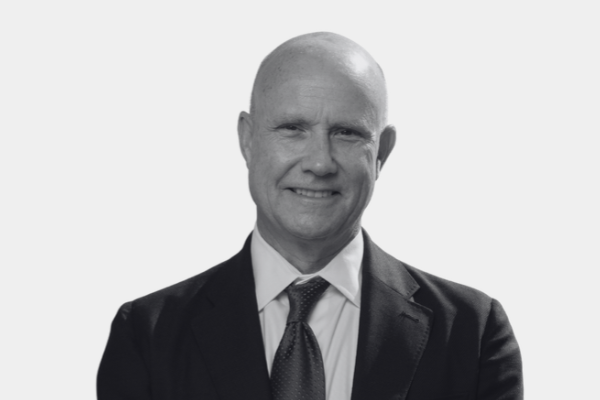
San Francisco-based Marathon Resource Advisors founder and chief investment officer Robert Mullin would happily tip SLB again at Sohn Hearts & Minds 2026 if that were possible.

‍

The company formerly known as Schlumberger rose 87 per cent by August and Mullin says it is still a great buy after a recent pullback. But the rules say he must find something new.

‍

Mullin has been investing in the energy and natural resource sector for more than three decades.

‍

His interest in the sector is partly historical. His mum grew up on a 100-year-old West Texas cattle ranch which is where Marathon – the name of the firm – comes from. But he also prefers to value companies based on the net present value of the cashflows they generate.

‍

“There are so many places in the market where you can’t do that,” Mullin tells The Australian. “The resource markets consistently are ones where you still can.”

‍

Valuing tech companies as a discount of their cashflow hasn’t worked for decades.

‍

“I’d actually argue most sectors of the market bear little or no relationship to the value of the cash the underlying businesses generate,” Mullin says. “I like the resource sector because those stocks do tend to have some modest relationship with the quality and cashflow capacity of the businesses.”

‍

Of course, the tech sector faces reality checks and resets at times – as was the case in South Korea when the high-flying KOSPI stock index fell about 40 per cent in six weeks, mostly due to a couple of AI chip stocks falling back to earth. Last week the KOSPI fell back to its July lows.

‍

“There’s the concept of ‘over-earning’ – where you’re making significantly higher margins today relative to what you’ll get over the full cycle,” Mullin says. “That happens in tech, and it also happens in resources; there are distortions out there we all have to account for.”

‍

As for his take on the global energy sector versus 10 years ago, he says it is in great shape.

‍

“Everyone wants to think of the sector as binary; if the Strait of Hormuz closes, everything’s good (but) if it opens, everything’s bad,” Mullin says. “What I’ve tried to do is step back and ask: what are the fundamental underlying drivers of the global energy markets?”

‍

The first is underinvestment. Global energy and mining capex is down about 50 per cent over the past decade on a nominal basis. On an inflation-adjusted basis it’s down about 75 per cent.

‍

He says that starvation of capital doesn’t bite immediately, but it “really starts to hurt once you get far enough down the road from these projects which take around a decade to complete”.

‍

“Most of the capital that should have been spent to significantly increase global resource capacity in 2025 through 2029 really needed to be spent between 2017 and 2022, and it just wasn’t,” he says.

‍

“I think it’s particularly acute in energy, but it’s true across the resource spectrum.

‍

“The main driver from around 2015 through 2019 was the fact that historically, every time you handed these guys money, they blew it.”

‍

Quantitative easing and massive financial stimulus after the GFC resulted in a lot of misallocated capital, overpriced acquisitions and massive projects brought on exactly when commodities were peaking.

‍

The second leg of underinvestment was caused by the ESG, decarbonisation, and green mandates that hit from about 2020. The third is the “giant sucking sound” of AI and its power demands.

‍

“Ironically, it’s the first technology boom that’s been massively energy and materials intensive,” Mullin says. “The dotcom cycle wasn’t. It was a software boom; all you had to do was hit a button to replicate it endlessly. This is the first tech bull market that’s genuinely intensive in energy and materials, because of the need to process data and build out the physical infrastructure.”

‍

Another irony is although the AI boom has sucked the oxygen out of the room, it’s now going to have to drag conventional energy and resources along with it, because it needs them.

‍

“You can’t have a continuation of the AI technology boom, or whatever it turns out to be, without dragging the energy and materials companies along behind it,” Mullin says.

‍

The two decades to 2020 were also a very deflationary environment.

‍

“You were happy to source raw materials anywhere in the world because everyone got along,” he says. “You never had to question whether you could get supply whenever you wanted it.

‍

“I think it’s become pretty clear we’re not in that world anymore.”

‍

Together with security of supply, national and corporate redundancy and resilience are now live topics.

‍

“You’ve gone from a period where you didn’t need to hold inventories, happy to source from anywhere, to one where you need to do some of this yourself and probably hold more of it than you have historically,” Mullin says.

‍

The world has transitioned from a period when global stability was the default setting and conflict was the occasional interloper, to one where conflict is now the base case, and periods where everyone gets along, or ceasefires hold, are the exception rather than the rule.

‍

“Everyone was slapped around the head with that in 2022 when Russia invaded Ukraine, and then promptly forgot it as soon as the disruption turned out to be smaller than expected,” he says.

‍

“There was very little actual disruption from that event, and then the shiny swirl of AI took off and grabbed everyone’s attention.

‍

“So now the market is being dragged back, kicking and screaming, to pay attention to the fact that resources are critical – that nothing in the bigger market themes works without them – and that at something around 3 or 4 per cent of global equity market cap, the sector is underpriced relative to its importance to the global economy.”

‍

The 2026 Sohn Hearts & Minds Investment Leaders Conference will be held in Queenstown, New Zealand on Friday November 6, which is the first time the event has been staged outside of Australia.

‍

The Australian is a media partner and tickets can be purchased at sohnheartsandminds.com.au

‍

This article was originally posted by The Australian here. Licensed by Copyright Agency. You must not copy this work without permission.

‍

Disclaimer: This material has been prepared by The Australian, published on October 18, 2026. HM1 is not responsible for the content of linked websites or content prepared by third party. The inclusion of these links and third-party content does not in any way imply any form of endorsement by HM1 of the products or services provided by persons or organisations who are responsible for the linked websites and third-party content. This information is for general information only and does not consider the objectives, financial situation or needs of any person. Before making an investment decision, you should read the relevant disclosure document (if appropriate) and seek professional advice to determine whether the investment and information is suitable for you.

facebook
linkedin
All
Thank you! Your submission has been received!
Oops! Something went wrong while submitting the form.
November 17, 2023

‘I Know It Sounds Crazy’: Cathie Wood’s Next Big Idea

Speaking from Ark’s headquarters in Florida ahead of her appearance at the Sohn Hearts & Minds Conference on Friday, Wood says she believes disinflation is now just around the corner in the US.

Read More
November 17, 2023

ARK Founder Wood Backs Bitcoin, Banking On Spot ETF Approval

Tech investment guru Cathie Wood is still a big believer in bitcoin, so it was fitting that she chose Grayscale Bitcoin Trust as her stock pick for the 2023 Sohn Hearts & Minds Investment Leaders Conference.

Read More
IFM Investors small cap specialist Rikki Bannan addresses the Sohn Hearts & Minds Investment Leaders Conference at Sydney Opera House. Picture: Renee NowytargerIFM Investors small cap specialist Rikki Bannan addresses the Sohn Hearts & Minds Investment Leaders Conference at Sydney Opera House. Picture: Renee NowytargerIFM Investors small cap specialist Rikki Bannan addresses the Sohn Hearts & Minds Investment Leaders Conference at Sydney Opera House. Picture: Renee NowytargerIFM Investors small cap specialist Rikki Bannan addresses the Sohn Hearts & Minds Investment Leaders Conference at Sydney Opera House. Picture: Renee Nowytarger
November 17, 2023

Hot Stocks To Ride The Next Healthcare Trends

Healthcare stocks – from sleep apnoea giant ResMed, to cancer diagnostic biotech Telix Pharmaceuticals – were recommended at the Sohn Hearts & Minds Investment Leaders Conference on Friday.

Read More
November 17, 2023

How Daniel Loeb, The Real Bobby Axelrod, Made His Wall Street Billions

When Damian Lewis, the actor who plays the ruthless hedge fund boss in the drama series Billions was looking for inspiration, he sat down with Daniel Loeb.

Read More
November 17, 2023

Investors Sound Warning On Private Equity Timebomb

Institutional investors such as super and pension funds are investing in private equity at “exactly the wrong time,” a top hedge fund manager has warned, as sharply higher interest rates threaten a wave of bankruptcies.

Read More
November 17, 2023

The 12 Hottest Stock Tips From This Year’s Sohn Experts

It might be time to look beyond big names. That was the message from top fund managers, company founders and super funds at the Sohn Hearts & Minds.

Read More
Azora Capital founder Ravi Chopra. Picture: Renee NowytargerAzora Capital founder Ravi Chopra. Picture: Renee NowytargerAzora Capital founder Ravi Chopra. Picture: Renee NowytargerAzora Capital founder Ravi Chopra. Picture: Renee Nowytarger
November 17, 2023

Webster Financial ‘Avoided The Mistakes Of US Bank Failures’

The US financial sector is not without its problems but Ravi Chopra backs Webster Financial Corporation as his stock pick for the 2023 Sohn Hearts & Minds Investment Leaders Conference.

Read More
November 17, 2023

Why Stock Picker Cathie Wood Of ARK Can’t Stand Google

The world’s highest-profile tech investor, Cathie Wood, might be bruised but she is certainly bullish. Nor is she holding back.

Read More
Munro Partners partner and portfolio manager Kieran Moore at the Sohn Hearts & Minds conference in Sydney. Picture: Renee NowytargerMunro Partners partner and portfolio manager Kieran Moore at the Sohn Hearts & Minds conference in Sydney. Picture: Renee NowytargerMunro Partners partner and portfolio manager Kieran Moore at the Sohn Hearts & Minds conference in Sydney. Picture: Renee NowytargerMunro Partners partner and portfolio manager Kieran Moore at the Sohn Hearts & Minds conference in Sydney. Picture: Renee Nowytarger
November 17, 2023

Wise Share Price Could Rise 50pc By 2025, Says Munro Partners

Global growth fund manager Munro has about $4.3bn in funds under management across four global funds, and usually invests in companies that are poised to win from massive structural change.

Read More
November 16, 2023

Hedge Fund Veteran Talks Lowest Moment In Toscafund’s 23-Year Run

Most hedge fund managers brag about their wins and shy away from their losses – Martin Hughes is not most hedge fund managers.

Read More
November 16, 2023

The ‘Armageddon Scenario’ Worrying The Future Fund CIO

Mr Samild shared his thoughts on the bond market – which underpins the returns of other assets – ahead of his appearance at Friday’s Sohn Hearts & Minds charity conference at the Sydney Opera House.

Read More
November 15, 2023

Daniel Loeb’s Wall St Hedge Fund Third Point Raises Bets On Corporate Credit Crunch

An “obsession” around balance sheet strength and debt is creating a new wave of investment bets for the influential Wall Street hedge fund run by Daniel Loeb.

Read More
November 13, 2023

Bond Bullish On Commodity Stocks, Uranium

Mining stocks are poised to rise amid tight supply for key commodities such as copper, nickel and uranium, says Terra Capital founder Jeremy Bond.

Read More
November 13, 2023

This Hedge Fund Manager Is Making A 100-Year Bet On Luxury

European leisure and luxury – a designer handbag, a last-minute flight to Monte Carlo, a stay in a five-star hotel – is where many choose to spend their hard-earned cash. For Sharif el Khazen, it’s where he makes it.

Read More
November 12, 2023

How Munro Will Pick Its Next Stock Winner

Munro partner and portfolio manager Kieran Moore must select a single company to pitch to an audience of industry heavyweights at the prestigious Sohn Hearts & Minds conference in Sydney.

Read More