The Future of Pain Management

Enhancing healthcare professionals' ability to deliver better pain management, now and into the future.

The Future of Pain Management

July 1, 2026
Enhancing healthcare professionals' ability to deliver better pain management, now and into the future.
Read Transcript

The challenge

Unlike short-term pain, chronic pain can continue long after an injury has healed or without an obvious cause. It affects 1 in 5 Australians, significantly impacting quality of life and productivity. The economic burden is projected to rise from $139 billion in 2018 to $215.6 billion by 2050.

Introducing OPEN

Many healthcare professionals lack consistent training in non-drug, person-centred pain management approaches. To help address this gap, funding from Hearts & Minds, as nominated by TDM Growth Partners, helped establish OPEN (Online Pain Education Network), a not-for-profit social enterprise focused on developing evidence-based pain education materials, the first of its kind in Australia. OPEN was created in collaboration with the University of Sydney, Curtin University, and the Australian Pain Society.

Read TDM Growth Partners’ case study, Changing the story of chronic pain, to learn more about the development of OPEN. In short, OPEN was designed as a platform to:

  • Develop new education resources for healthcare professionals and people living with pain
  • Support vital pain research in a sustainable way, which is often difficult to attract funding for
  • Foster greater collaboration across the pain sector

OPEN’s operating costs are underwritten by philanthropic contributions from the TDM Foundation, via collaboration with HM1, and the Pain Foundation. This ensures proceeds from the sale of educational materials can be reinvested directly into advancing OPEN’s mission and furthering research into chronic pain.

The program

The OPEN Clinical Pain Management Training Program is a self-paced online training program developed by leading pain clinicians, providing healthcare professionals with practical, evidence-based skills to better support Australians living with chronic pain. It’s suitable for GPs, nurses, physiotherapists, psychologists, occupational therapists, pharmacists and other allied health professionals.

Since launching enrolments in October 2025, OPEN has established itself as Australia's leading interdisciplinary pain education platform, with significant growth, sector recognition and national reach. The program brings together practical tools, interdisciplinary strategies, and real-world perspectives that can be used at the point of care for better access to pain care.

“Early feedback from the program showed strong engagement from healthcare professionals across Australia and New Zealand. Participants reported high overall satisfaction and reported that OPEN was relevant to clinical practice (93%), addressed their learning needs (90%) and improved their confidence to manage patients experiencing chronic pain (93%). Most participants (91%) intended to change their practice due to participation in OPEN.”

By equipping healthcare professionals with practical, evidence-based skills, the OPEN Training Program is helping improve pain management and patient outcomes across Australia. For more information, please visit the Open Pain Education Network.

This project is supported by Hearts & Minds, as nominated by Core Fund Manager,  TDM Growth Partners.

The challenge

Unlike short-term pain, chronic pain can continue long after an injury has healed or without an obvious cause. It affects 1 in 5 Australians, significantly impacting quality of life and productivity. The economic burden is projected to rise from $139 billion in 2018 to $215.6 billion by 2050.

Introducing OPEN

Many healthcare professionals lack consistent training in non-drug, person-centred pain management approaches. To help address this gap, funding from Hearts & Minds, as nominated by TDM Growth Partners, helped establish OPEN (Online Pain Education Network), a not-for-profit social enterprise focused on developing evidence-based pain education materials, the first of its kind in Australia. OPEN was created in collaboration with the University of Sydney, Curtin University, and the Australian Pain Society.

Read TDM Growth Partners’ case study, Changing the story of chronic pain, to learn more about the development of OPEN. In short, OPEN was designed as a platform to:

  • Develop new education resources for healthcare professionals and people living with pain
  • Support vital pain research in a sustainable way, which is often difficult to attract funding for
  • Foster greater collaboration across the pain sector

OPEN’s operating costs are underwritten by philanthropic contributions from the TDM Foundation, via collaboration with HM1, and the Pain Foundation. This ensures proceeds from the sale of educational materials can be reinvested directly into advancing OPEN’s mission and furthering research into chronic pain.

The program

The OPEN Clinical Pain Management Training Program is a self-paced online training program developed by leading pain clinicians, providing healthcare professionals with practical, evidence-based skills to better support Australians living with chronic pain. It’s suitable for GPs, nurses, physiotherapists, psychologists, occupational therapists, pharmacists and other allied health professionals.

Since launching enrolments in October 2025, OPEN has established itself as Australia's leading interdisciplinary pain education platform, with significant growth, sector recognition and national reach. The program brings together practical tools, interdisciplinary strategies, and real-world perspectives that can be used at the point of care for better access to pain care.

“Early feedback from the program showed strong engagement from healthcare professionals across Australia and New Zealand. Participants reported high overall satisfaction and reported that OPEN was relevant to clinical practice (93%), addressed their learning needs (90%) and improved their confidence to manage patients experiencing chronic pain (93%). Most participants (91%) intended to change their practice due to participation in OPEN.”

By equipping healthcare professionals with practical, evidence-based skills, the OPEN Training Program is helping improve pain management and patient outcomes across Australia. For more information, please visit the Open Pain Education Network.

This project is supported by Hearts & Minds, as nominated by Core Fund Manager,  TDM Growth Partners.

Disclaimer: This material has been prepared by Hearts & Minds, published on July 1, 2026. HM1 is not responsible for the content of linked websites or content prepared by third party. The inclusion of these links and third-party content does not in any way imply any form of endorsement by HM1 of the products or services provided by persons or organisations who are responsible for the linked websites and third-party content. This information is for general information only and does not consider the objectives, financial situation or needs of any person. Before making an investment decision, you should read the relevant disclosure document (if appropriate) and seek professional advice to determine whether the investment and information is suitable for you.

facebook
linkedin
All
Thank you! Your submission has been received!
Oops! Something went wrong while submitting the form.
July 1, 2026

Understanding fatigue in young people with Charcot-Marie-Tooth disease

Developing a tool to improve understanding, research and care.

Read More
Pictured left to right: Professor Gina Ravenscroft (Perkins), Jasmine Chew, Sam Payne (CEO and Founder, Pink Elephants Support Network), and Shelby Mullin (Perkins).Pictured left to right: Professor Gina Ravenscroft (Perkins), Jasmine Chew, Sam Payne (CEO and Founder, Pink Elephants Support Network), and Shelby Mullin (Perkins).Pictured left to right: Professor Gina Ravenscroft (Perkins), Jasmine Chew, Sam Payne (CEO and Founder, Pink Elephants Support Network), and Shelby Mullin (Perkins).Pictured left to right: Professor Gina Ravenscroft (Perkins), Jasmine Chew, Sam Payne (CEO and Founder, Pink Elephants Support Network), and Shelby Mullin (Perkins).
July 1, 2026

Giving families living with rare diseases the answers they need

Supporting research to improve the diagnosis of rare genetic neuromuscular diseases and build the foundations for future treatments.

Read More
Picture: Dr Laura Grice, Lead Researcher Picture: Dr Laura Grice, Lead Researcher Picture: Dr Laura Grice, Lead Researcher Picture: Dr Laura Grice, Lead Researcher
July 1, 2026

Understanding spinal cord injury recovery

The world's first molecular map of spinal cord injury across time and injury levels

Read More
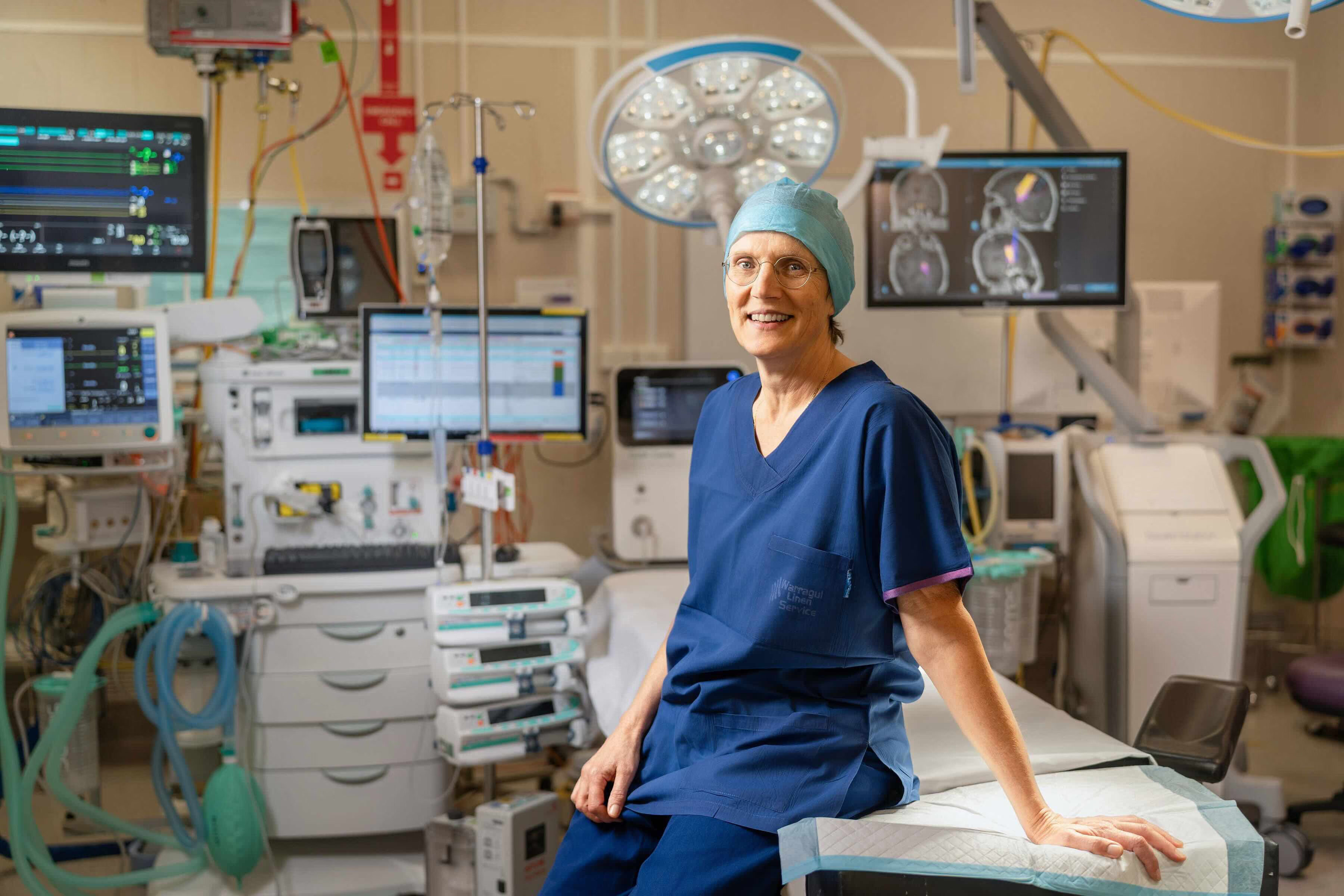
Picture: Professor Lindy Jeffree, Neurosurgeon and Chair, Brain Cancer Australia National Consortium Picture: Professor Lindy Jeffree, Neurosurgeon and Chair, Brain Cancer Australia National Consortium Picture: Professor Lindy Jeffree, Neurosurgeon and Chair, Brain Cancer Australia National Consortium Picture: Professor Lindy Jeffree, Neurosurgeon and Chair, Brain Cancer Australia National Consortium
July 1, 2026

Building the foundations for faster progress against brain cancer

Uniting researchers, clinicians and patients to accelerate research and improve patient care.

Read More
July 1, 2026

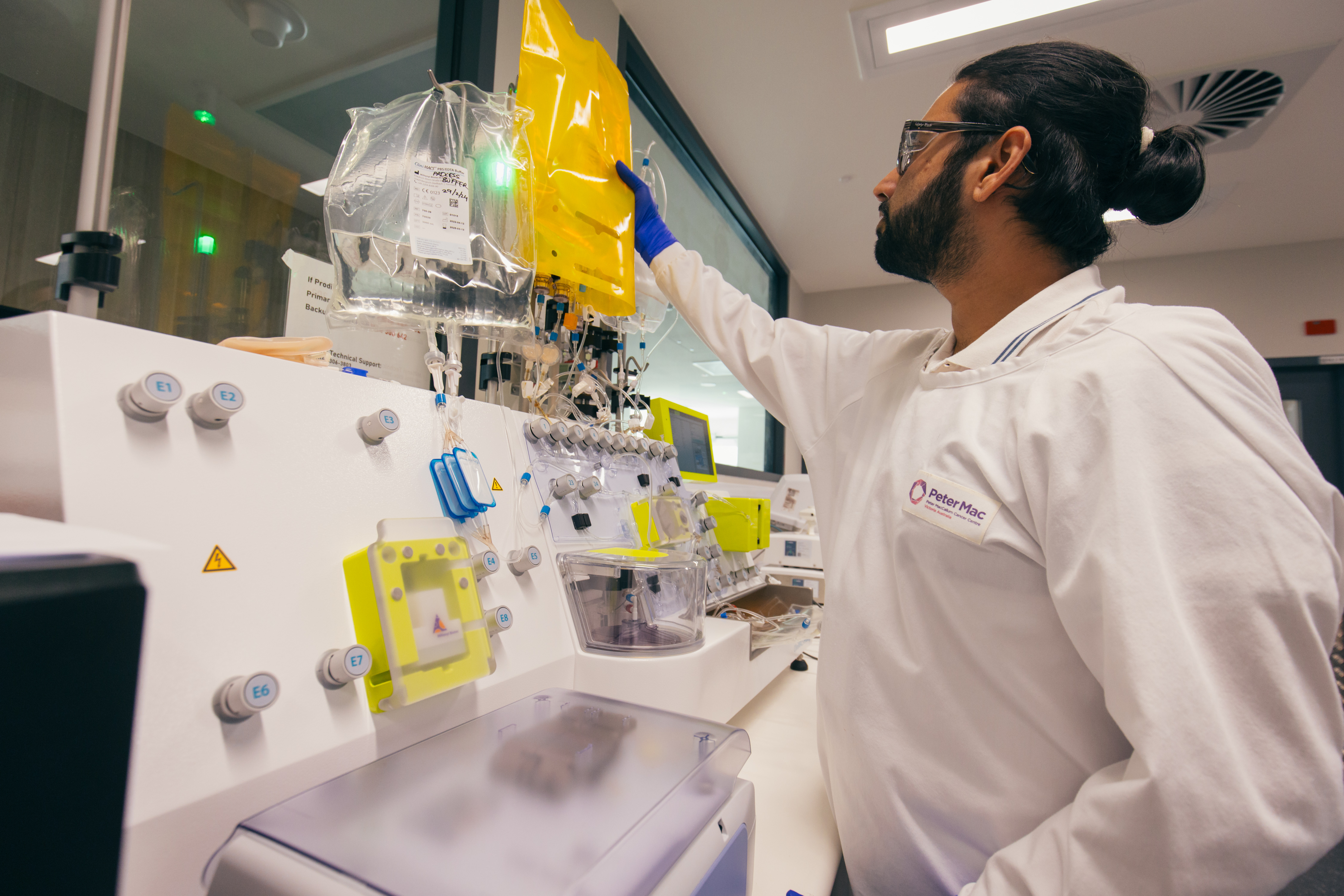
Accelerating CAR-T cell therapies for patients in need 

Bringing innovative cancer therapies closer to patients.

Read More
July 1, 2026

Supporting babies at high risk of cerebral palsy from the very beginning

Testing a family-centred early intervention program to improve outcomes for infants and support parents during the first critical months of life.

Read More
July 1, 2026

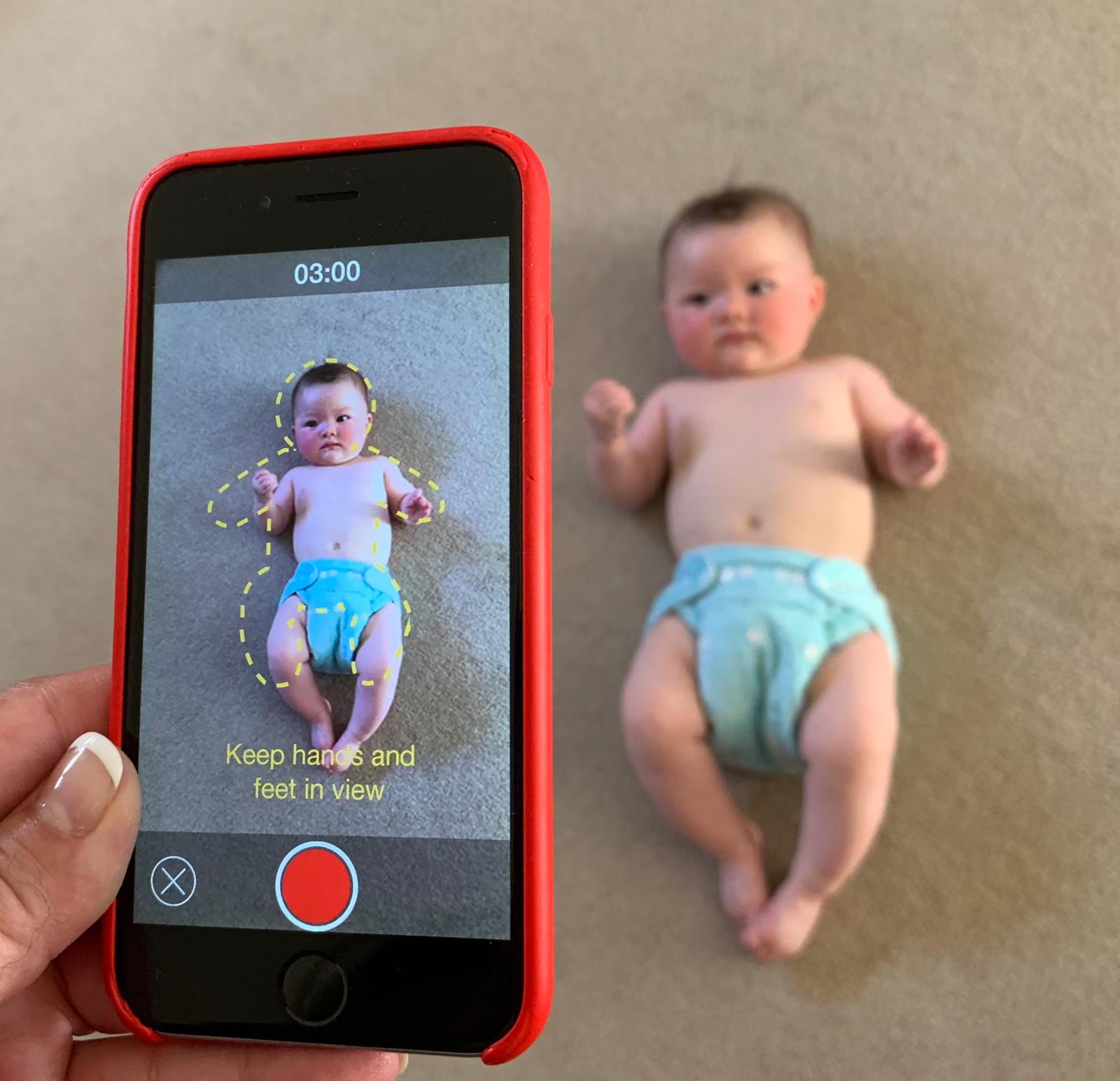
Making early cerebral palsy screening more accessible

Exploring new ways to identify babies at risk of cerebral palsy sooner and support better outcomes.

Read More
Picture: Professor Tracy Putoczki, Laboratory Head at WEHIPicture: Professor Tracy Putoczki, Laboratory Head at WEHIPicture: Professor Tracy Putoczki, Laboratory Head at WEHIPicture: Professor Tracy Putoczki, Laboratory Head at WEHI
July 1, 2026

Mapping the surface of pancreatic cancer cells

Identifying proteins on pancreatic cancer cells that could become new targets for developing future treatments.

Read More
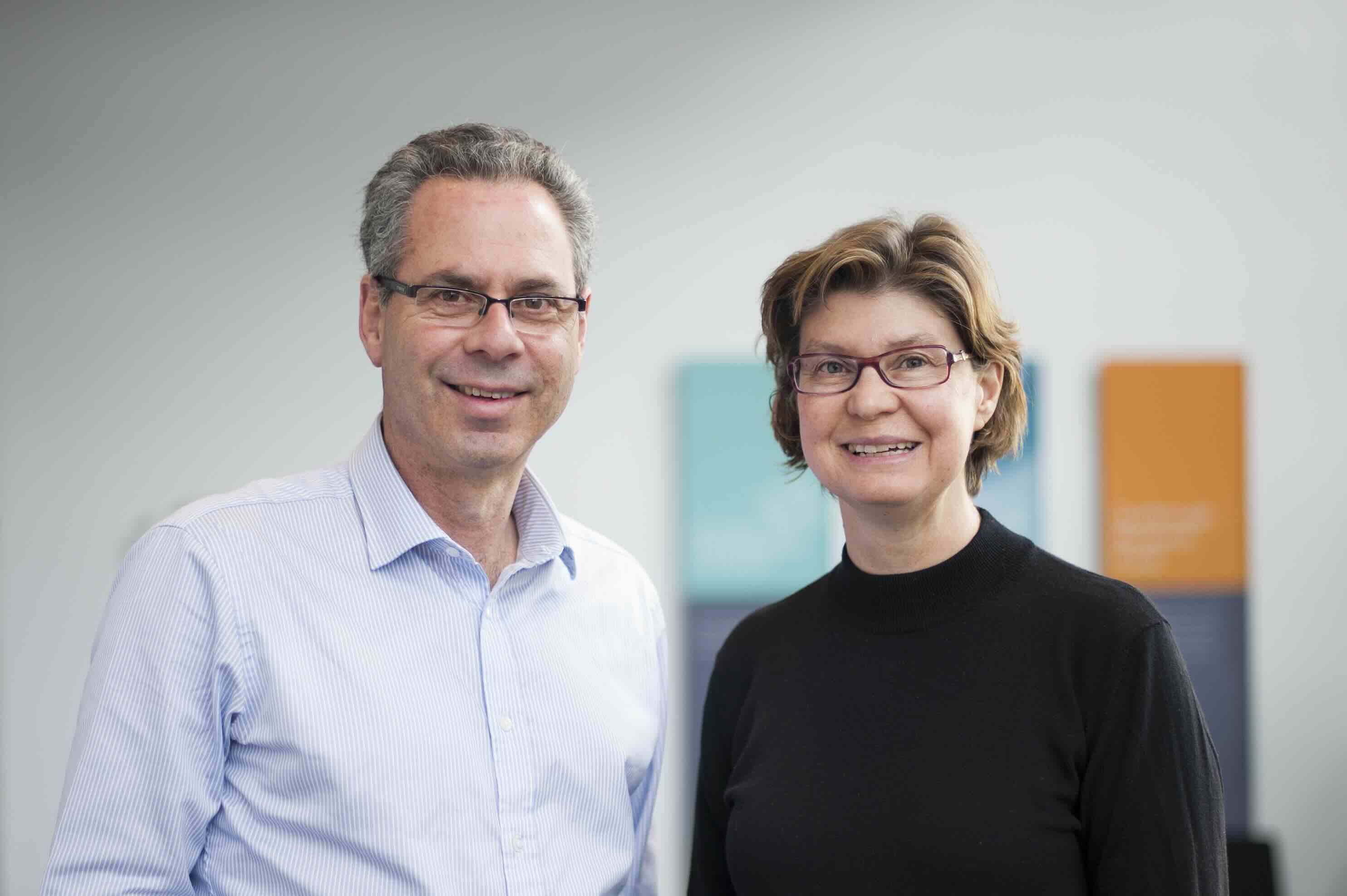
Picture: Professor Jane Visvader and Professor Geoff Lindeman from the Breast Cancer Laboratory at WEHI Picture: Professor Jane Visvader and Professor Geoff Lindeman from the Breast Cancer Laboratory at WEHI Picture: Professor Jane Visvader and Professor Geoff Lindeman from the Breast Cancer Laboratory at WEHI Picture: Professor Jane Visvader and Professor Geoff Lindeman from the Breast Cancer Laboratory at WEHI
July 1, 2026

Understanding how breast cancer begins

Tracking the earliest changes in BRCA mutation carriers to help prevent cancer before it starts.

Read More
July 1, 2026

A new path forward for women living with period and pelvic pain

Uncovering the biology driving debilitating symptoms

Read More
Picture: Professor Daniel MacArthurPicture: Professor Daniel MacArthurPicture: Professor Daniel MacArthurPicture: Professor Daniel MacArthur
July 1, 2026

Closing the gap in rare disease diagnosis for Australian families

Building better genomic tools and more representative data to help families receive answers sooner.

Read More
PICTURE: A/Prof Rebecca Nisbet and her teamPICTURE: A/Prof Rebecca Nisbet and her teamPICTURE: A/Prof Rebecca Nisbet and her teamPICTURE: A/Prof Rebecca Nisbet and her team
July 1, 2026

Developing a new mRNA vaccine for Alzheimer’s disease

Using innovative technology to explore new possibilities for treatment and prevention.

Read More
Researchers are growing human “mini-brains” in the laboratory and introducing immune cells from people living with MS. Researchers are growing human “mini-brains” in the laboratory and introducing immune cells from people living with MS. Researchers are growing human “mini-brains” in the laboratory and introducing immune cells from people living with MS. Researchers are growing human “mini-brains” in the laboratory and introducing immune cells from people living with MS.
July 1, 2026

Unlocking new approaches for Multiple Sclerosis

Understanding why the brain fails to repair itself and exploring new treatment possibilities.

Read More
July 1, 2026

Helping emergency doctors make faster decisions with AI

Using Australian-developed artificial intelligence to improve emergency care.

Read More
July 1, 2026

Protecting vulnerable children, when it matters most

How the Safer Kids Project is helping identify and protect children at risk in emergency care

Read More