Third Point’s Loeb leads bullish investors despite stock slump

Major investors say the global economy is strong enough to withstand a bubble in artificial intelligence and turmoil in private credit markets despite a sharp fall on Wall Street and the ASX over the past week.
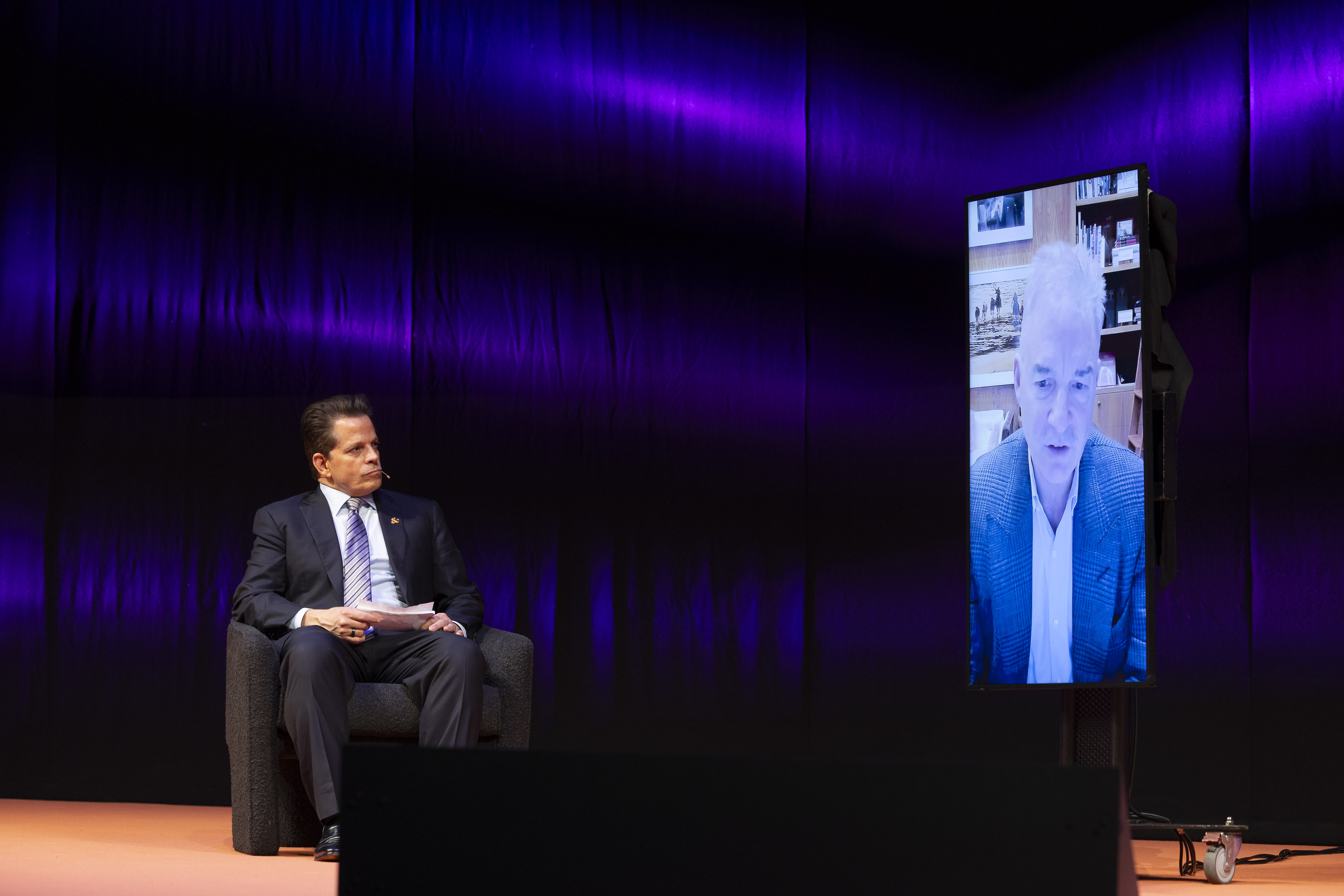
Picture: Katje Ford

Jonathan Shapiro

Third Point’s Loeb leads bullish investors despite stock slump

November 14, 2025
Major investors say the global economy is strong enough to withstand a bubble in artificial intelligence and turmoil in private credit markets despite a sharp fall on Wall Street and the ASX over the past week.
Read Transcript

Major investors say the global economy is strong enough to withstand a bubble in artificial intelligence and turmoil in private credit markets despite a sharp fall on Wall Street and the ASX over the past week.

The local sharemarket tumbled to a four-month low on Friday as investors erased $37 billion in value on concerns that interest rates in the US and Australia were falling any time soon.

Tracking Wall Street’s biggest one-day fall in a month, the S&P/ASX 200 index dropped 1.4 per cent, or 118.9 points, to 8634.5 – a level last seen mid-July. The index has fallen about 1.5 per cent over the past week.

Despite the slump, billionaire American hedge fund manager Dan Loeb said he was “generally optimistic” about the outlook for equities.

“It doesn’t mean that we won’t have some ugly days and weeks along the way. That’s what makes a market, but I’m pretty constructive,” Loeb, who co-founded high-powered New York investment firm Third Point, told fund managers at the Sohn Hearts & Minds conference in Sydney on Friday.

Loeb also said he wasn’t worried about the Federal Reserve’s moves as hopes of a December rate cut faded.

“The Fed has told you that they’re not going to lower rates, which they would do if they saw some signs of weakness. The first half of next year, I expect to be pretty strong,” he said.

A growing number of Federal Reserve officials this week have signalled hesitation about more interest rate cuts. Bond traders have subsequently lowered the odds of a December rate cut to nearly 50 per cent, from 63 per cent a day earlier and 95 per cent a month ago.

“The market was far too optimistic about what the Fed could deliver, which has generated high valuations at a time when tech now has a very symbiotic relationship with surrounding industries,” said Perpetual head of investment strategy Matt Sherwood.

“The upcoming data deluge in the next few weeks could alter ... the justification for extreme valuations.”

Wall Street fell as worries about stretched valuations for AI and other technology stocks have grown, particularly given the US government shutdown has deprived investors of key economic data. That shutdown has ended this week after 43 days, although the economic indicators remain delayed.

Loeb is one major investor who believes there is a bubble in technology stocks, but told the conference it was not “at Microsoft or Amazon”. Instead, he said speculative capital had flown into smaller stocks in the sector.

“We saw inexplicable valuations around companies like [cloud computing infrastructure operator] CoreWeave,” he said. “The more mainstream companies didn’t go up as much, nor do I think they’ll correct as much.”

His comments come amid broader concerns that the Federal Reserve will stop lowering interest rates, forcing investors to reconsider whether risky assets would get a boost from cheaper money.

The S&P500 index slid 1.7 per cent during Thursday’s session while the tech-heavy Nasdaq lost 2.29 per cent after central bank officials cast doubt that policy rates would be lowered when they meet in December. Nvidia, the focus of much of the interest in AI-related stocks, fell more than 4 per cent as the US sell-off dragged Australia’s benchmark share market lower.

Still, doubts about excessive valuations and persistently higher rates have slowed a sharemarket rally that was on track to repeat the near 20 per cent rise last year. Australia’s benchmark index had gained as much as 10 per cent but has given back half of those gains over the past month.

London-based hedge fund manager Michael Hintze, speaking at the conference, said he also believed that the market’s largest stocks were not overvalued based on the earnings growth they were delivering.

“A $US5 trillion ($7.7 trillion) company looking cheap to me. It’s bizarre,” Hintze, who was raised in Australia, said about Nvidia. The company is expected to grow its profits by 35 per cent over the next 12 months.

Beyond the potential for a bubble in AI valuations, investors are worried about problems in fast-growing credit markets. High-yield credit spreads – which measure the compensation investors are prepared to accept – has narrowed to the lowest levels since the global financial crisis.

Meanwhile, failures are ticking up in the private credit markets as high-profile defaults and write-offs have rattled confidence in the $US1.5 trillion market.

Still, Loeb was also upbeat about the growth of private credit, which has concerned regulators around the world, including the Australian Securities and Investments Commission.

“Everybody’s focused on some of these scary headlines about frauds and mis-markings and some of the canaries in the coal mine in the credit market,” Loeb said. “But I don’t think it’s going to be systemic. I’m glad we have another trillion-and-a-half-dollar [funding] market.”

Others are cautious about the outlook for financial markets and excessive technology valuations. New York-based Matthew McLennan, who oversees the $100 billion First Eagle value fund, has piled into gold.

McLennan said the near 50 per cent rise in the gold price was evidence that more investors were worried about the debasement of financial assets as governments accelerate their debt issuance.

“The precious metal markets have sent a warning sign,” he said while also pointing to a rise on bond rates. “The 1970s and early 80s showed that the price of gold can go parabolic relative to the level of debt outstanding.”

This article was originally posted by The Australian Financial Review here.

Licensed by Copyright Agency. You must not copy this work without permission.

Major investors say the global economy is strong enough to withstand a bubble in artificial intelligence and turmoil in private credit markets despite a sharp fall on Wall Street and the ASX over the past week.

The local sharemarket tumbled to a four-month low on Friday as investors erased $37 billion in value on concerns that interest rates in the US and Australia were falling any time soon.

Tracking Wall Street’s biggest one-day fall in a month, the S&P/ASX 200 index dropped 1.4 per cent, or 118.9 points, to 8634.5 – a level last seen mid-July. The index has fallen about 1.5 per cent over the past week.

Despite the slump, billionaire American hedge fund manager Dan Loeb said he was “generally optimistic” about the outlook for equities.

“It doesn’t mean that we won’t have some ugly days and weeks along the way. That’s what makes a market, but I’m pretty constructive,” Loeb, who co-founded high-powered New York investment firm Third Point, told fund managers at the Sohn Hearts & Minds conference in Sydney on Friday.

Loeb also said he wasn’t worried about the Federal Reserve’s moves as hopes of a December rate cut faded.

“The Fed has told you that they’re not going to lower rates, which they would do if they saw some signs of weakness. The first half of next year, I expect to be pretty strong,” he said.

A growing number of Federal Reserve officials this week have signalled hesitation about more interest rate cuts. Bond traders have subsequently lowered the odds of a December rate cut to nearly 50 per cent, from 63 per cent a day earlier and 95 per cent a month ago.

“The market was far too optimistic about what the Fed could deliver, which has generated high valuations at a time when tech now has a very symbiotic relationship with surrounding industries,” said Perpetual head of investment strategy Matt Sherwood.

“The upcoming data deluge in the next few weeks could alter ... the justification for extreme valuations.”

Wall Street fell as worries about stretched valuations for AI and other technology stocks have grown, particularly given the US government shutdown has deprived investors of key economic data. That shutdown has ended this week after 43 days, although the economic indicators remain delayed.

Loeb is one major investor who believes there is a bubble in technology stocks, but told the conference it was not “at Microsoft or Amazon”. Instead, he said speculative capital had flown into smaller stocks in the sector.

“We saw inexplicable valuations around companies like [cloud computing infrastructure operator] CoreWeave,” he said. “The more mainstream companies didn’t go up as much, nor do I think they’ll correct as much.”

His comments come amid broader concerns that the Federal Reserve will stop lowering interest rates, forcing investors to reconsider whether risky assets would get a boost from cheaper money.

The S&P500 index slid 1.7 per cent during Thursday’s session while the tech-heavy Nasdaq lost 2.29 per cent after central bank officials cast doubt that policy rates would be lowered when they meet in December. Nvidia, the focus of much of the interest in AI-related stocks, fell more than 4 per cent as the US sell-off dragged Australia’s benchmark share market lower.

Still, doubts about excessive valuations and persistently higher rates have slowed a sharemarket rally that was on track to repeat the near 20 per cent rise last year. Australia’s benchmark index had gained as much as 10 per cent but has given back half of those gains over the past month.

London-based hedge fund manager Michael Hintze, speaking at the conference, said he also believed that the market’s largest stocks were not overvalued based on the earnings growth they were delivering.

“A $US5 trillion ($7.7 trillion) company looking cheap to me. It’s bizarre,” Hintze, who was raised in Australia, said about Nvidia. The company is expected to grow its profits by 35 per cent over the next 12 months.

Beyond the potential for a bubble in AI valuations, investors are worried about problems in fast-growing credit markets. High-yield credit spreads – which measure the compensation investors are prepared to accept – has narrowed to the lowest levels since the global financial crisis.

Meanwhile, failures are ticking up in the private credit markets as high-profile defaults and write-offs have rattled confidence in the $US1.5 trillion market.

Still, Loeb was also upbeat about the growth of private credit, which has concerned regulators around the world, including the Australian Securities and Investments Commission.

“Everybody’s focused on some of these scary headlines about frauds and mis-markings and some of the canaries in the coal mine in the credit market,” Loeb said. “But I don’t think it’s going to be systemic. I’m glad we have another trillion-and-a-half-dollar [funding] market.”

Others are cautious about the outlook for financial markets and excessive technology valuations. New York-based Matthew McLennan, who oversees the $100 billion First Eagle value fund, has piled into gold.

McLennan said the near 50 per cent rise in the gold price was evidence that more investors were worried about the debasement of financial assets as governments accelerate their debt issuance.

“The precious metal markets have sent a warning sign,” he said while also pointing to a rise on bond rates. “The 1970s and early 80s showed that the price of gold can go parabolic relative to the level of debt outstanding.”

This article was originally posted by The Australian Financial Review here.

Licensed by Copyright Agency. You must not copy this work without permission.

Disclaimer: This material has been prepared by Australian Financial Review, published on Nov 14, 2025. HM1 is not responsible for the content of linked websites or content prepared by third party. The inclusion of these links and third-party content does not in any way imply any form of endorsement by HM1 of the products or services provided by persons or organisations who are responsible for the linked websites and third-party content. This information is for general information only and does not consider the objectives, financial situation or needs of any person. Before making an investment decision, you should read the relevant disclosure document (if appropriate) and seek professional advice to determine whether the investment and information is suitable for you.

facebook
linkedin
All
Thank you! Your submission has been received!
Oops! Something went wrong while submitting the form.
November 14, 2022

Think outside the box for green investment opportunities

James Miller, Portfolio Manager at Firetrail Investments, believes investors need to stop seeing the global decarbonisation push as a risk – and start seeing it as an opportunity.

Read More
October 30, 2022

Why this fundie is betting big on two losing companies

Speaking to the AFR before the SH&M conference, Sandler named global on-demand ride-sharing and food delivery service Uber Technologies among his top picks, alongside real estate marketplace Zillow.

Read More
October 13, 2022

It’s Trump I fear, says Putin’s nemesis

Bill Browder, once the largest foreign investor in Russia and the man behind the global Magnitsky justice campaign, says the US is the weakest link in the war in Ukraine.

Read More
October 13, 2022

This fundie fought Vladimir Putin. He says there can be no peace deal

Bill Browder, the fund manager who has become one of Vladimir Putin’s fiercest critics, says the Russian leader is increasingly desperate, but no less dangerous.

Read More
August 31, 2022

‘Putin’s number one foreign enemy’ to address Aussie finance event

Bill Browder, who is viewed as a key enemy of Russia’s government will address Australian investors on the war in Ukraine at this year’s Sohn Hearts & Minds conference.

Read More
August 31, 2022

Putin critic and author Bill Browder to headline Sohn investor conference

Bill Browder, one of Putin's fiercest critics, the founder of Hermitage Capital and the man behind the Magnitsky Law, will headline this year's Sohn Hearts & Minds investor conference.

Read More
August 31, 2022

Sohn Hearts & Minds looks beyond tech ahead of Hobart event

Keynote speaker Bill Browder is the former Hermitage Capital hedge fund manager who has lobbied governments to black-list senior Russian officials attempting to shift their assets offshore.

Read More
December 3, 2021

Hamish Corlett picks Spotify as his top stock again at Sohn Hearts & Minds Conference

Hamish Corlett is the only stock picker in the history of the Sohn Hearts & Minds Investment Conference to pitch exactly the same company twice.

Read More
December 3, 2021

Sohn Hearts and Minds: The Australian Fund Manager Coverage

Leading fund managers reveal their top stock picks for the year ahead at the Sohn Hearts & Minds Conference. Read The Australian live coverage.

Read More
December 2, 2021

Here comes the Sohn: big names battle over conference music

For all that heavyweight finance names Michael Walsh, David ­Paradice, Matthew Grounds and Gary Weiss have in common professionally, one thing they can’t seem to find consensus on is music.

Read More