This Silicon Valley VC giant has a warning for software stocks

One of the world’s largest venture capital firms says investors are underestimating the carnage artificial intelligence will create for software companies, warning their pivots towards AI are likely just marketing.
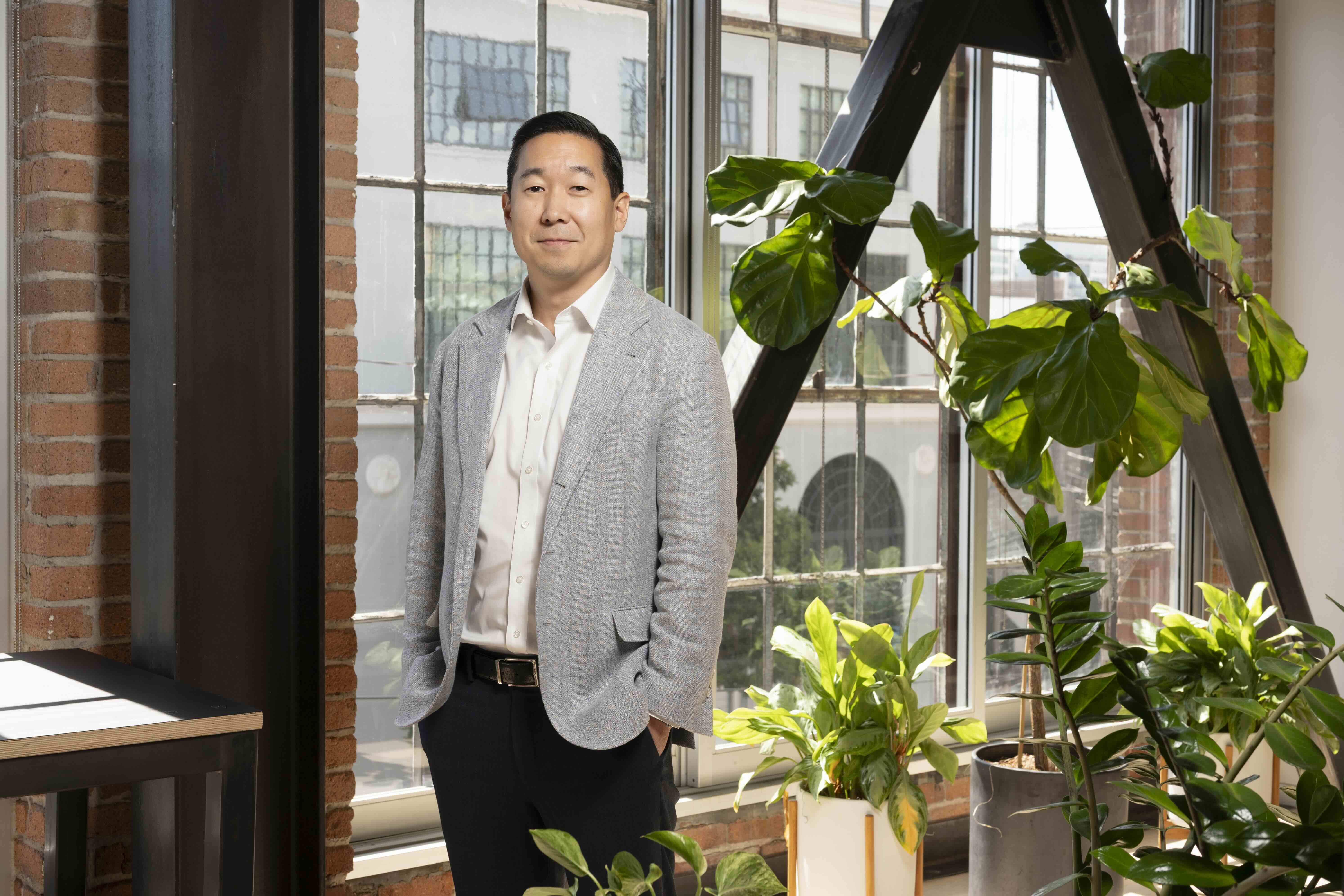
Photo: Isaac Kim (Laure Andrillon)

Emma Rapaport

This Silicon Valley VC giant has a warning for software stocks

September 11, 2026
One of the world’s largest venture capital firms says investors are underestimating the carnage artificial intelligence will create for software companies, warning their pivots towards AI are likely just marketing.
Read Transcript

One of the world’s largest venture capital firms says investors are underestimating the carnage artificial intelligence will create for software companies, warning their pivots towards AI are likely just marketing.

Lightspeed Venture Partners partner Isaac Kim said software investors were changing their narratives to justify support for companies clearly being disrupted by sophisticated AI tools. He said his firm, which oversees a portfolio worth about $70 billion, was now shunning traditional software businesses in funding rounds.

Isaac Kim, partner of Lightspeed Venture Partners, says investors are underestimating product disruption, as the $70b fund pivots capital away from legacy tech. 

“When AI [first] came out, a lot of software investors were like, ‘Don’t look over there, don’t worry about it,’” said Kim, who will be a headline speaker at the Sohn Hearts & Minds investor conference in Queenstown this year.

“Then the SaaSpocalypse hit, and people were on their heels and had to say, don’t worry about it; we’re going to take care of this; it’s fine; nothing is happening in our portfolio; we’re not seeing any revenue degradation or retention degradation. Now you see some good prints in the public market for software, and people are like, AI is the accelerator for software.

“Disruption takes time. If you have an entrenched customer base, they’re not necessarily going anywhere in a year or two years, but I guarantee you they’re planning to for two to three years down the line as it relates to AI.”

Over a period now known as the SaaSpocalypse, software stocks on Wall Street and the ASX were rapidly sold off earlier this year amid concerns that AI tools would reduce their growth and even replace their products. The sharp drop in valuations was widespread, pushing down the market capitalisations of companies as varied as Xero and REA Group. It also hurt the valuations of unlisted companies such as design software giant Canva.

Kim spent his formative years in private equity at Elliott Investment Management and Golden Gate Capital before joining Lightspeed in 2024. The firm is best known for its support of Anthropic, the developer behind Claude, one of the world’s most advanced AI platforms, along with start-ups such as Harvey, a legal platform, and Wiz, a cloud computing cybersecurity business that was acquired by Google this year for $US32 billion.

Lightspeed is among a growing list of venture capital firms that are no longer interested in investing in software businesses. Kim said another American private equity giant – Clayton, Dubilier & Rice – “doesn’t have a software team any more” while KKR is also reworking its team.

Last month, The Australian Financial Review reported that Airtree had told investors that it “would be remiss to pretend” AI was not hurting older start-ups, and said it was “pressure-testing whether our portfolio companies have a credible AI story, not as marketing, but as a genuine product”.

“If the answer is no, that’s a strategic gap that needs to be addressed quickly,” the Australian venture capital giant wrote to investors in May.

Asked how Lightspeed would approach older software businesses in its portfolio, Kim said it was “really hard”, and often a scramble for engineering talent that would be able to transform the company quickly.

“The talent game is really tough out there, and a lot of that talent doesn’t want to go into legacy businesses,” he said. “It’s a very tough thing to do, but you have to try to pivot, innovate, upgrade your team, get your team working on AI tooling, and you have to bring your customer base along.”

But Kim said venture capital firms were in a better position to deal with the disruption brought on by AI than other private equity firms, even as the sector faced pressure from investors to exit long-held assets.

“There are some massive private equity maturity walls coming up in the next three years,” he said. “When you have that looming, you have to either do unnatural things or get out and sell sooner. The good thing about VC is that often VC can be more patient, as long as you have the correct cash runway, and you can play for the option of being able to make that pivot.”

Kim said investors should scrutinise listed software stocks for claims they were pivoting to AI, adding that they could “obfuscate things pretty easily”.

“[Companies could] say, ‘we need to renew you’ ... you’re not going to get off in the short term of the software you bought before, but on the renewal, [they] want you to split that renewal up such that 20 per cent of it goes to a new AI product, and 80 per cent to the old product,” he said.

“All of a sudden, you split where the money’s coming from and going, and you can bolster your AI revenue. It doesn’t mean that it’s in production and being used.”

This article was originally posted by The Australian Financial Review here.

Licensed by Copyright Agency. You must not copy this work without permission.

One of the world’s largest venture capital firms says investors are underestimating the carnage artificial intelligence will create for software companies, warning their pivots towards AI are likely just marketing.

Lightspeed Venture Partners partner Isaac Kim said software investors were changing their narratives to justify support for companies clearly being disrupted by sophisticated AI tools. He said his firm, which oversees a portfolio worth about $70 billion, was now shunning traditional software businesses in funding rounds.

Isaac Kim, partner of Lightspeed Venture Partners, says investors are underestimating product disruption, as the $70b fund pivots capital away from legacy tech. 

“When AI [first] came out, a lot of software investors were like, ‘Don’t look over there, don’t worry about it,’” said Kim, who will be a headline speaker at the Sohn Hearts & Minds investor conference in Queenstown this year.

“Then the SaaSpocalypse hit, and people were on their heels and had to say, don’t worry about it; we’re going to take care of this; it’s fine; nothing is happening in our portfolio; we’re not seeing any revenue degradation or retention degradation. Now you see some good prints in the public market for software, and people are like, AI is the accelerator for software.

“Disruption takes time. If you have an entrenched customer base, they’re not necessarily going anywhere in a year or two years, but I guarantee you they’re planning to for two to three years down the line as it relates to AI.”

Over a period now known as the SaaSpocalypse, software stocks on Wall Street and the ASX were rapidly sold off earlier this year amid concerns that AI tools would reduce their growth and even replace their products. The sharp drop in valuations was widespread, pushing down the market capitalisations of companies as varied as Xero and REA Group. It also hurt the valuations of unlisted companies such as design software giant Canva.

Kim spent his formative years in private equity at Elliott Investment Management and Golden Gate Capital before joining Lightspeed in 2024. The firm is best known for its support of Anthropic, the developer behind Claude, one of the world’s most advanced AI platforms, along with start-ups such as Harvey, a legal platform, and Wiz, a cloud computing cybersecurity business that was acquired by Google this year for $US32 billion.

Lightspeed is among a growing list of venture capital firms that are no longer interested in investing in software businesses. Kim said another American private equity giant – Clayton, Dubilier & Rice – “doesn’t have a software team any more” while KKR is also reworking its team.

Last month, The Australian Financial Review reported that Airtree had told investors that it “would be remiss to pretend” AI was not hurting older start-ups, and said it was “pressure-testing whether our portfolio companies have a credible AI story, not as marketing, but as a genuine product”.

“If the answer is no, that’s a strategic gap that needs to be addressed quickly,” the Australian venture capital giant wrote to investors in May.

Asked how Lightspeed would approach older software businesses in its portfolio, Kim said it was “really hard”, and often a scramble for engineering talent that would be able to transform the company quickly.

“The talent game is really tough out there, and a lot of that talent doesn’t want to go into legacy businesses,” he said. “It’s a very tough thing to do, but you have to try to pivot, innovate, upgrade your team, get your team working on AI tooling, and you have to bring your customer base along.”

But Kim said venture capital firms were in a better position to deal with the disruption brought on by AI than other private equity firms, even as the sector faced pressure from investors to exit long-held assets.

“There are some massive private equity maturity walls coming up in the next three years,” he said. “When you have that looming, you have to either do unnatural things or get out and sell sooner. The good thing about VC is that often VC can be more patient, as long as you have the correct cash runway, and you can play for the option of being able to make that pivot.”

Kim said investors should scrutinise listed software stocks for claims they were pivoting to AI, adding that they could “obfuscate things pretty easily”.

“[Companies could] say, ‘we need to renew you’ ... you’re not going to get off in the short term of the software you bought before, but on the renewal, [they] want you to split that renewal up such that 20 per cent of it goes to a new AI product, and 80 per cent to the old product,” he said.

“All of a sudden, you split where the money’s coming from and going, and you can bolster your AI revenue. It doesn’t mean that it’s in production and being used.”

This article was originally posted by The Australian Financial Review here.

Licensed by Copyright Agency. You must not copy this work without permission.

Disclaimer: This material has been prepared by Australian Financial Review, published on September 11, 2026. HM1 is not responsible for the content of linked websites or content prepared by third party. The inclusion of these links and third-party content does not in any way imply any form of endorsement by HM1 of the products or services provided by persons or organisations who are responsible for the linked websites and third-party content. This information is for general information only and does not consider the objectives, financial situation or needs of any person. Before making an investment decision, you should read the relevant disclosure document (if appropriate) and seek professional advice to determine whether the investment and information is suitable for you.

facebook
linkedin
All
Thank you! Your submission has been received!
Oops! Something went wrong while submitting the form.
November 18, 2022

Hearts racing: Rich listers rendezvous for speed-dating style stock picking

A room filled with 700 of the country’s financial luminaries and billionaires is a difficult place to pitch an investment idea but it’s a great place to raise money for charity.

Read More
November 18, 2022

How MONA’s David Walsh shocked our top stock pickers

Professional gambler and arts impresario David Walsh had a brutal message for successful top money managers – you may just be lucky.

Read More
November 18, 2022

Why Sohn’s top stock pickers want investors to play it safe

Top global money managers are telling investors to steer clear of companies that don’t make money and invest instead in unloved but profitable businesses.

Read More
November 17, 2022

Low debt counts for everything, says Perpetual’s Aboud

Perpetual’s top stock picker Anthony Aboud makes his money running against the crowd and this is why property trusts like Charter Hall are sitting right the top his list right now.

Read More
November 17, 2022

Perpetual’s Aboud says bet on balance sheets in turbulent markets

Perpetual’s Anthony Aboud says companies with strong balance sheets will finally be rewarded for their discipline in a time of global market upheaval.

Read More
November 16, 2022

How Gerry Cardinale of RedBird Capital tries to double his money investing in sport

The owner of AC Milan and a host of other soccer, cricket, baseball and ice hockey assets is trying to double his money in the ‘resilient’ asset class.

Read More
November 14, 2022

Think outside the box for green investment opportunities

James Miller, Portfolio Manager at Firetrail Investments, believes investors need to stop seeing the global decarbonisation push as a risk – and start seeing it as an opportunity.

Read More
October 30, 2022

Why this fundie is betting big on two losing companies

Speaking to the AFR before the SH&M conference, Sandler named global on-demand ride-sharing and food delivery service Uber Technologies among his top picks, alongside real estate marketplace Zillow.

Read More
October 13, 2022

It’s Trump I fear, says Putin’s nemesis

Bill Browder, once the largest foreign investor in Russia and the man behind the global Magnitsky justice campaign, says the US is the weakest link in the war in Ukraine.

Read More
October 13, 2022

This fundie fought Vladimir Putin. He says there can be no peace deal

Bill Browder, the fund manager who has become one of Vladimir Putin’s fiercest critics, says the Russian leader is increasingly desperate, but no less dangerous.

Read More
December 10, 2024

Professor Jane Butler: Sparking Hope for Spinal Cord Injuries

In this episode of the Hearts & Minds Podcast, we sit down with Professor Jane Butler to discuss her groundbreaking research into spinal cord injuries.

Read More
impact-podcasts
September 24, 2024

Asian Market Potential with Tom Naughton of Prusik

CIO Charlie Lanchester sits down with Tom Naughton, CIO of Prusik Investment Mgmt. Tom shares his investment philosophy, the opportunities and challenges in Asian markets, and how his 2023 conference stock pick, Swire Pacific (0019.HK), delivered an impressive 30% return.

Read More
investing
September 4, 2024

Building Hearts and Minds with Co-Founders Matthew Grounds and Guy Fowler

In this episode, co-founders Matthew Grounds AM and Guy Fowler OAM discuss their journey in building Hearts & Minds and its philanthropic model that has donated over $70 million to medical research.

Read More
investing
June 25, 2024

Navigating the Resource Sector with Jeremy Bond of Terra Capital

In this episode, we chat with Jeremy Bond, Founder of Terra Capital and HM1 Conference Fund Manager. Tune in for insights into the world of resource investments and the exciting opportunities that lie ahead.

Read More
investing
June 11, 2024

Prof. Nadia Badawi on Cerebral Palsy Breakthroughs and Neonatal Care

Dive deep into the groundbreaking work of Professor Nadia Badawi, an internationally recognised neonatologist and expert in Cerebral Palsy.

Read More
impact-podcasts
May 28, 2024

Investment Insights: Rikki Bannan on Top Picks and Trends

Join us for an engaging episode featuring Rikki Bannan, Portfolio Manager of IFM Investors and HM1 Conference Fund Manager. This episode explores Rikki's career journey, investment strategies, and her 2023 conference stock pick, Telix Pharmaceuticals (ASX.TLX).

Read More
investing
December 6, 2023

Peter Cooper talks building and instilling a culture of humility and excellence

In this episode, our guest is the renowned investor, Peter Cooper, founder and Chief Investment Officer of Cooper Investors (Core Fund Manager). A founding supporter of Hearts and Minds, Peter is a staunch advocate of our model and its philanthropic purpose, actively engaging in every facet of Hearts and Minds.

Read More
investing
November 28, 2023

Jun Bei Liu on her high conviction investment strategy

In this episode, HM1 Chief Investment Officer Charlie Lanchester is joined by Jun Bei Liu. Jun Bei is the Portfolio Manager of Tribeca’s Alpha Plus Fund and since taking over managing the Fund, she has quadrupled AUM.

Read More
investing
November 21, 2023

The world of rare genetic disease research

In this episode, we speak to Associate Professor Gina Ravenscroft. Gina is an Associate Professor in Neurogenetics at the Harry Perkins Institute of Medical Research in Perth. Her research interests are in rare genetic diseases, with a particular focus on neurogenetic diseases in babies and children.

Read More
impact-podcasts
November 14, 2023

Learn what makes a high conviction investment and how to avoid short-term noise

In this episode, our Core Fund Manager Magellan shares how they select top stocks for the HM1 portfolio.

Read More
investing
November 7, 2023

Delve into the world of kids critical care and trauma research

In thie episode, we are joined by Dr. Marino Festa, or Rino for short. He is the Medical Director of NSW Kids ECMO Referral Service and a senior specialist in Paediatric Intensive Care at Children’s Hospital at Westmead.

Read More
impact-podcasts
October 31, 2023

Where Regal's Phil King is searching for opportunities

HM1's CIO, Charlie Lanchester, talks to Phil King of Regal Funds about his passion for stocks, his ongoing search for opportunities, and some of the sectors he’s excited by right now. Phil King of Regal Funds, has been a tremendous supporter of Hearts & Minds since the beginning.

Read More
investing
October 24, 2023

Preventing recurrent miscarriages and birth defects

In this episode, CEO Paul Rayson is joined by renowned biomedical researcher Professor Sally Dunwoodie. Prof. Dunwoodie's groundbreaking work has revolutionised clinical practices and enabled genetic diagnostic tests worldwide. In 2017, her team achieved a double breakthrough with the potential to prevent recurrent miscarriages and various birth defects.

Read More
impact-podcasts
October 17, 2023

Nick Griffin on how he finds global winners

In this episode, CIO Charlie Lanchester chats with Nick Griffin, the founding partner and CIO of Munro Partners, one of HM1's Core Fund Managers. They go over his career to date, reflect on the lessons he’s learned, and trace the decisions that led to him starting Munro.

Read More
investing
October 10, 2023

How A/Prof Matt Call is teaching our body to kill cancer

In this episode, CEO Paul Rayson is joined by WEHI’s Associate Professor Matt Call to talk about his incredible research. Matt’s team teaches and trains the body's own immune cells to target and kill cancer cells.

Read More
impact-podcasts

No results found.

Please try a different search keyword or filter.