Accelerating CAR-T cell therapies for patients in need 

Bringing innovative cancer therapies closer to patients.

Accelerating CAR-T cell therapies for patients in need 

July 1, 2026
Bringing innovative cancer therapies closer to patients.
Read Transcript

The challenge

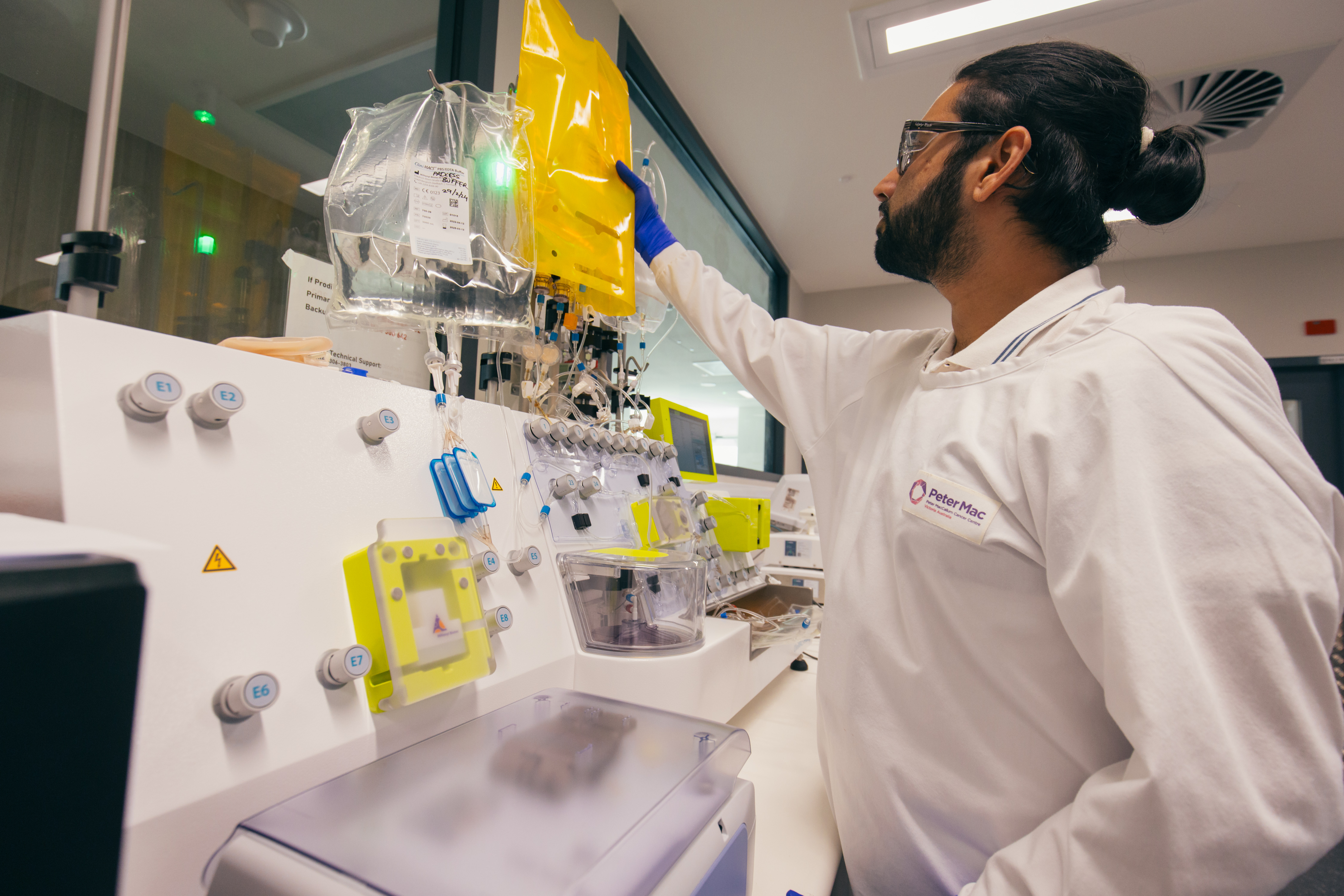
The Centre of Excellence in Cellular Immunotherapy (CoE CIT) at Peter MacCallum Cancer Centre is accelerating the development of CAR-T therapies and other cell-based immunotherapies for people with cancer who urgently need new treatment options, bridging the critical gap between laboratory discovery and patient care. 

CAR-T cell therapy (CAR-T) has already shown strong results in certain blood cancers, particularly for patients whose disease has not responded to, or has returned after conventional treatments, such as chemotherapy or radiation.  While the clinical use of CAR-T cell therapy is currently limited to the treatment of certain blood cancers in standard practice, its potential extends far beyond these indications. These expanding applications highlight the versatility of the platform and its significant potential to transform the treatment of diseases that currently have limited therapeutic options. T cells act as the body’s security guards, constantly patrolling for threats. CAR-T builds on this natural function by reprogramming a patient’s T cells to recognise and destroy cancer cells more effectively.

The CoE CIT is working to overcome key challenges in cellular immunotherapy, including improving how immune cells recognise cancer, developing new options for treatment-resistant disease, and creating more powerful targeted therapies that can overcome the cancers cells ability to shut down immunotherapies.

Who could benefit?

The Centre's work is focused on people whose cancer has returned after treatment or has never responded in the first place. For these patients, treatment options are often limited, and CAR-T offers a potential path forward when few alternatives remain.

The most immediate impact is seen in people with certain blood cancers, where cellular immunotherapy has already improved outcomes for some patients with lymphoma and multiple myeloma, as well as children and adults with leukaemia,. Researchers are working to extend these therapies to more cancers, including solid tumours, and explore their potential in autoimmune diseases through clinical trials.

“CAR-T therapies have life changing efficacy in blood cancers like leukaemia, lymphoma and myeloma. Our next big challenge is to boost this technology for patients with solid cancers that can evade immune attack.”

Professor Simon Harrison, Director, Centre of Excellence for Cellular Immunotherapy and Haematologist

The role of philanthropy 

Funding from Hearts & Minds, as nominated by Munro Partners, has helped advance important work at the Centre by supporting the specialised laboratory teams conducting rigorous safety and efficacy testing of new therapies, as well as the expert staff delivering complex early-phase clinical trials.

This support has enabled a major milestone, with the first two patients now treated in a first-in-human clinical trial of a CAR-T therapy fully developed at Peter MacCallum Cancer Centre and manufactured on site in partnership with Cell Therapies Pty Ltd. The trial is evaluating a novel CAR-T therapy for people with CD19-positive blood cancers whose disease has stopped responding to standard treatments.

What this could unlock 

This work has the potential to transform cellular immunotherapy from a highly specialised treatment into one that could benefit patients worldwide. 

Over time, it could help to:

  • Extend these therapies to more cancers, including solid tumours
  • Improve treatments to make them safer and more effective 
  • Increase access so more patients can receive these therapies closer to home
  • Reduce the cost and complexity of manufacturing, making cellular immunotherapy more scalable and sustainable.

This project is supported by Hearts and Minds Investments, as nominated by Core Fund Manager, Munro Partners. For further information and updates, visit Peter MacCallum Cancer Centre.
The challenge

The Centre of Excellence in Cellular Immunotherapy (CoE CIT) at Peter MacCallum Cancer Centre is accelerating the development of CAR-T therapies and other cell-based immunotherapies for people with cancer who urgently need new treatment options, bridging the critical gap between laboratory discovery and patient care. 

CAR-T cell therapy (CAR-T) has already shown strong results in certain blood cancers, particularly for patients whose disease has not responded to, or has returned after conventional treatments, such as chemotherapy or radiation.  While the clinical use of CAR-T cell therapy is currently limited to the treatment of certain blood cancers in standard practice, its potential extends far beyond these indications. These expanding applications highlight the versatility of the platform and its significant potential to transform the treatment of diseases that currently have limited therapeutic options. T cells act as the body’s security guards, constantly patrolling for threats. CAR-T builds on this natural function by reprogramming a patient’s T cells to recognise and destroy cancer cells more effectively.

The CoE CIT is working to overcome key challenges in cellular immunotherapy, including improving how immune cells recognise cancer, developing new options for treatment-resistant disease, and creating more powerful targeted therapies that can overcome the cancers cells ability to shut down immunotherapies.

Who could benefit?

The Centre's work is focused on people whose cancer has returned after treatment or has never responded in the first place. For these patients, treatment options are often limited, and CAR-T offers a potential path forward when few alternatives remain.

The most immediate impact is seen in people with certain blood cancers, where cellular immunotherapy has already improved outcomes for some patients with lymphoma and multiple myeloma, as well as children and adults with leukaemia,. Researchers are working to extend these therapies to more cancers, including solid tumours, and explore their potential in autoimmune diseases through clinical trials.

“CAR-T therapies have life changing efficacy in blood cancers like leukaemia, lymphoma and myeloma. Our next big challenge is to boost this technology for patients with solid cancers that can evade immune attack.”

Professor Simon Harrison, Director, Centre of Excellence for Cellular Immunotherapy and Haematologist

The role of philanthropy 

Funding from Hearts & Minds, as nominated by Munro Partners, has helped advance important work at the Centre by supporting the specialised laboratory teams conducting rigorous safety and efficacy testing of new therapies, as well as the expert staff delivering complex early-phase clinical trials.

This support has enabled a major milestone, with the first two patients now treated in a first-in-human clinical trial of a CAR-T therapy fully developed at Peter MacCallum Cancer Centre and manufactured on site in partnership with Cell Therapies Pty Ltd. The trial is evaluating a novel CAR-T therapy for people with CD19-positive blood cancers whose disease has stopped responding to standard treatments.

What this could unlock 

This work has the potential to transform cellular immunotherapy from a highly specialised treatment into one that could benefit patients worldwide. 

Over time, it could help to:

  • Extend these therapies to more cancers, including solid tumours
  • Improve treatments to make them safer and more effective 
  • Increase access so more patients can receive these therapies closer to home
  • Reduce the cost and complexity of manufacturing, making cellular immunotherapy more scalable and sustainable.

This project is supported by Hearts and Minds Investments, as nominated by Core Fund Manager, Munro Partners. For further information and updates, visit Peter MacCallum Cancer Centre.
Disclaimer: This material has been prepared by Hearts & Minds, published on July 1, 2026. HM1 is not responsible for the content of linked websites or content prepared by third party. The inclusion of these links and third-party content does not in any way imply any form of endorsement by HM1 of the products or services provided by persons or organisations who are responsible for the linked websites and third-party content. This information is for general information only and does not consider the objectives, financial situation or needs of any person. Before making an investment decision, you should read the relevant disclosure document (if appropriate) and seek professional advice to determine whether the investment and information is suitable for you.

facebook
linkedin
All
Thank you! Your submission has been received!
Oops! Something went wrong while submitting the form.
Picture: A/Prof Melissa Call & Prof Matt CallPicture: A/Prof Melissa Call & Prof Matt CallPicture: A/Prof Melissa Call & Prof Matt CallPicture: A/Prof Melissa Call & Prof Matt Call
July 1, 2026

Next generation CAR T-cell therapy for cancer

The Call Lab at WEHI is pioneering innovative approaches to find this ‘goldilocks zone’, making CAR T-cell therapy safer and more effective.

Read More
Picture: Associate Professor Neale CohenPicture: Associate Professor Neale CohenPicture: Associate Professor Neale CohenPicture: Associate Professor Neale Cohen
July 1, 2026

Revolutionising Diabetes Care

Improving diabetes care has the potential to transform individual health outcomes while strengthening the wellbeing of entire communities.

Read More
HM1 Chief Operating Officer Maggie O’Neill with A/Prof Elizabeth Ng at the Murdoch Children's Research Institute in Melbourne (March 2026).HM1 Chief Operating Officer Maggie O’Neill with A/Prof Elizabeth Ng at the Murdoch Children's Research Institute in Melbourne (March 2026).HM1 Chief Operating Officer Maggie O’Neill with A/Prof Elizabeth Ng at the Murdoch Children's Research Institute in Melbourne (March 2026).HM1 Chief Operating Officer Maggie O’Neill with A/Prof Elizabeth Ng at the Murdoch Children's Research Institute in Melbourne (March 2026).
May 4, 2026

How science turned back the clock of human development to create a miracle blood stem cell

Many thought it could never be done. But three Murdoch Children’s Research Institute scientists recreated embryonic development to crack the blood stem cell code.

Read More
November 15, 2024

Professor Alex Brown in conversation with Professor Jason Kovacic

At the 2024 Sohn Hearts & Minds Conference, we heard from Professor Alex Brown in conversation with Professor Jason Kovacic about Indigenous heart health and genomics.

Read More

A/Professor Tim Sargeant | 2024 Sohn Hearts & Minds Conference

Associate Professor Tim Sargeant has been at SAHMRI (South Australian Health and Medical Research Institute) in Adelaide where he studies the role of lysosomes in Alzheimer’s disease.

Read More
July 1, 2026

Unlocking the mysteries of the human brain

The Sydney Brain Bank is helping researchers uncover the causes of neurodegenerative disease and build a future with better diagnosis, treatment and prevention.

Read More
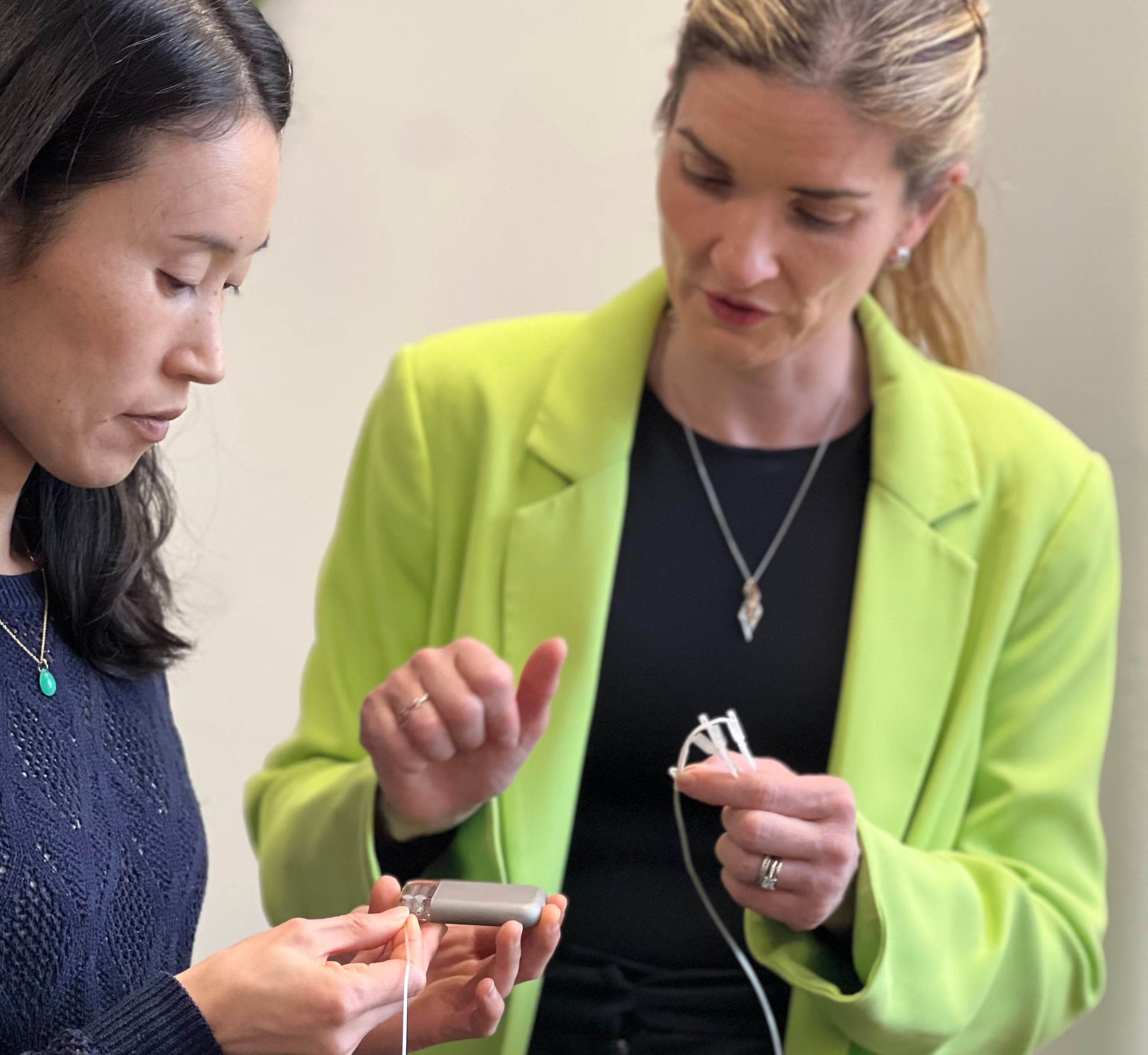
Bionics Institute researchers A/Prof Sophie Payne and Dr Tomoko Hyakumura.Bionics Institute researchers A/Prof Sophie Payne and Dr Tomoko Hyakumura.Bionics Institute researchers A/Prof Sophie Payne and Dr Tomoko Hyakumura.Bionics Institute researchers A/Prof Sophie Payne and Dr Tomoko Hyakumura.
July 1, 2026

A new approach to Parkinson’s Disease

Exploring nerve stimulation as a potential treatment.

Read More
Dr Eleanor Drummond presenting at the 2025 Sohn Hearts & Minds ConferenceDr Eleanor Drummond presenting at the 2025 Sohn Hearts & Minds ConferenceDr Eleanor Drummond presenting at the 2025 Sohn Hearts & Minds ConferenceDr Eleanor Drummond presenting at the 2025 Sohn Hearts & Minds Conference
July 1, 2026

Revealing what drives PSP

Mapping the biological changes behind progressive supranuclear palsy in the brain.

Read More
Picture: Dr Jennifer SnaithPicture: Dr Jennifer SnaithPicture: Dr Jennifer SnaithPicture: Dr Jennifer Snaith
July 1, 2026

Advancing treatment options for type 1 diabetes

Improving blood glucose and reducing insulin needs.

Read More
Picture: Dr Hamish KingPicture: Dr Hamish KingPicture: Dr Hamish KingPicture: Dr Hamish King
July 1, 2026

Solving the genetic causes of autoimmune diseases

Mapping hundreds of risk markers to better understand how these diseases develop and progress

Read More
July 1, 2026

The Future of Pain Management

Enhancing healthcare professionals' ability to deliver better pain management, now and into the future.

Read More
July 1, 2026

Harnessing the power of stem cell technology

Developing cell therapies for patients with blood diseases

Read More
Picture: Professor Kazuaki NegishiPicture: Professor Kazuaki NegishiPicture: Professor Kazuaki NegishiPicture: Professor Kazuaki Negishi
July 1, 2026

Protecting the heart when every minute matters

Investigating a new treatment to reduce heart damage after heart attacks

Read More
Picture: Associate Professor Orazio VittorioPicture: Associate Professor Orazio VittorioPicture: Associate Professor Orazio VittorioPicture: Associate Professor Orazio Vittorio
July 1, 2026

Targeting the drivers of cancer growth

Exploring how extrachromosomal DNA (ecDNA) drives cancer growth, spread and treatment resistance.

Read More
July 1, 2026

Improving the diagnosis of muscle disorders using advanced genetic testing

Focused on improving the efficiency and accuracy of diagnosing muscle disorders.

Read More