Building the foundations for faster progress against brain cancer

Uniting researchers, clinicians and patients to accelerate research and improve patient care.
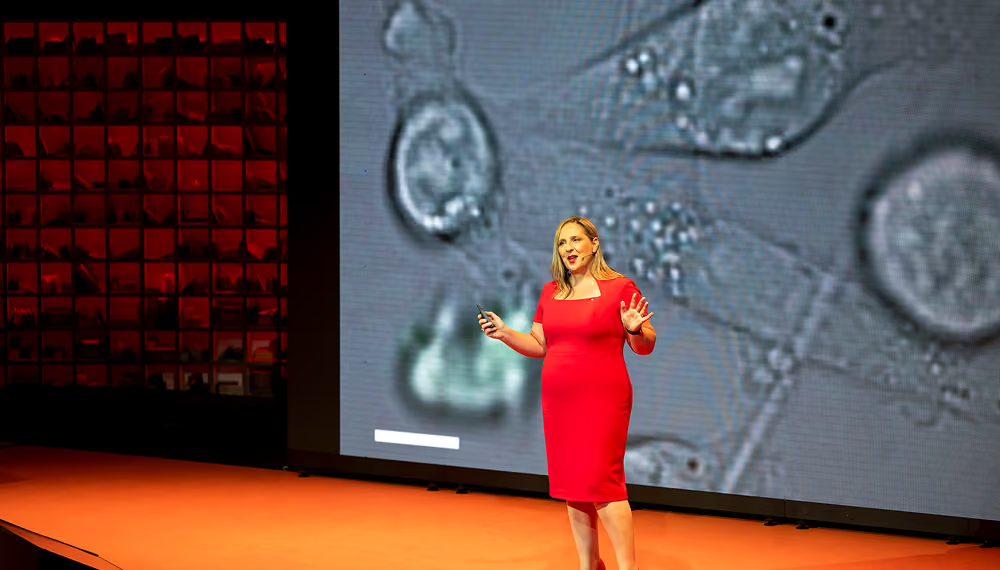
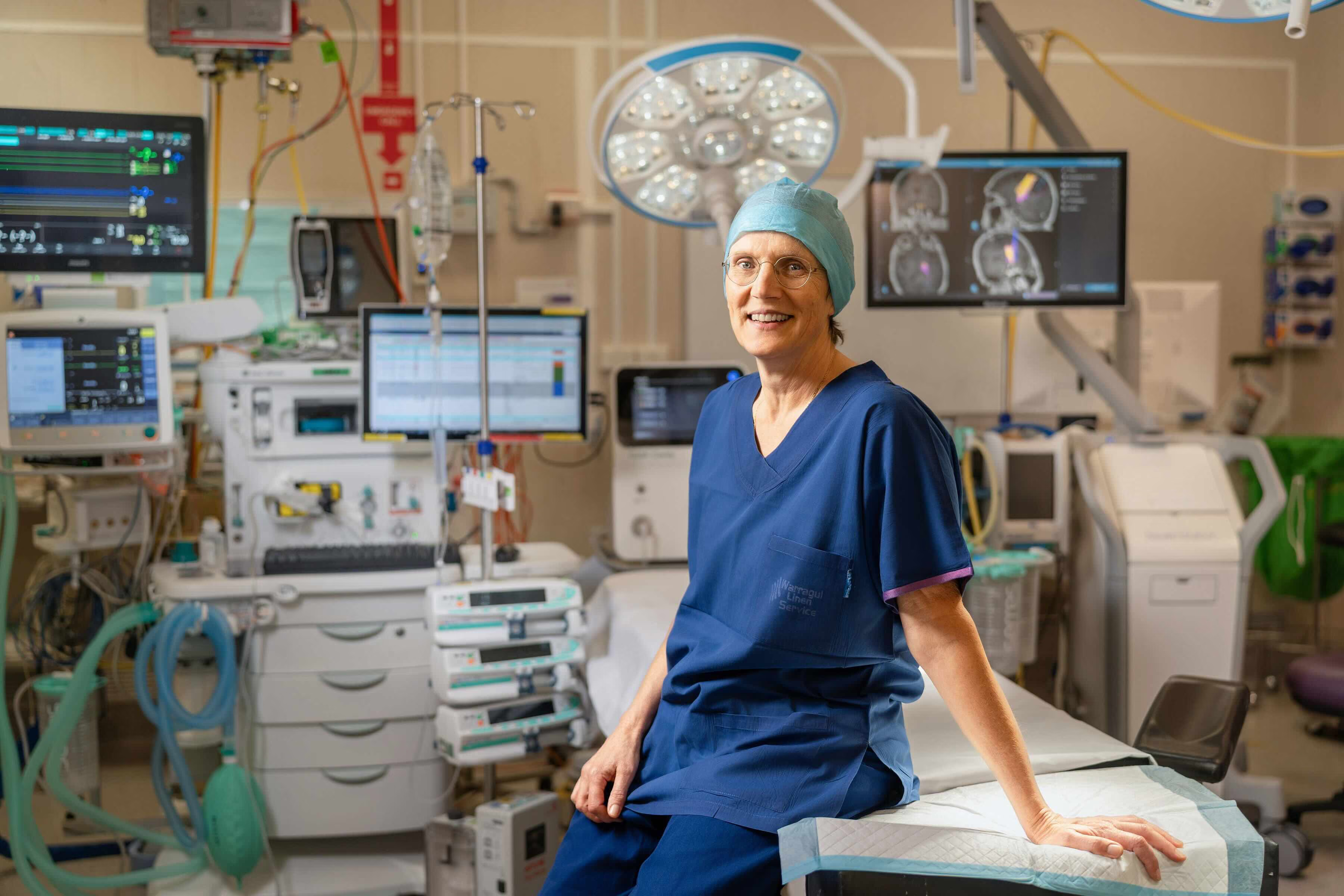
Picture: Professor Lindy Jeffree, Neurosurgeon and Chair, Brain Cancer Australia National Consortium

Building the foundations for faster progress against brain cancer

July 1, 2026
Uniting researchers, clinicians and patients to accelerate research and improve patient care.
Read Transcript

The challenge

Brain cancer remains the leading cause of cancer death in children and adults under 40, yet survival outcomes have changed little in the past four decades. Progress has been slowed by fragmented data, limited access to biospecimens and tumour models, costly clinical trials, challenges recruiting patients into research, and variation in care across Australia.


To address these barriers, Brain Cancer Australia is developing three nationally coordinated research infrastructure platforms designed to give everyone who can help defeat brain cancer what they need to do it.

"This is not about a single research project; this is about enabling the whole system to work better, improving consistency of care, accelerating research, and lifting survival rates."

Professor Lindy Jeffree, Neurosurgeon and Chair, Brain Cancer Australia National Consortium

The role of philanthropy

The three platforms include the Australian Brain Cancer Registry (ABCR), the Opt Me In Platform, and the Biobanking and Organoid Platform. Together, they will provide the national infrastructure that all clinicians and researchers need to tackle the challenges of brain cancer collaboratively and effectively.

This collaboration brings together 47 leading brain cancer clinicians and researchers from 33 institutions, alongside 12 partner organisations, creating the largest collaborative brain cancer research project ever established in Australia.  Hearts & Minds funding has played a critical role in establishing this national collaboration by supporting the coordination, governance, stakeholder engagement and partnerships needed to build and sustain these platforms. These essential activities underpin long-term research success but are rarely funded through traditional research grants.

The platforms are already demonstrating their potential to improve research and care. For example, the ABCR is helping identify variation in clinical care. Early reporting highlighted an opportunity to improve treatment by identifying older patients who were not receiving the recommended dose of radiotherapy, enabling targeted action.

What this could unlock

Once complete, the three platforms will create a nationally coordinated infrastructure ecosystem to support brain cancer research and care. This will help enable more cost-effective clinical trials, faster translation of research into treatments, greater collaboration between researchers, clinicians and patients, improved access to research opportunities, and more consistent care across Australia. It is also expected to strengthen Australia's ability to attract international research investment and partnerships. Ultimately, this work aims to improve survival outcomes for people diagnosed with brain cancer.

Funding support from Hearts & Minds and Core Fund Manager TDM Growth Partners. This content was last updated in July 2026. For further information, visit Brain Cancer Australia.

The challenge

Brain cancer remains the leading cause of cancer death in children and adults under 40, yet survival outcomes have changed little in the past four decades. Progress has been slowed by fragmented data, limited access to biospecimens and tumour models, costly clinical trials, challenges recruiting patients into research, and variation in care across Australia.


To address these barriers, Brain Cancer Australia is developing three nationally coordinated research infrastructure platforms designed to give everyone who can help defeat brain cancer what they need to do it.

"This is not about a single research project; this is about enabling the whole system to work better, improving consistency of care, accelerating research, and lifting survival rates."

Professor Lindy Jeffree, Neurosurgeon and Chair, Brain Cancer Australia National Consortium

The role of philanthropy

The three platforms include the Australian Brain Cancer Registry (ABCR), the Opt Me In Platform, and the Biobanking and Organoid Platform. Together, they will provide the national infrastructure that all clinicians and researchers need to tackle the challenges of brain cancer collaboratively and effectively.

This collaboration brings together 47 leading brain cancer clinicians and researchers from 33 institutions, alongside 12 partner organisations, creating the largest collaborative brain cancer research project ever established in Australia.  Hearts & Minds funding has played a critical role in establishing this national collaboration by supporting the coordination, governance, stakeholder engagement and partnerships needed to build and sustain these platforms. These essential activities underpin long-term research success but are rarely funded through traditional research grants.

The platforms are already demonstrating their potential to improve research and care. For example, the ABCR is helping identify variation in clinical care. Early reporting highlighted an opportunity to improve treatment by identifying older patients who were not receiving the recommended dose of radiotherapy, enabling targeted action.

What this could unlock

Once complete, the three platforms will create a nationally coordinated infrastructure ecosystem to support brain cancer research and care. This will help enable more cost-effective clinical trials, faster translation of research into treatments, greater collaboration between researchers, clinicians and patients, improved access to research opportunities, and more consistent care across Australia. It is also expected to strengthen Australia's ability to attract international research investment and partnerships. Ultimately, this work aims to improve survival outcomes for people diagnosed with brain cancer.

Funding support from Hearts & Minds and Core Fund Manager TDM Growth Partners. This content was last updated in July 2026. For further information, visit Brain Cancer Australia.

Disclaimer: This material has been prepared by Hearts & Minds, published on July 1, 2026. HM1 is not responsible for the content of linked websites or content prepared by third party. The inclusion of these links and third-party content does not in any way imply any form of endorsement by HM1 of the products or services provided by persons or organisations who are responsible for the linked websites and third-party content. This information is for general information only and does not consider the objectives, financial situation or needs of any person. Before making an investment decision, you should read the relevant disclosure document (if appropriate) and seek professional advice to determine whether the investment and information is suitable for you.

facebook
linkedin
All
Thank you! Your submission has been received!
Oops! Something went wrong while submitting the form.
August 3, 2021

Australian breakthrough to stop heart arteries from clogging

Victor Chang scientist has led landmark research that has the potential to stop arteries of the heart from becoming clogged by targeting a particular gene.

Read More
October 12, 2020

Beneficiary Profile: Victor Chang

Cardiovascular disease is the number one cause of death globally and costs the Australian economy $12 billion each year. Every 12 minutes, one Australian dies from the disease. This is why the Victor Chang Cardiac Research Institute is dedicated to finding cures through their world class research.

Read More
September 23, 2020

Silent wave' of brain damage could follow pandemic

Australia urgently needs to prepare for a "silent wave" of COVID-19, which appears to be taking the form of long-term neurological side effects following infection with the virus.

Read More
September 8, 2020

Beneficiary Profile: Black Dog Institute

1 in 5 of us will experience symptoms of mental illness in any given year. In Australia that’s around 5 million people. And roughly 60% of these people won’t seek help. Learn what Black Dog is doing to create a mentally healthier world for everyone.

Read More
August 10, 2020

Beneficiary Profile: RPA Green Light

Emergency departments are the frontline of health care, with one in seven Australians seeking help from a hospital emergency department every year. Our medical staff depend on research findings to help inform their responses to urgent patient needs.

Read More
July 7, 2020

Beneficiary Profile: The Florey

Every year, 4.7 million Australians are diagnosed with one of the conditions that the Florey study. That's why they believe everyone has a stake in medical research.

Read More
June 9, 2020

Beneficiary Profile: Orygen

1 in 5 young people will have experienced a depressive episode by the time they are 18. With thanks to Cooper Investors and Hearts & Minds, we have been able to put youth mental health on the global agenda and progress our work in developing a global mental health framework.

Read More
November 22, 2019

Impact Video Series: Sydney Children's Hospital Foundation

We interviewed leading individuals from our beneficiaries to discuss the importance of medical research, their recent breakthroughs and the vital need for private funding.

Read More
May 29, 2019

Winning Hearts and Minds

Mark Nelson of Caledonia discusses his connection with the Florey Institute, one of our beneficiaries, and why he's involved with Hearts and Minds.

Read More