
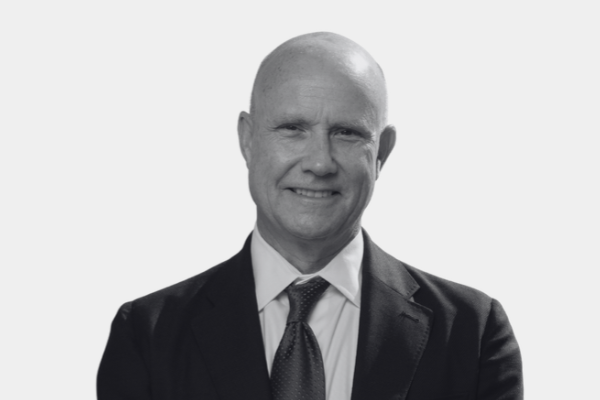

San Francisco-based Marathon Resource Advisors founder and chief investment officer Robert Mullin would happily tip SLB again at Sohn Hearts & Minds 2026 if that were possible.
The company formerly known as Schlumberger rose 87 per cent by August and Mullin says it is still a great buy after a recent pullback. But the rules say he must find something new.
Mullin has been investing in the energy and natural resource sector for more than three decades.
His interest in the sector is partly historical. His mum grew up on a 100-year-old West Texas cattle ranch which is where Marathon – the name of the firm – comes from. But he also prefers to value companies based on the net present value of the cashflows they generate.
“There are so many places in the market where you can’t do that,” Mullin tells The Australian. “The resource markets consistently are ones where you still can.”
Valuing tech companies as a discount of their cashflow hasn’t worked for decades.
“I’d actually argue most sectors of the market bear little or no relationship to the value of the cash the underlying businesses generate,” Mullin says. “I like the resource sector because those stocks do tend to have some modest relationship with the quality and cashflow capacity of the businesses.”
Of course, the tech sector faces reality checks and resets at times – as was the case in South Korea when the high-flying KOSPI stock index fell about 40 per cent in six weeks, mostly due to a couple of AI chip stocks falling back to earth. Last week the KOSPI fell back to its July lows.
“There’s the concept of ‘over-earning’ – where you’re making significantly higher margins today relative to what you’ll get over the full cycle,” Mullin says. “That happens in tech, and it also happens in resources; there are distortions out there we all have to account for.”
As for his take on the global energy sector versus 10 years ago, he says it is in great shape.
“Everyone wants to think of the sector as binary; if the Strait of Hormuz closes, everything’s good (but) if it opens, everything’s bad,” Mullin says. “What I’ve tried to do is step back and ask: what are the fundamental underlying drivers of the global energy markets?”
The first is underinvestment. Global energy and mining capex is down about 50 per cent over the past decade on a nominal basis. On an inflation-adjusted basis it’s down about 75 per cent.
He says that starvation of capital doesn’t bite immediately, but it “really starts to hurt once you get far enough down the road from these projects which take around a decade to complete”.
“Most of the capital that should have been spent to significantly increase global resource capacity in 2025 through 2029 really needed to be spent between 2017 and 2022, and it just wasn’t,” he says.
“I think it’s particularly acute in energy, but it’s true across the resource spectrum.
“The main driver from around 2015 through 2019 was the fact that historically, every time you handed these guys money, they blew it.”
Quantitative easing and massive financial stimulus after the GFC resulted in a lot of misallocated capital, overpriced acquisitions and massive projects brought on exactly when commodities were peaking.
The second leg of underinvestment was caused by the ESG, decarbonisation, and green mandates that hit from about 2020. The third is the “giant sucking sound” of AI and its power demands.
“Ironically, it’s the first technology boom that’s been massively energy and materials intensive,” Mullin says. “The dotcom cycle wasn’t. It was a software boom; all you had to do was hit a button to replicate it endlessly. This is the first tech bull market that’s genuinely intensive in energy and materials, because of the need to process data and build out the physical infrastructure.”
Another irony is although the AI boom has sucked the oxygen out of the room, it’s now going to have to drag conventional energy and resources along with it, because it needs them.
“You can’t have a continuation of the AI technology boom, or whatever it turns out to be, without dragging the energy and materials companies along behind it,” Mullin says.
The two decades to 2020 were also a very deflationary environment.
“You were happy to source raw materials anywhere in the world because everyone got along,” he says. “You never had to question whether you could get supply whenever you wanted it.
“I think it’s become pretty clear we’re not in that world anymore.”
Together with security of supply, national and corporate redundancy and resilience are now live topics.
“You’ve gone from a period where you didn’t need to hold inventories, happy to source from anywhere, to one where you need to do some of this yourself and probably hold more of it than you have historically,” Mullin says.
The world has transitioned from a period when global stability was the default setting and conflict was the occasional interloper, to one where conflict is now the base case, and periods where everyone gets along, or ceasefires hold, are the exception rather than the rule.
“Everyone was slapped around the head with that in 2022 when Russia invaded Ukraine, and then promptly forgot it as soon as the disruption turned out to be smaller than expected,” he says.
“There was very little actual disruption from that event, and then the shiny swirl of AI took off and grabbed everyone’s attention.
“So now the market is being dragged back, kicking and screaming, to pay attention to the fact that resources are critical – that nothing in the bigger market themes works without them – and that at something around 3 or 4 per cent of global equity market cap, the sector is underpriced relative to its importance to the global economy.”
The 2026 Sohn Hearts & Minds Investment Leaders Conference will be held in Queenstown, New Zealand on Friday November 6, which is the first time the event has been staged outside of Australia.
The Australian is a media partner and tickets can be purchased at sohnheartsandminds.com.au
This article was originally posted by The Australian here. Licensed by Copyright Agency. You must not copy this work without permission.


