Giving families living with rare diseases the answers they need

Supporting research to improve the diagnosis of rare genetic neuromuscular diseases and build the foundations for future treatments.
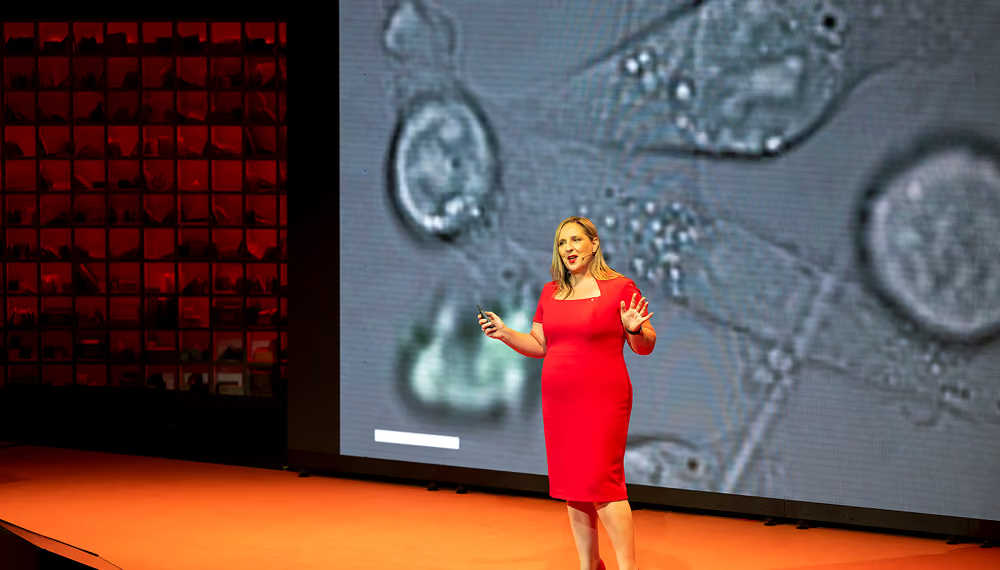
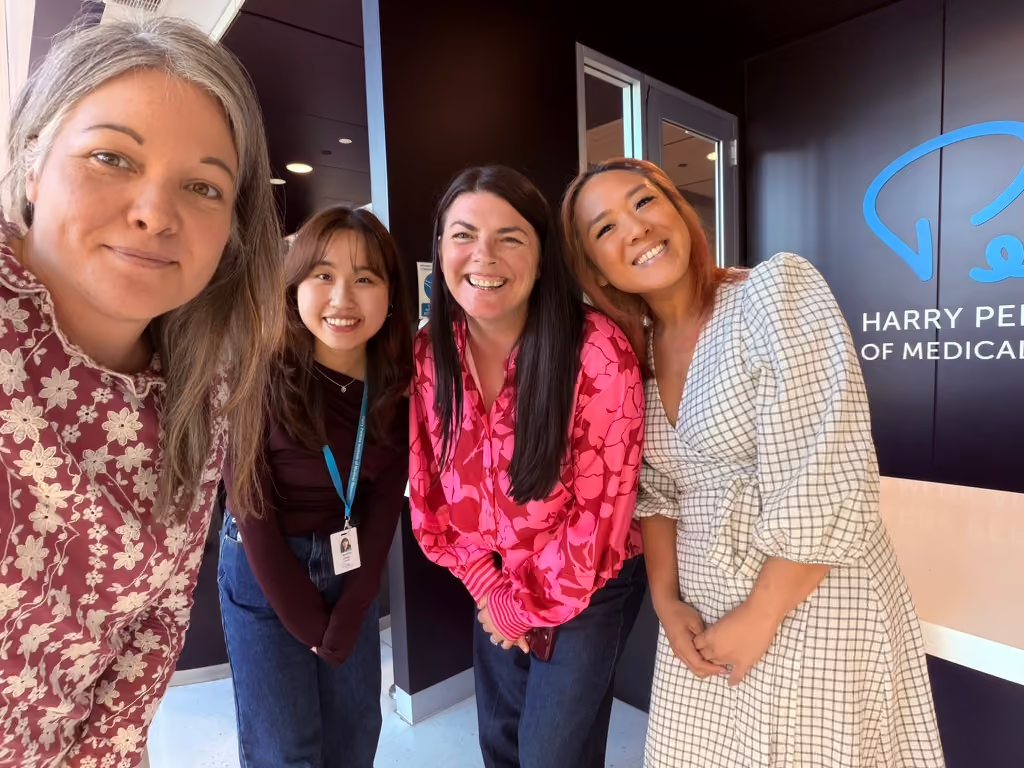
Picture: Professor Gina Ravenscroft and her team

Giving families living with rare diseases the answers they need

July 1, 2026
Supporting research to improve the diagnosis of rare genetic neuromuscular diseases and build the foundations for future treatments.
Read Transcript

The challenge

Rare diseases collectively affect around 400 million people worldwide, half of whom are children. Approximately 30% of children diagnosed with a rare disease die before their 5th birthday. More than 80% of rare diseases are genetic.¹ 

Neuromuscular disorders are one group of rare diseases and are a diverse collection of hundreds of genetically distinct conditions that affect the nerves and muscles. The most common symptom is muscle weakness. While severity varies, many children experience significant disability and may require lifelong support with breathing, feeding or mobility.

Although researchers have identified more than 700 genes linked to these conditions, more than half of people living with a neuromuscular disease still do not receive a genetic diagnosis after standard clinical testing. Without knowing the underlying cause, families are left without clear answers about their condition, future care or treatment options.

Professor Gina Ravenscroft and her team at the Harry Perkins Institute of Medical Research (Perkins) are working to change this by uncovering previously unknown genetic causes of rare diseases and helping more families receive an accurate diagnosis.


The role of philanthropy

Hearts & Minds funding, as nominated by Magellan Investment Partners, has helped Perkins retain talented researchers and support the next generation of scientists through PhD scholarships, ensuring critical expertise remains focused on rare disease research.

During 2025–26, the team identified four previously unknown neuromuscular disease genes and improved the interpretation of several other rare genetic conditions. Among these discoveries was a diagnosis for Valentina, a young girl in Sydney living with an ultra-rare condition, giving her family long-awaited answers.

Hearts & Minds support has also contributed to the team's role in establishing the Rare Care Comprehensive Centre (RCCC) in Western Australia. Bringing together healthcare, research, education, disability and family support services, the Centre aims to provide more coordinated care for people living with rare diseases while accelerating research and future clinical advances. 

As part of this initiative, Hearts & Minds support has also contributed to Professor Gina Ravenscroft’s appointment as the inaugural Dr Patricia Kailis Chair in Rare Diseases at the University of Western Australia, strengthening Australia's capacity to lead rare disease research for years to come.

Early impact

To date, researchers at Perkins have identified more than 30 previously unknown disease genes and helped provide accurate genetic diagnoses to more than 1,000 patients and families. Each new diagnosis represents far more than a scientific discovery. It can guide medical care, inform future family planning, connect families with others facing the same condition and, increasingly, open the door to emerging precision medicine approaches.

What this could unlock

The Perkins team is continuing to search for the genetic causes of rare neuromuscular diseases that remain unsolved. This includes identifying new disease genes, improving genetic diagnosis for patients and families, and building knowledge about how these conditions develop.

The team is also continuing to build valuable research resources, including patient biobanks, and train the next generation of rare disease researchers. By sharing discoveries with researchers around the world, this work helps improve understanding, diagnosis and future care for people living with rare diseases.

With continued philanthropic support, more families can receive timely answers, researchers can accelerate the search for new treatments, and Australia can continue to strengthen its role in rare disease research.

Funding support from Hearts & Minds, as nominated by Magellan Investment Partners. This content was last updated in July 2026. For further information, visit Harry Perkins Institute of Medical Research.

¹ Source: Gürkan, H. & Satkın, N. B. (2025). The Importance of Genetic Diagnosis in Rare Diseases. Balkan Medical Journal, 42(2), 92–93.

The challenge

Rare diseases collectively affect around 400 million people worldwide, half of whom are children. Approximately 30% of children diagnosed with a rare disease die before their 5th birthday. More than 80% of rare diseases are genetic.¹ 

Neuromuscular disorders are one group of rare diseases and are a diverse collection of hundreds of genetically distinct conditions that affect the nerves and muscles. The most common symptom is muscle weakness. While severity varies, many children experience significant disability and may require lifelong support with breathing, feeding or mobility.

Although researchers have identified more than 700 genes linked to these conditions, more than half of people living with a neuromuscular disease still do not receive a genetic diagnosis after standard clinical testing. Without knowing the underlying cause, families are left without clear answers about their condition, future care or treatment options.

Professor Gina Ravenscroft and her team at the Harry Perkins Institute of Medical Research (Perkins) are working to change this by uncovering previously unknown genetic causes of rare diseases and helping more families receive an accurate diagnosis.


The role of philanthropy

Hearts & Minds funding, as nominated by Magellan Investment Partners, has helped Perkins retain talented researchers and support the next generation of scientists through PhD scholarships, ensuring critical expertise remains focused on rare disease research.

During 2025–26, the team identified four previously unknown neuromuscular disease genes and improved the interpretation of several other rare genetic conditions. Among these discoveries was a diagnosis for Valentina, a young girl in Sydney living with an ultra-rare condition, giving her family long-awaited answers.

Hearts & Minds support has also contributed to the team's role in establishing the Rare Care Comprehensive Centre (RCCC) in Western Australia. Bringing together healthcare, research, education, disability and family support services, the Centre aims to provide more coordinated care for people living with rare diseases while accelerating research and future clinical advances. 

As part of this initiative, Hearts & Minds support has also contributed to Professor Gina Ravenscroft’s appointment as the inaugural Dr Patricia Kailis Chair in Rare Diseases at the University of Western Australia, strengthening Australia's capacity to lead rare disease research for years to come.

Early impact

To date, researchers at Perkins have identified more than 30 previously unknown disease genes and helped provide accurate genetic diagnoses to more than 1,000 patients and families. Each new diagnosis represents far more than a scientific discovery. It can guide medical care, inform future family planning, connect families with others facing the same condition and, increasingly, open the door to emerging precision medicine approaches.

What this could unlock

The Perkins team is continuing to search for the genetic causes of rare neuromuscular diseases that remain unsolved. This includes identifying new disease genes, improving genetic diagnosis for patients and families, and building knowledge about how these conditions develop.

The team is also continuing to build valuable research resources, including patient biobanks, and train the next generation of rare disease researchers. By sharing discoveries with researchers around the world, this work helps improve understanding, diagnosis and future care for people living with rare diseases.

With continued philanthropic support, more families can receive timely answers, researchers can accelerate the search for new treatments, and Australia can continue to strengthen its role in rare disease research.

Funding support from Hearts & Minds, as nominated by Magellan Investment Partners. This content was last updated in July 2026. For further information, visit Harry Perkins Institute of Medical Research.

¹ Source: Gürkan, H. & Satkın, N. B. (2025). The Importance of Genetic Diagnosis in Rare Diseases. Balkan Medical Journal, 42(2), 92–93.

Disclaimer: This material has been prepared by Hearts & Minds, published on July 1, 2026. HM1 is not responsible for the content of linked websites or content prepared by third party. The inclusion of these links and third-party content does not in any way imply any form of endorsement by HM1 of the products or services provided by persons or organisations who are responsible for the linked websites and third-party content. This information is for general information only and does not consider the objectives, financial situation or needs of any person. Before making an investment decision, you should read the relevant disclosure document (if appropriate) and seek professional advice to determine whether the investment and information is suitable for you.

facebook
linkedin
All
Thank you! Your submission has been received!
Oops! Something went wrong while submitting the form.
September 8, 2020

Beneficiary Profile: Black Dog Institute

1 in 5 of us will experience symptoms of mental illness in any given year. In Australia that’s around 5 million people. And roughly 60% of these people won’t seek help. Learn what Black Dog is doing to create a mentally healthier world for everyone.

Read More
August 10, 2020

Beneficiary Profile: RPA Green Light

Emergency departments are the frontline of health care, with one in seven Australians seeking help from a hospital emergency department every year. Our medical staff depend on research findings to help inform their responses to urgent patient needs.

Read More
July 7, 2020

Beneficiary Profile: The Florey

Every year, 4.7 million Australians are diagnosed with one of the conditions that the Florey study. That's why they believe everyone has a stake in medical research.

Read More
June 9, 2020

Beneficiary Profile: Orygen

1 in 5 young people will have experienced a depressive episode by the time they are 18. With thanks to Cooper Investors and Hearts & Minds, we have been able to put youth mental health on the global agenda and progress our work in developing a global mental health framework.

Read More
November 22, 2019

Impact Video Series: Sydney Children's Hospital Foundation

We interviewed leading individuals from our beneficiaries to discuss the importance of medical research, their recent breakthroughs and the vital need for private funding.

Read More
May 29, 2019

Winning Hearts and Minds

Mark Nelson of Caledonia discusses his connection with the Florey Institute, one of our beneficiaries, and why he's involved with Hearts and Minds.

Read More