How to beat the market without owning Nvidia shares

Vihari Ross' global fund returned more than 20 per cent in the year to September 30 versus about 10 per cent for the benchmark without owning Nvidia, Meta, Tesla, Apple or Broadcom.

David Rogers

How to beat the market without owning Nvidia shares

November 3, 2025
Vihari Ross' global fund returned more than 20 per cent in the year to September 30 versus about 10 per cent for the benchmark without owning Nvidia, Meta, Tesla, Apple or Broadcom.
Read Transcript

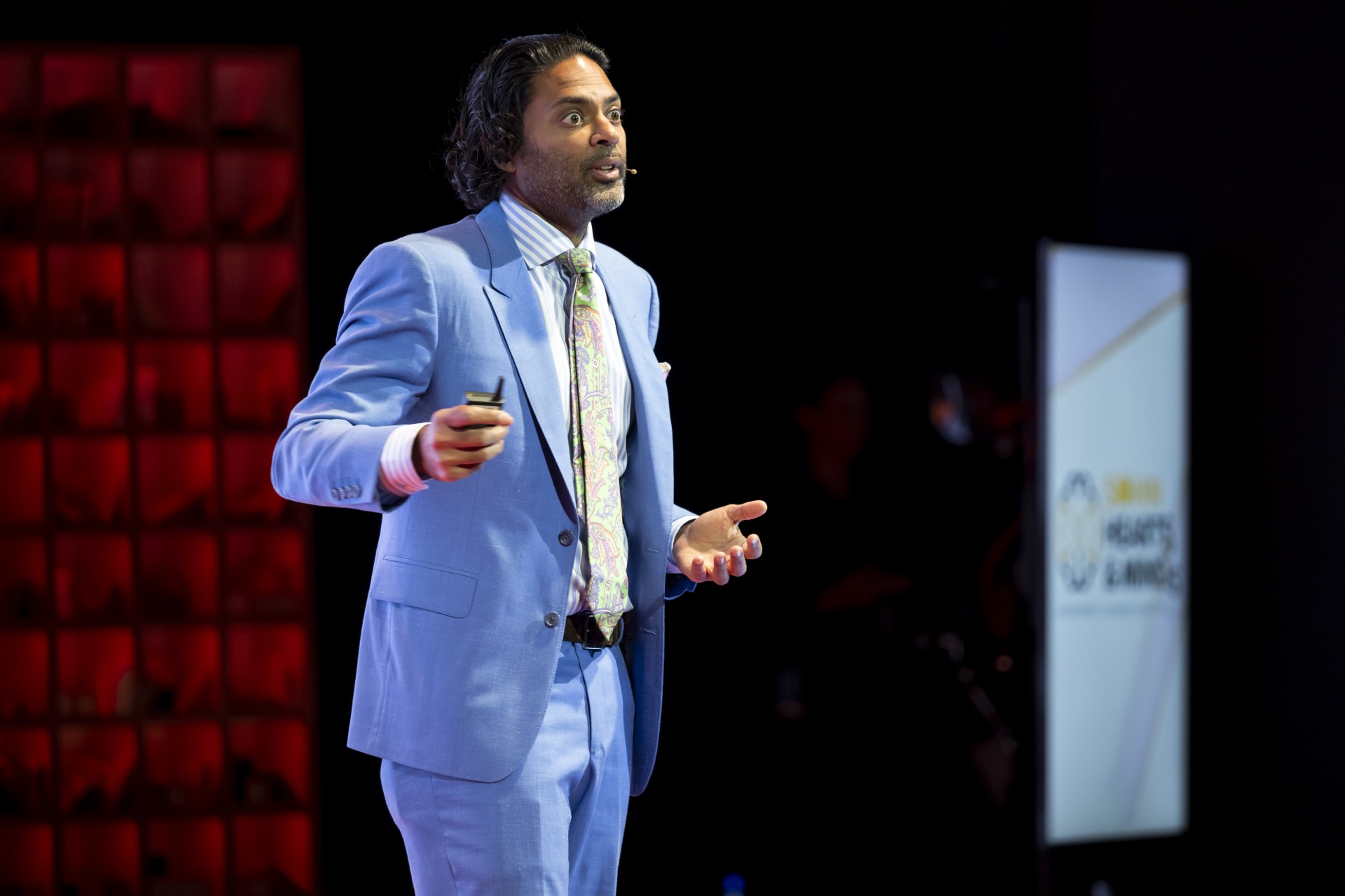
Most investors obsess over Nvidia and the Magnificent Seven these days. Vihari Ross held less than half of them and thrashed the market anyway.

Her Antipodes global fund returned more than 20 per cent in the year to September 30 versus about 10 per cent for the benchmark without owning Nvidia, Meta, Tesla, Apple or Broadcom.

The secret? Looking everywhere else while investors pile into an ever-shrinking group of US tech giants. The former Magellan research boss reckons the game is about to change dramatically.

“The US market is really expensive compared to the rest of the world, but it’s also expensive compared to its own history,” she says. “The US is priced for everything to be completely fine. Perfection, really.”

Ross will be back at the Sohn Hearts & Minds investment conference on November 14.

Her Sohn 2024 stock pick, Airbus, is up about 60 per cent since then and she expects it to keep rallying.

The European aerospace giant benefited from the market broadening beyond US tech, plus strong results from it ramping up plane deliveries and a boost in defence spending.

“It turned out really well and there’s more to go in it. We still own it,” she says.

But her real focus is on what she calls the “gravity of fundamentals” that will eventually pull overvalued stocks back to earth. And right now, she reckons that gravity is about to kick in.

Take Nvidia. The chip designer just added $US1 trillion in market value in three months, fuelled by mammoth spending from tech giants like Amazon, which dropped $US120bn on capital expenditure in a recent quarter.

“One company’s capex is another company’s revenue,” Ross says.

“The nature of capex is it’s supposed to be investment driven. You spend, then you monetise, then you spend more. There could be a capex cycle here.”

Add in rising competition from AMD and the tech giants building their own chips, and Nvidia’s sky-high margins suddenly look vulnerable.

“With all these big technology cycles, the hardware layer ends up becoming commoditised,” she warns. It’s not that these are bad companies. Ross draws a parallel with the tech bubble, when firms like Cisco and Intel were critical to building the internet but simply too expensive.

“They were good companies,” she says. “They just fell because they were expensive.”

Antipodes does own three of the Magnificent Seven tech stocks: Microsoft, Amazon and Alphabet. The latter was bought earlier this year when it traded at 15 times earnings, with investors fearing it would be an AI loser. It’s since rerated to 22 times as that view shifted.

“The market often makes these misjudgements about companies,” Ross says.

But she’s far more excited about what she calls AI “adopters” rather than builders.

“How you can utilise AI, the adopters of AI, is where the more interesting investment ideas lie. They’re the most mispriced because everyone’s already really exuberant about the AI building part.”

Just as Google, Meta and Amazon emerged a decade after the internet bubble to monetise technology, today’s winners might be firms using AI to improve their core businesses.

That search for value has taken Ross well beyond the US.

She’s hunting in the less-glamorous parts of the AI supply chain, owning Japanese firms, Taiwan’s TSMC, and Keysight Technologies, which does systems testing.

“There’s actually much more to an AI supply chain than just the Nvidias of the world,” she says. “Everyone is so hellbent on focusing on this one stock. But there’s a whole industry that sits behind it.”

The fund also holds about 10 per cent in Chinese equities, though Ross took profits after the market rallied hard in February. She sees the Chinese market, trading at 12 times earnings, as the mirror image of America.

“Chinese consumers have $US6.5 trillion sitting in savings. That could be a coiled spring if it starts to be spent when consumer confidence is restored. Everything’s priced for it to be rubbish, but there’s opportunity.”

By contrast, expensive US consumer stocks like Costco, Chipotle and Nike are trading at multiples above 20 times with little growth.

“You can get Alphabet for 22 times. It’s just a really bad deal in that quality consumer side.”

Ross manages risk actively through Antipodes’ long-short fund, which means she can control its net exposure to the market.

The team cut exposure sharply before February’s wobble, then ramped back up in April.

Looking ahead, she sees a familiar pattern emerging.

“You get markets concentrated, you get market peaks, you get overvaluation,” she tells The Australian. “It happens at least once a decade. But it always unwinds in the same way: expensive stocks fall and cheap stocks catch up.”

Her key message for investors? “It’s never been a better time to have differentiated return sources.” Or as Charlie Munger put it: the market’s a weighing machine in the long term, even if it’s a voting machine in the short term.

Ross is keeping her Sohn stock pick under wraps for now, except to say that it’s a smaller, overlooked company outside the US that’s “fallen between the cracks”. It won’t be anywhere near the Magnificent Seven.

Sohn Hearts & Minds returns to the Sydney Opera House this year to feature stock picks from leading investment experts across the globe. All profits go to medical research.

The event has raised $83m over the past decade.

This article was originally posted by The Australian here.

Licensed by Copyright Agency. You must not copy this work without permission.

Most investors obsess over Nvidia and the Magnificent Seven these days. Vihari Ross held less than half of them and thrashed the market anyway.

Her Antipodes global fund returned more than 20 per cent in the year to September 30 versus about 10 per cent for the benchmark without owning Nvidia, Meta, Tesla, Apple or Broadcom.

The secret? Looking everywhere else while investors pile into an ever-shrinking group of US tech giants. The former Magellan research boss reckons the game is about to change dramatically.

“The US market is really expensive compared to the rest of the world, but it’s also expensive compared to its own history,” she says. “The US is priced for everything to be completely fine. Perfection, really.”

Ross will be back at the Sohn Hearts & Minds investment conference on November 14.

Her Sohn 2024 stock pick, Airbus, is up about 60 per cent since then and she expects it to keep rallying.

The European aerospace giant benefited from the market broadening beyond US tech, plus strong results from it ramping up plane deliveries and a boost in defence spending.

“It turned out really well and there’s more to go in it. We still own it,” she says.

But her real focus is on what she calls the “gravity of fundamentals” that will eventually pull overvalued stocks back to earth. And right now, she reckons that gravity is about to kick in.

Take Nvidia. The chip designer just added $US1 trillion in market value in three months, fuelled by mammoth spending from tech giants like Amazon, which dropped $US120bn on capital expenditure in a recent quarter.

“One company’s capex is another company’s revenue,” Ross says.

“The nature of capex is it’s supposed to be investment driven. You spend, then you monetise, then you spend more. There could be a capex cycle here.”

Add in rising competition from AMD and the tech giants building their own chips, and Nvidia’s sky-high margins suddenly look vulnerable.

“With all these big technology cycles, the hardware layer ends up becoming commoditised,” she warns. It’s not that these are bad companies. Ross draws a parallel with the tech bubble, when firms like Cisco and Intel were critical to building the internet but simply too expensive.

“They were good companies,” she says. “They just fell because they were expensive.”

Antipodes does own three of the Magnificent Seven tech stocks: Microsoft, Amazon and Alphabet. The latter was bought earlier this year when it traded at 15 times earnings, with investors fearing it would be an AI loser. It’s since rerated to 22 times as that view shifted.

“The market often makes these misjudgements about companies,” Ross says.

But she’s far more excited about what she calls AI “adopters” rather than builders.

“How you can utilise AI, the adopters of AI, is where the more interesting investment ideas lie. They’re the most mispriced because everyone’s already really exuberant about the AI building part.”

Just as Google, Meta and Amazon emerged a decade after the internet bubble to monetise technology, today’s winners might be firms using AI to improve their core businesses.

That search for value has taken Ross well beyond the US.

She’s hunting in the less-glamorous parts of the AI supply chain, owning Japanese firms, Taiwan’s TSMC, and Keysight Technologies, which does systems testing.

“There’s actually much more to an AI supply chain than just the Nvidias of the world,” she says. “Everyone is so hellbent on focusing on this one stock. But there’s a whole industry that sits behind it.”

The fund also holds about 10 per cent in Chinese equities, though Ross took profits after the market rallied hard in February. She sees the Chinese market, trading at 12 times earnings, as the mirror image of America.

“Chinese consumers have $US6.5 trillion sitting in savings. That could be a coiled spring if it starts to be spent when consumer confidence is restored. Everything’s priced for it to be rubbish, but there’s opportunity.”

By contrast, expensive US consumer stocks like Costco, Chipotle and Nike are trading at multiples above 20 times with little growth.

“You can get Alphabet for 22 times. It’s just a really bad deal in that quality consumer side.”

Ross manages risk actively through Antipodes’ long-short fund, which means she can control its net exposure to the market.

The team cut exposure sharply before February’s wobble, then ramped back up in April.

Looking ahead, she sees a familiar pattern emerging.

“You get markets concentrated, you get market peaks, you get overvaluation,” she tells The Australian. “It happens at least once a decade. But it always unwinds in the same way: expensive stocks fall and cheap stocks catch up.”

Her key message for investors? “It’s never been a better time to have differentiated return sources.” Or as Charlie Munger put it: the market’s a weighing machine in the long term, even if it’s a voting machine in the short term.

Ross is keeping her Sohn stock pick under wraps for now, except to say that it’s a smaller, overlooked company outside the US that’s “fallen between the cracks”. It won’t be anywhere near the Magnificent Seven.

Sohn Hearts & Minds returns to the Sydney Opera House this year to feature stock picks from leading investment experts across the globe. All profits go to medical research.

The event has raised $83m over the past decade.

This article was originally posted by The Australian here.

Licensed by Copyright Agency. You must not copy this work without permission.

Disclaimer: This material has been prepared by The Australian, published on Nov 03, 2025. HM1 is not responsible for the content of linked websites or content prepared by third party. The inclusion of these links and third-party content does not in any way imply any form of endorsement by HM1 of the products or services provided by persons or organisations who are responsible for the linked websites and third-party content. This information is for general information only and does not consider the objectives, financial situation or needs of any person. Before making an investment decision, you should read the relevant disclosure document (if appropriate) and seek professional advice to determine whether the investment and information is suitable for you.

facebook
linkedin
All
Thank you! Your submission has been received!
Oops! Something went wrong while submitting the form.
September 9, 2024

The Wellcome Trust’s Nick Moakes made a 100-year bet. It’s paying off

Chief Investment Officer, Nick Moakes raised almost $3 billion at ultra-low rates. Sometimes the long view can be the most profitable.

Read More
September 5, 2024

Why Howard Marks says you’re making a big mistake

Howard Marks says investors must ignore manic depressive markets and focus on the bigger picture. Rates will be higher for longer and that will bring pain – and opportunity.

Read More
November 17, 2023

The 12 Hottest Stock Tips From This Year’s Sohn Experts

It might be time to look beyond big names. That was the message from top fund managers, company founders and super funds at the Sohn Hearts & Minds.

Read More
November 17, 2023

Why Stock Picker Cathie Wood Of ARK Can’t Stand Google

The world’s highest-profile tech investor, Cathie Wood, might be bruised but she is certainly bullish. Nor is she holding back.

Read More
Munro Partners partner and portfolio manager Kieran Moore at the Sohn Hearts & Minds conference in Sydney. Picture: Renee NowytargerMunro Partners partner and portfolio manager Kieran Moore at the Sohn Hearts & Minds conference in Sydney. Picture: Renee NowytargerMunro Partners partner and portfolio manager Kieran Moore at the Sohn Hearts & Minds conference in Sydney. Picture: Renee NowytargerMunro Partners partner and portfolio manager Kieran Moore at the Sohn Hearts & Minds conference in Sydney. Picture: Renee Nowytarger
November 17, 2023

Wise Share Price Could Rise 50pc By 2025, Says Munro Partners

Global growth fund manager Munro has about $4.3bn in funds under management across four global funds, and usually invests in companies that are poised to win from massive structural change.

Read More
November 12, 2023

The Australian At The Centre Of Dalio’s Bridgewater – Who Loves It

The culture at Ray Dalio’s massive hedge fund has been a source of intrigue, and with a new book, controversy. Atul Lele says it’s made him a better investor.

Read More
October 10, 2023

Beware the pitfalls of investing in healthcare, says IFM boss

“Healthcare is often viewed as a stable, defensive sector to invest in, but in small caps that hasn’t necessarily proven to be the case,” she says in an interview ahead of her appearance at the Sohn Hearts & Minds Conference 2023.

Read More
Barrenjoey co-executive chairman Matthew Grounds and New York-based Eminence Capital fund manager Ricky Sandler will be at the eighth Sohn Hearts & Minds conference. Picture: Peter RaeBarrenjoey co-executive chairman Matthew Grounds and New York-based Eminence Capital fund manager Ricky Sandler will be at the eighth Sohn Hearts & Minds conference. Picture: Peter RaeBarrenjoey co-executive chairman Matthew Grounds and New York-based Eminence Capital fund manager Ricky Sandler will be at the eighth Sohn Hearts & Minds conference. Picture: Peter RaeBarrenjoey co-executive chairman Matthew Grounds and New York-based Eminence Capital fund manager Ricky Sandler will be at the eighth Sohn Hearts & Minds conference. Picture: Peter Rae
September 11, 2023

Top Ny Stock Picker Warns Inflation To Remain Above Pre-Covid Levels

Influential New York hedge fund manager Ricky Sandler of Eminence Capital returns for the 2023 Sohn Hearts & Minds Conference in Sydney and says no one is focused on picking interesting, idiosyncratic stocks.

Read More
January 5, 2023

Why Transurban will always be one step ahead of inflation

Loathed by motorists, but loved by investors. Transurban came under focus when Catherine Allfrey nominated the roads operator as her top pick at the recent Sohn Hearts & Minds Conference.

Read More
August 31, 2022

Putin critic and author Bill Browder to headline Sohn investor conference

Bill Browder, one of Putin's fiercest critics, the founder of Hermitage Capital and the man behind the Magnitsky Law, will headline this year's Sohn Hearts & Minds investor conference.

Read More
October 27, 2021

Moderna’s miracle and why mRNA is the new powerhouse of medicine

The powerful technology that has enabled mRNA vaccines to save millions of lives during the coronavirus pandemic has much broader potential, according Bob Langer, one of the co-founders of Moderna.

Read More
October 25, 2021

Why this tech stockpicker is patient on China, bullish on bitcoin

Conference Fund Manager, Beeneet Kothari admits it’s been a ‘bloodbath’ for Chinese tech stocks this year, but there are two good reasons he thinks the sentiment will shift.

Read More
No items found.

No results found.

Please try a different search keyword or filter.