
The challenge
Cerebral palsy (CP) is the most common physical disability in childhood, affecting movement, posture and, for many children, speech, learning, feeding and other aspects of development. Every day in Australia, two babies are born with CP (Cerebral Palsy Alliance Research Institute, Sydney, 2023). While it is now possible to identify many infants at high risk within weeks of birth, access to evidence-based early intervention remains limited and inconsistent.
The first months of life are a critical period for brain development, when an infant's brain has its greatest capacity to adapt and learn. Supporting parents during this time is equally important, yet families of infants at high risk of CP often receive little structured support, despite mothers being more than 15 times more likely to experience depression than mothers of infants without CP.
A new approach to early intervention
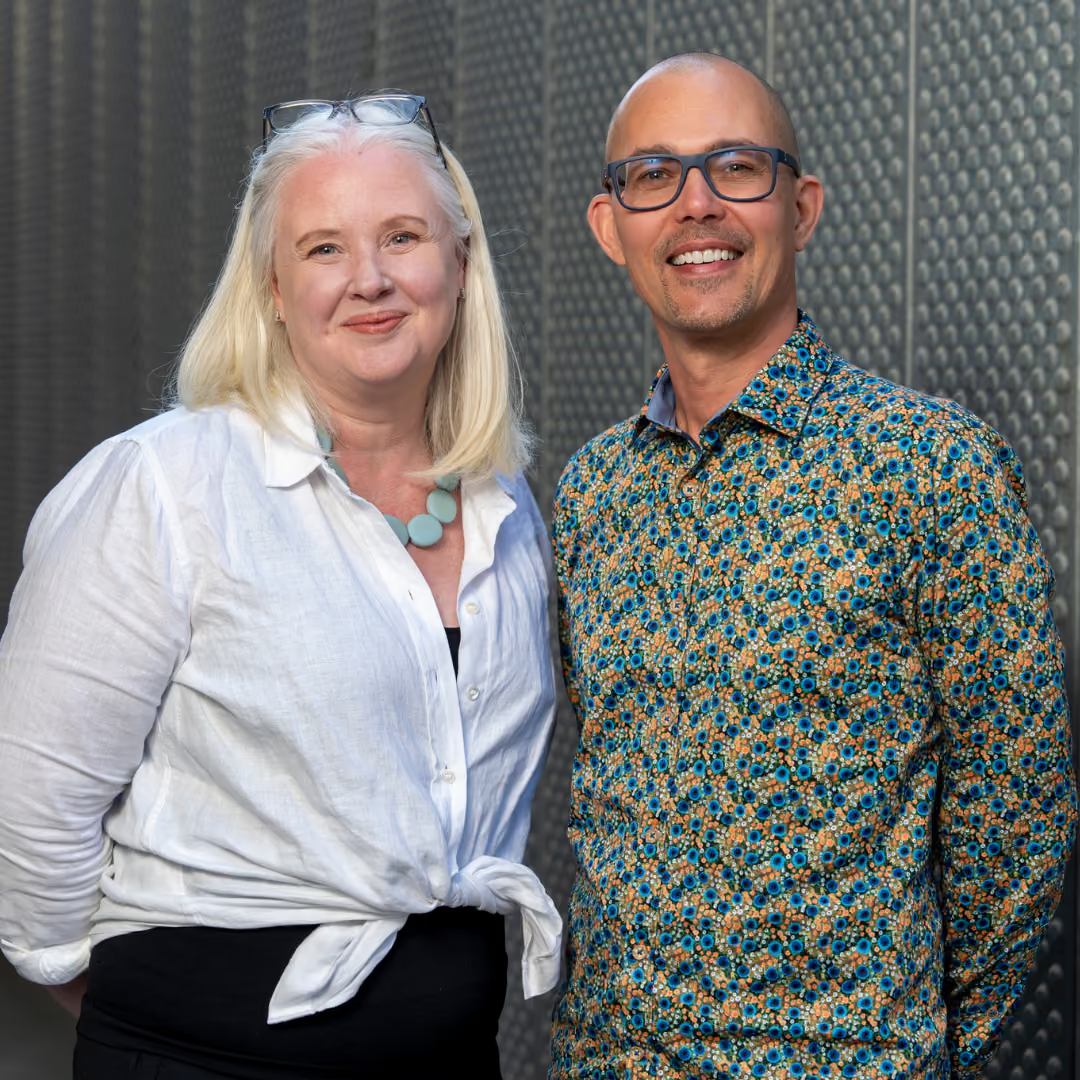
Adjunct Associate Professor Cathy Morgan and Professor Nadia Badawi from Cerebral Palsy Alliance are evaluating the Very early Intensive Programme (VIP), a six-month intervention for babies identified as being at high risk of CP. Beginning when babies are between birth and four weeks’ corrected age, the program combines customised motor training and environmental enrichment with parent support and coaching.
The randomised controlled trial will involve 138 infants and compare the VIP with the standard parent education and monitoring that families currently receive. The study will assess whether the program improves infants' motor, cognitive and communication development, while also supporting parents' wellbeing, confidence and quality of life.
Early impact
The study is now underway, with recruitment across 10 neonatal intensive care units and special care nurseries in New South Wales. To date, 27 infants have been screened for eligibility, and 19 families have been enrolled in the trial. Although the study is still recruiting participants and analysis has yet to begin, many families have already shared positive feedback about their experience with the VIP intervention.
Parents have spoken about the value of the customised, family-centred approach and the confidence they have gained through personalised coaching and support during the first months of their baby's life. Several families have also reached out to the research team to express their appreciation for the program.
Beyond the trial, a monthly peer support group, led by parents with lived experience of raising a child with CP, has been established to help families connect with others navigating similar experiences. Resources have also been developed to support health professionals in having early diagnostic conversations with families. Listen to the podcast below to learn more about why these early conversations matter.
What this could unlock
If successful, the VIP Study will provide important evidence to guide the delivery of early intervention for infants at high risk of CP. The research aims to inform future clinical practice and policy, helping ensure families receive evidence-based, family-centred support during the earliest stages of their child's development. Researchers also hope to expand the model for families living in regional and remote Australia, where access to specialist allied health services is often limited.
Funding support from Hearts & Minds. This content was last updated in July 2026. For further information, visit Cerebral Palsy Alliance.