VCCRI: 'Heart in a Box'

An Australian method of preserving donated hearts has boosted the number of successful transplants across the world, with new research demonstrating similar survival rates to traditional transplants.

VCCRI: 'Heart in a Box'

September 6, 2022
An Australian method of preserving donated hearts has boosted the number of successful transplants across the world, with new research demonstrating similar survival rates to traditional transplants.
Read Transcript

An Australian method of preserving donated hearts has boosted the number of successful transplants and new data shows recipients of these “dead” tickers have similar survival rates to traditional transplants.

There have been 78 heart transplants conducted through Sydney’s St Vincent’s Hospital and the Victor Chang Cardiac Research Institute’s world-first DCD (donation after circulatory death) process, a technique that has since been adopted by several hospitals abroad.

While donated hearts once had to come from brain-dead people whose hearts were still beating, the DCD method, pioneered in Sydney, means donations can take place after the heart has stopped. Within half an hour of life support being switched off, the heart is extracted and flushed with an oxygenated blood preservation solution before being transported in a special machine to its recipient.

“These are hearts that would not otherwise have been used,” said Professor Peter MacDonald, a senior cardiologist at St Vincent’s Hospital and leader of the DCD heart transplant team.

When Sydneysider Ross Tripodi woke up from his DCD heart transplant in April 2020, he assumed it must not have happened: he didn’t feel like he had just had a big surgery, he felt better than before.

“I was bright-eyed and bushy-tailed,” the 57-year-old recalled. “I turned to the nurse and said, ‘Oh, you haven’t done the transplant?’”

Tripodi was diagnosed with cardiomyopathy – an enlarged heart – aged 49. In 2019, experiencing organ failure, he was warned he would not survive another year without a transplant.

“I got home to see my daughter turn 21, most people take that for granted, but, for me, it was a lot,” he said. “There’s never a bad day anymore. You don’t sweat the little things. I’m just grateful for anything.”

A review of the first eight years of the program, published in the journal Transplantation, showed the new technology had increased the number of transplants performed at the hospital by 25 per cent.

It also demonstrated, in its small sample of 74 transplants, a negligible difference in one-year and five-year survival rates between people who received a heart via either method.

The review’s lead author Dr Yashutosh Joshi said it demonstrated there was “no reason why we shouldn’t” pursue DCD when appropriate for the patient. The five-year survival rate for a DCD heart transplant was 88 per cent, compared with 81 per cent for a brain-dead transplant.

“We don’t want to overstate the benefits of DCD over brain death because it’s still a small sample,” MacDonald said, noting heart transplant was generally a very successful procedure.

The newer method also comes with a time pressure that does not exist in traditional heart transplants. Joshi – who has travelled to collect donated hearts from as far as Darwin – described the program as “essentially 24/7”, with minutes saved by harvesting the organ in an anaesthetic bay, as opposed to in intensive care, contributing to success.

But, said Dr Emily Granger, a surgeon at St Vincent’s, the hearts donated through the DCD system are generally of better quality.

“When someone is brain-dead they have often had a surge of adrenaline which impacts the heart, but in these people their heart is in much better condition,” said Granger, who is also the president-elect of the Australian and New Zealand Society of Cardiac and Thoracic Surgeons.

At St Vincent’s, the only Australian hospital using the method, DCD procedures now account for 30 per cent of heart transplants. In the UK, where DCD transplants started in 2015, they account for almost half of procedures.

Hospitals in the US, Spain, Belgium and the Netherlands have also adopted the technology.

MacDonald said he expected the cost of the “heart in a box” – about $50,000 per use – would mean that it would probably never make up the majority of transplants, but it was an important way to increase organ donation.

The Organ and Tissue Authority’s national medical director, Associate Professor Helen Opdam, agreed, noting the pandemic had impacted the number of available donors and people receiving transplants.

“Heart transplantation from donation after circulatory death enables more people to have their wishes to donate honoured, as it has expanded the situations in which donation is possible,” she said. “It also means more people will have the chance to receive a life-saving heart transplant.”

St Vincent’s and the Victor Chang Cardiac Research Institute are now working with researchers at the University of Queensland to improve the viability of donated hearts, through a novel project involving the use of protein from funnel web spider venom in the preservation process.

 This article was originally posted by The Sydney Morning Herald here.

Licensed by Copyright Agency. You must not copy this work without permission.
An Australian method of preserving donated hearts has boosted the number of successful transplants and new data shows recipients of these “dead” tickers have similar survival rates to traditional transplants.

There have been 78 heart transplants conducted through Sydney’s St Vincent’s Hospital and the Victor Chang Cardiac Research Institute’s world-first DCD (donation after circulatory death) process, a technique that has since been adopted by several hospitals abroad.

While donated hearts once had to come from brain-dead people whose hearts were still beating, the DCD method, pioneered in Sydney, means donations can take place after the heart has stopped. Within half an hour of life support being switched off, the heart is extracted and flushed with an oxygenated blood preservation solution before being transported in a special machine to its recipient.

“These are hearts that would not otherwise have been used,” said Professor Peter MacDonald, a senior cardiologist at St Vincent’s Hospital and leader of the DCD heart transplant team.

When Sydneysider Ross Tripodi woke up from his DCD heart transplant in April 2020, he assumed it must not have happened: he didn’t feel like he had just had a big surgery, he felt better than before.

“I was bright-eyed and bushy-tailed,” the 57-year-old recalled. “I turned to the nurse and said, ‘Oh, you haven’t done the transplant?’”

Tripodi was diagnosed with cardiomyopathy – an enlarged heart – aged 49. In 2019, experiencing organ failure, he was warned he would not survive another year without a transplant.

“I got home to see my daughter turn 21, most people take that for granted, but, for me, it was a lot,” he said. “There’s never a bad day anymore. You don’t sweat the little things. I’m just grateful for anything.”

A review of the first eight years of the program, published in the journal Transplantation, showed the new technology had increased the number of transplants performed at the hospital by 25 per cent.

It also demonstrated, in its small sample of 74 transplants, a negligible difference in one-year and five-year survival rates between people who received a heart via either method.

The review’s lead author Dr Yashutosh Joshi said it demonstrated there was “no reason why we shouldn’t” pursue DCD when appropriate for the patient. The five-year survival rate for a DCD heart transplant was 88 per cent, compared with 81 per cent for a brain-dead transplant.

“We don’t want to overstate the benefits of DCD over brain death because it’s still a small sample,” MacDonald said, noting heart transplant was generally a very successful procedure.

The newer method also comes with a time pressure that does not exist in traditional heart transplants. Joshi – who has travelled to collect donated hearts from as far as Darwin – described the program as “essentially 24/7”, with minutes saved by harvesting the organ in an anaesthetic bay, as opposed to in intensive care, contributing to success.

But, said Dr Emily Granger, a surgeon at St Vincent’s, the hearts donated through the DCD system are generally of better quality.

“When someone is brain-dead they have often had a surge of adrenaline which impacts the heart, but in these people their heart is in much better condition,” said Granger, who is also the president-elect of the Australian and New Zealand Society of Cardiac and Thoracic Surgeons.

At St Vincent’s, the only Australian hospital using the method, DCD procedures now account for 30 per cent of heart transplants. In the UK, where DCD transplants started in 2015, they account for almost half of procedures.

Hospitals in the US, Spain, Belgium and the Netherlands have also adopted the technology.

MacDonald said he expected the cost of the “heart in a box” – about $50,000 per use – would mean that it would probably never make up the majority of transplants, but it was an important way to increase organ donation.

The Organ and Tissue Authority’s national medical director, Associate Professor Helen Opdam, agreed, noting the pandemic had impacted the number of available donors and people receiving transplants.

“Heart transplantation from donation after circulatory death enables more people to have their wishes to donate honoured, as it has expanded the situations in which donation is possible,” she said. “It also means more people will have the chance to receive a life-saving heart transplant.”

St Vincent’s and the Victor Chang Cardiac Research Institute are now working with researchers at the University of Queensland to improve the viability of donated hearts, through a novel project involving the use of protein from funnel web spider venom in the preservation process.

 This article was originally posted by The Sydney Morning Herald here.

Licensed by Copyright Agency. You must not copy this work without permission.

Disclaimer: This material has been prepared by Sydney Morning Herald, published on September 6, 2022. HM1 is not responsible for the content of linked websites or content prepared by third party. The inclusion of these links and third-party content does not in any way imply any form of endorsement by HM1 of the products or services provided by persons or organisations who are responsible for the linked websites and third-party content. This information is for general information only and does not consider the objectives, financial situation or needs of any person. Before making an investment decision, you should read the relevant disclosure document (if appropriate) and seek professional advice to determine whether the investment and information is suitable for you.

facebook
linkedin
All
Thank you! Your submission has been received!
Oops! Something went wrong while submitting the form.
Picture: A/Prof Melissa Call & Prof Matt CallPicture: A/Prof Melissa Call & Prof Matt CallPicture: A/Prof Melissa Call & Prof Matt CallPicture: A/Prof Melissa Call & Prof Matt Call
July 1, 2026

Next generation CAR T-cell therapy for cancer

The Call Lab at WEHI is pioneering innovative approaches to find this ‘goldilocks zone’, making CAR T-cell therapy safer and more effective.

Read More
Picture: Associate Professor Neale CohenPicture: Associate Professor Neale CohenPicture: Associate Professor Neale CohenPicture: Associate Professor Neale Cohen
July 1, 2026

Revolutionising Diabetes Care

Improving diabetes care has the potential to transform individual health outcomes while strengthening the wellbeing of entire communities.

Read More
HM1 Chief Operating Officer Maggie O’Neill with A/Prof Elizabeth Ng at the Murdoch Children's Research Institute in Melbourne (March 2026).HM1 Chief Operating Officer Maggie O’Neill with A/Prof Elizabeth Ng at the Murdoch Children's Research Institute in Melbourne (March 2026).HM1 Chief Operating Officer Maggie O’Neill with A/Prof Elizabeth Ng at the Murdoch Children's Research Institute in Melbourne (March 2026).HM1 Chief Operating Officer Maggie O’Neill with A/Prof Elizabeth Ng at the Murdoch Children's Research Institute in Melbourne (March 2026).
May 4, 2026

How science turned back the clock of human development to create a miracle blood stem cell

Many thought it could never be done. But three Murdoch Children’s Research Institute scientists recreated embryonic development to crack the blood stem cell code.

Read More
November 15, 2024

Professor Alex Brown in conversation with Professor Jason Kovacic

At the 2024 Sohn Hearts & Minds Conference, we heard from Professor Alex Brown in conversation with Professor Jason Kovacic about Indigenous heart health and genomics.

Read More

A/Professor Tim Sargeant | 2024 Sohn Hearts & Minds Conference

Associate Professor Tim Sargeant has been at SAHMRI (South Australian Health and Medical Research Institute) in Adelaide where he studies the role of lysosomes in Alzheimer’s disease.

Read More
July 1, 2026

Unlocking the mysteries of the human brain

The Sydney Brain Bank is helping researchers uncover the causes of neurodegenerative disease and build a future with better diagnosis, treatment and prevention.

Read More
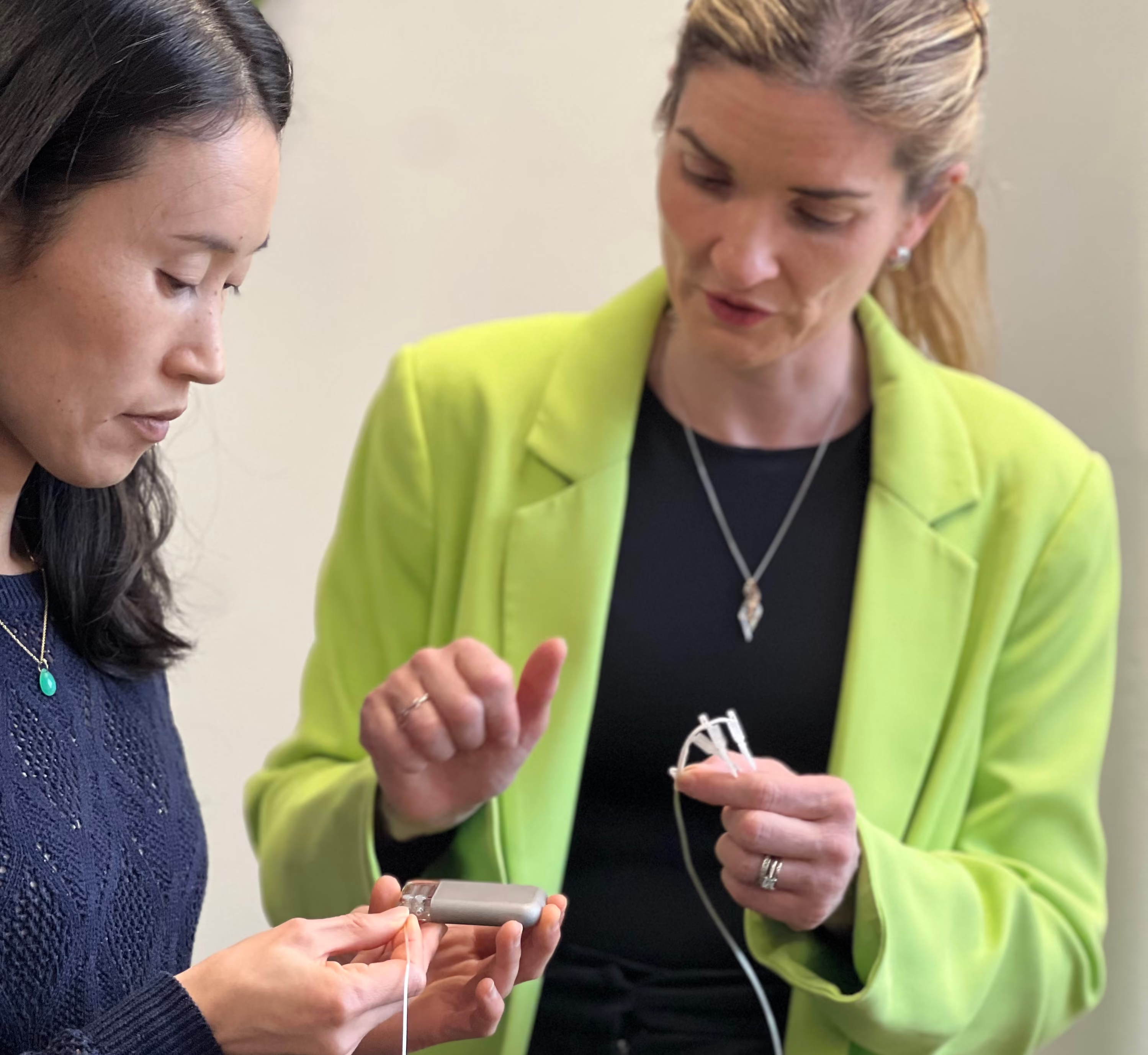
Bionics Institute researchers A/Prof Sophie Payne and Dr Tomoko Hyakumura.Bionics Institute researchers A/Prof Sophie Payne and Dr Tomoko Hyakumura.Bionics Institute researchers A/Prof Sophie Payne and Dr Tomoko Hyakumura.Bionics Institute researchers A/Prof Sophie Payne and Dr Tomoko Hyakumura.
July 1, 2026

A new approach to Parkinson’s Disease

Exploring nerve stimulation as a potential treatment.

Read More
Dr Eleanor Drummond presenting at the 2025 Sohn Hearts & Minds ConferenceDr Eleanor Drummond presenting at the 2025 Sohn Hearts & Minds ConferenceDr Eleanor Drummond presenting at the 2025 Sohn Hearts & Minds ConferenceDr Eleanor Drummond presenting at the 2025 Sohn Hearts & Minds Conference
July 1, 2026

Revealing what drives PSP

Mapping the biological changes behind progressive supranuclear palsy in the brain.

Read More
Picture: Dr Jennifer SnaithPicture: Dr Jennifer SnaithPicture: Dr Jennifer SnaithPicture: Dr Jennifer Snaith
July 1, 2026

Advancing treatment options for type 1 diabetes

Improving blood glucose and reducing insulin needs.

Read More
Picture: Dr Hamish KingPicture: Dr Hamish KingPicture: Dr Hamish KingPicture: Dr Hamish King
July 1, 2026

Solving the genetic causes of autoimmune diseases

Mapping hundreds of risk markers to better understand how these diseases develop and progress

Read More
July 1, 2026

The Future of Pain Management

Enhancing healthcare professionals' ability to deliver better pain management, now and into the future.

Read More
July 1, 2026

Harnessing the power of stem cell technology

Developing cell therapies for patients with blood diseases

Read More
Picture: Professor Kazuaki NegishiPicture: Professor Kazuaki NegishiPicture: Professor Kazuaki NegishiPicture: Professor Kazuaki Negishi
July 1, 2026

Protecting the heart when every minute matters

Investigating a new treatment to reduce heart damage after heart attacks

Read More
Picture: Associate Professor Orazio VittorioPicture: Associate Professor Orazio VittorioPicture: Associate Professor Orazio VittorioPicture: Associate Professor Orazio Vittorio
July 1, 2026

Targeting the drivers of cancer growth

Exploring how extrachromosomal DNA (ecDNA) drives cancer growth, spread and treatment resistance.

Read More
July 1, 2026

Improving the diagnosis of muscle disorders using advanced genetic testing

Focused on improving the efficiency and accuracy of diagnosing muscle disorders.

Read More