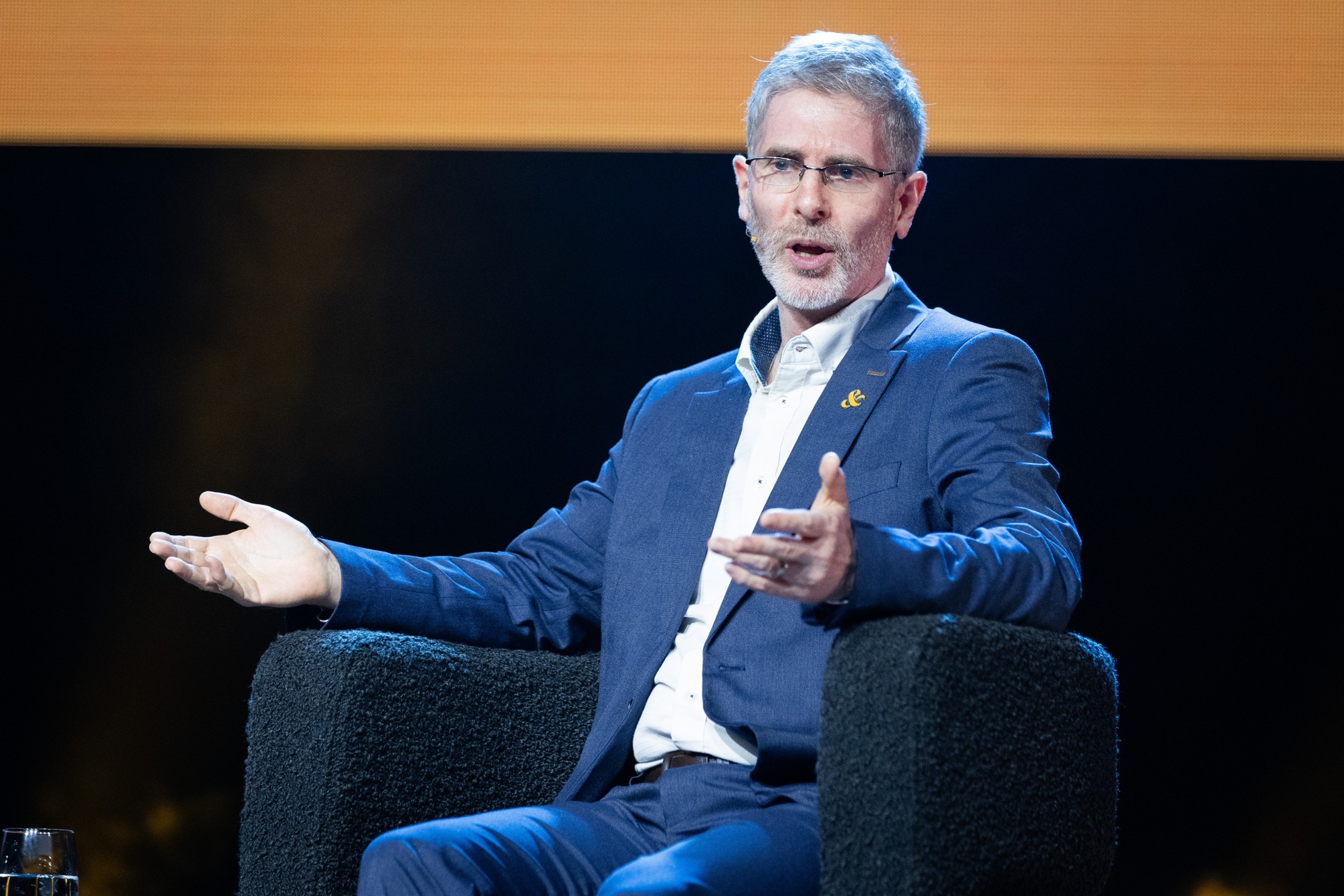

Rabobank global strategist Michael Every delivered the best line of the Sohn Hearts & Minds conference on Friday in Queenstown, New Zealand, by taking the mickey out of his hosts.
“There are no middle powers,” Every said. “They don’t have any power. They’re just in the middle. You can get together with Canada. You can get together with New Zealand. New Zealand and Australia can get together with the UK. But it’s like a lot of bald men talking about buying a comb.”
Every’s bigger message was similarly brutal. We’re in a world of war, where if you don’t control global supply chains, you’re nowhere.
“America, under Trump at least, is determined to do everything it can to get back to No. 1, even if it has to demolish everything and then rebuild it again a different way ... against that backdrop, you’re going to get war and you’re going to get peace … But this is not all about Trump. It won’t be all about Trump when he’s gone.”
Like many, Every expects that the Republican Party’s crushing defeat in the midterm elections will lead the president to focus more on foreign policy, and that could start soon. He noted that Trump has been talking about the possibility of a peace deal between Russia and Ukraine as recently as Thursday night.
Of course, this hint of peace is offset by talk of fear – Poland’s revelation that it foiled a possible provocation from the Russian exclave of Kaliningrad near its border is proof the escalation remains a risk.
It’s the same story in the war with Iran. Talk in recent days that some sort of peace deal is (again) moving into the frame has been offset with intense speculation that Israel and the US could be readying for fresh attacks, amid speculation that Prime Minister Benjamin Netanyahu’s chances of forming a new government are rapidly diminishing.
“In the Middle East, we have a war against the global economy, which continues to drag on and on,” says Every. “Potentially, that could kick off to another stage, even this evening or over the weekend. That’s what some of the war drums are signalling.”
The Tolstoy conundrum
Investors can be forgiven for being punch-drunk from all this war talk, much of which seems to go nowhere. But against the backdrop of Thursday night’s brutal artificial intelligence-driven sell-off on Wall Street, Every’s point is simple: ignore geopolitics at your peril, particularly when we are dealing with two live and very much connected wars.
Call it the Tolstoy conundrum. If we get peace in Ukraine, Iran or both, it’s a major market moving event; not only do oil prices fall, but a ceasefire in Russia would stop attacks on oil refineries, finally bringing relief on diesel and petrol prices.
But if we get more on one or both fronts, then markets have another big problem.
“They are one war,” Every says. “The bigger risk is they conflate into an even larger war, dragging in more countries. And guess what? Yes, it can even come out to Asia. There are lots of hotspots in Asia which can be inflamed by this getting bigger and bigger.”
And you thought the AI bloodbath was all there was to worry about this weekend.
This article was originally posted by Australian Financial Review here. Licensed by Copyright Agency. You must not copy this work without permission.