This Silicon Valley VC giant has a warning for software stocks

One of the world’s largest venture capital firms says investors are underestimating the carnage artificial intelligence will create for software companies, warning their pivots towards AI are likely just marketing.
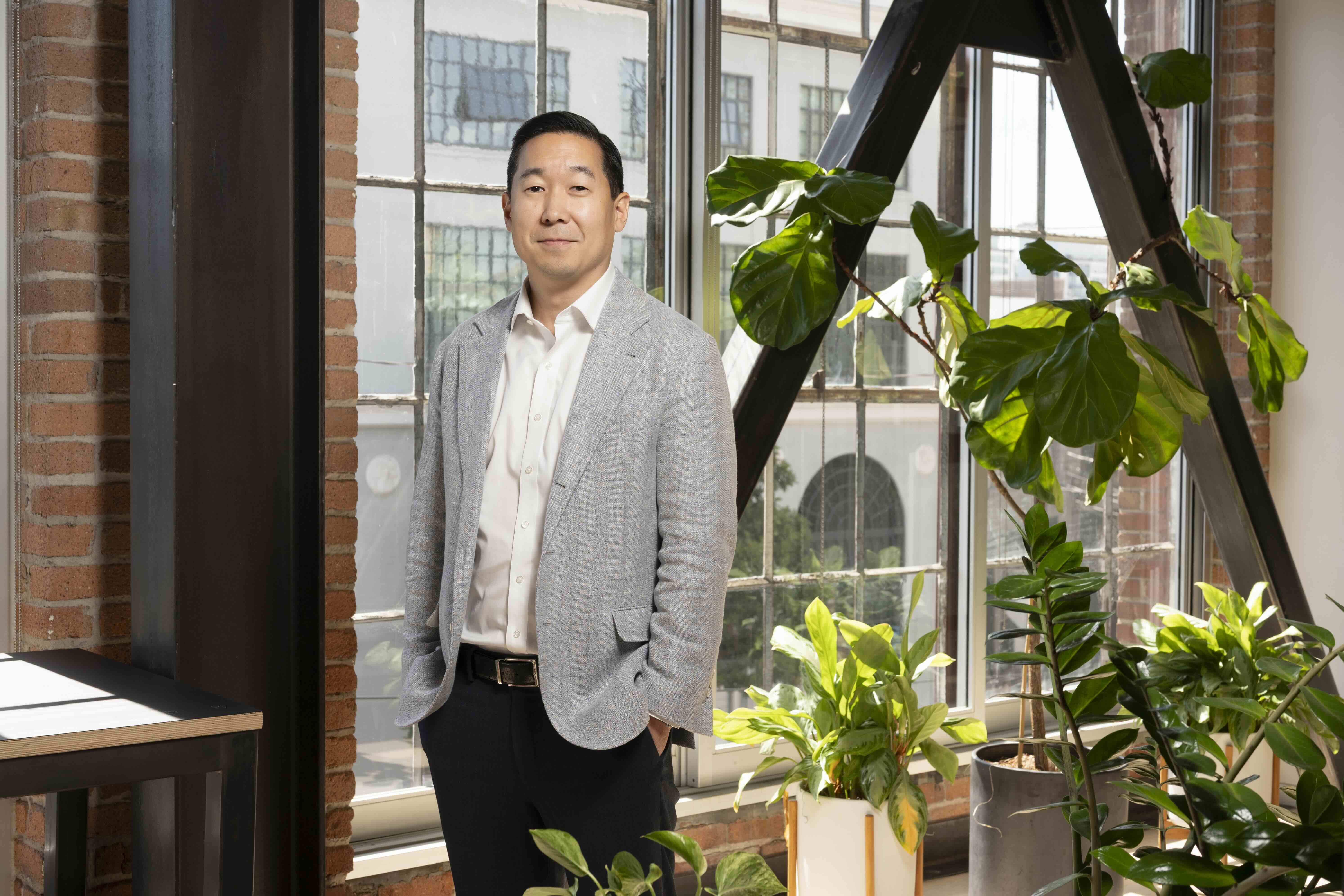
Photo: Isaac Kim (Laure Andrillon)

Emma Rapaport

This Silicon Valley VC giant has a warning for software stocks

September 11, 2026
One of the world’s largest venture capital firms says investors are underestimating the carnage artificial intelligence will create for software companies, warning their pivots towards AI are likely just marketing.
Read Transcript

One of the world’s largest venture capital firms says investors are underestimating the carnage artificial intelligence will create for software companies, warning their pivots towards AI are likely just marketing.

Lightspeed Venture Partners partner Isaac Kim said software investors were changing their narratives to justify support for companies clearly being disrupted by sophisticated AI tools. He said his firm, which oversees a portfolio worth about $70 billion, was now shunning traditional software businesses in funding rounds.

Isaac Kim, partner of Lightspeed Venture Partners, says investors are underestimating product disruption, as the $70b fund pivots capital away from legacy tech. 

“When AI [first] came out, a lot of software investors were like, ‘Don’t look over there, don’t worry about it,’” said Kim, who will be a headline speaker at the Sohn Hearts & Minds investor conference in Queenstown this year.

“Then the SaaSpocalypse hit, and people were on their heels and had to say, don’t worry about it; we’re going to take care of this; it’s fine; nothing is happening in our portfolio; we’re not seeing any revenue degradation or retention degradation. Now you see some good prints in the public market for software, and people are like, AI is the accelerator for software.

“Disruption takes time. If you have an entrenched customer base, they’re not necessarily going anywhere in a year or two years, but I guarantee you they’re planning to for two to three years down the line as it relates to AI.”

Over a period now known as the SaaSpocalypse, software stocks on Wall Street and the ASX were rapidly sold off earlier this year amid concerns that AI tools would reduce their growth and even replace their products. The sharp drop in valuations was widespread, pushing down the market capitalisations of companies as varied as Xero and REA Group. It also hurt the valuations of unlisted companies such as design software giant Canva.

Kim spent his formative years in private equity at Elliott Investment Management and Golden Gate Capital before joining Lightspeed in 2024. The firm is best known for its support of Anthropic, the developer behind Claude, one of the world’s most advanced AI platforms, along with start-ups such as Harvey, a legal platform, and Wiz, a cloud computing cybersecurity business that was acquired by Google this year for $US32 billion.

Lightspeed is among a growing list of venture capital firms that are no longer interested in investing in software businesses. Kim said another American private equity giant – Clayton, Dubilier & Rice – “doesn’t have a software team any more” while KKR is also reworking its team.

Last month, The Australian Financial Review reported that Airtree had told investors that it “would be remiss to pretend” AI was not hurting older start-ups, and said it was “pressure-testing whether our portfolio companies have a credible AI story, not as marketing, but as a genuine product”.

“If the answer is no, that’s a strategic gap that needs to be addressed quickly,” the Australian venture capital giant wrote to investors in May.

Asked how Lightspeed would approach older software businesses in its portfolio, Kim said it was “really hard”, and often a scramble for engineering talent that would be able to transform the company quickly.

“The talent game is really tough out there, and a lot of that talent doesn’t want to go into legacy businesses,” he said. “It’s a very tough thing to do, but you have to try to pivot, innovate, upgrade your team, get your team working on AI tooling, and you have to bring your customer base along.”

But Kim said venture capital firms were in a better position to deal with the disruption brought on by AI than other private equity firms, even as the sector faced pressure from investors to exit long-held assets.

“There are some massive private equity maturity walls coming up in the next three years,” he said. “When you have that looming, you have to either do unnatural things or get out and sell sooner. The good thing about VC is that often VC can be more patient, as long as you have the correct cash runway, and you can play for the option of being able to make that pivot.”

Kim said investors should scrutinise listed software stocks for claims they were pivoting to AI, adding that they could “obfuscate things pretty easily”.

“[Companies could] say, ‘we need to renew you’ ... you’re not going to get off in the short term of the software you bought before, but on the renewal, [they] want you to split that renewal up such that 20 per cent of it goes to a new AI product, and 80 per cent to the old product,” he said.

“All of a sudden, you split where the money’s coming from and going, and you can bolster your AI revenue. It doesn’t mean that it’s in production and being used.”

This article was originally posted by The Australian Financial Review here.

Licensed by Copyright Agency. You must not copy this work without permission.

One of the world’s largest venture capital firms says investors are underestimating the carnage artificial intelligence will create for software companies, warning their pivots towards AI are likely just marketing.

Lightspeed Venture Partners partner Isaac Kim said software investors were changing their narratives to justify support for companies clearly being disrupted by sophisticated AI tools. He said his firm, which oversees a portfolio worth about $70 billion, was now shunning traditional software businesses in funding rounds.

Isaac Kim, partner of Lightspeed Venture Partners, says investors are underestimating product disruption, as the $70b fund pivots capital away from legacy tech. 

“When AI [first] came out, a lot of software investors were like, ‘Don’t look over there, don’t worry about it,’” said Kim, who will be a headline speaker at the Sohn Hearts & Minds investor conference in Queenstown this year.

“Then the SaaSpocalypse hit, and people were on their heels and had to say, don’t worry about it; we’re going to take care of this; it’s fine; nothing is happening in our portfolio; we’re not seeing any revenue degradation or retention degradation. Now you see some good prints in the public market for software, and people are like, AI is the accelerator for software.

“Disruption takes time. If you have an entrenched customer base, they’re not necessarily going anywhere in a year or two years, but I guarantee you they’re planning to for two to three years down the line as it relates to AI.”

Over a period now known as the SaaSpocalypse, software stocks on Wall Street and the ASX were rapidly sold off earlier this year amid concerns that AI tools would reduce their growth and even replace their products. The sharp drop in valuations was widespread, pushing down the market capitalisations of companies as varied as Xero and REA Group. It also hurt the valuations of unlisted companies such as design software giant Canva.

Kim spent his formative years in private equity at Elliott Investment Management and Golden Gate Capital before joining Lightspeed in 2024. The firm is best known for its support of Anthropic, the developer behind Claude, one of the world’s most advanced AI platforms, along with start-ups such as Harvey, a legal platform, and Wiz, a cloud computing cybersecurity business that was acquired by Google this year for $US32 billion.

Lightspeed is among a growing list of venture capital firms that are no longer interested in investing in software businesses. Kim said another American private equity giant – Clayton, Dubilier & Rice – “doesn’t have a software team any more” while KKR is also reworking its team.

Last month, The Australian Financial Review reported that Airtree had told investors that it “would be remiss to pretend” AI was not hurting older start-ups, and said it was “pressure-testing whether our portfolio companies have a credible AI story, not as marketing, but as a genuine product”.

“If the answer is no, that’s a strategic gap that needs to be addressed quickly,” the Australian venture capital giant wrote to investors in May.

Asked how Lightspeed would approach older software businesses in its portfolio, Kim said it was “really hard”, and often a scramble for engineering talent that would be able to transform the company quickly.

“The talent game is really tough out there, and a lot of that talent doesn’t want to go into legacy businesses,” he said. “It’s a very tough thing to do, but you have to try to pivot, innovate, upgrade your team, get your team working on AI tooling, and you have to bring your customer base along.”

But Kim said venture capital firms were in a better position to deal with the disruption brought on by AI than other private equity firms, even as the sector faced pressure from investors to exit long-held assets.

“There are some massive private equity maturity walls coming up in the next three years,” he said. “When you have that looming, you have to either do unnatural things or get out and sell sooner. The good thing about VC is that often VC can be more patient, as long as you have the correct cash runway, and you can play for the option of being able to make that pivot.”

Kim said investors should scrutinise listed software stocks for claims they were pivoting to AI, adding that they could “obfuscate things pretty easily”.

“[Companies could] say, ‘we need to renew you’ ... you’re not going to get off in the short term of the software you bought before, but on the renewal, [they] want you to split that renewal up such that 20 per cent of it goes to a new AI product, and 80 per cent to the old product,” he said.

“All of a sudden, you split where the money’s coming from and going, and you can bolster your AI revenue. It doesn’t mean that it’s in production and being used.”

This article was originally posted by The Australian Financial Review here.

Licensed by Copyright Agency. You must not copy this work without permission.

Disclaimer: This material has been prepared by Australian Financial Review, published on September 11, 2026. HM1 is not responsible for the content of linked websites or content prepared by third party. The inclusion of these links and third-party content does not in any way imply any form of endorsement by HM1 of the products or services provided by persons or organisations who are responsible for the linked websites and third-party content. This information is for general information only and does not consider the objectives, financial situation or needs of any person. Before making an investment decision, you should read the relevant disclosure document (if appropriate) and seek professional advice to determine whether the investment and information is suitable for you.

facebook
linkedin
All
Thank you! Your submission has been received!
Oops! Something went wrong while submitting the form.
November 2, 2023

Meet the 2023 Conference Managers

Following a rigorous global search, the Conference Fund Manager Selection Committee is pleased to share ten new managers for 2023.

Read More
October 23, 2023

Dan Loeb to headline Sohn Hearts & Minds

Famed hedge fund manager Dan Loeb has been named as one of the headline acts for next month’s Sohn Hearts & Minds philanthropic investment conference to be held in Sydney.

Read More
October 23, 2023

US Bank Run Has Slowed To A Walk, But Instability Remains

When Ravi Chopra reveals his stock pick at the prestigious Sohn Hearts & Minds conference at the Opera House in Sydney next month, it could well be a short bet on a US bank.

Read More
October 18, 2023

Two small caps: Propel Funeral Services (ASX: PFP) and Clarity Pharmaceuticals (ASX: CU6)

Get to know our 2023 Conference Fund Manager Rikki Bannan of IFM Investors who recently featured on the Equity Mates Media podcast.

Read More
October 16, 2023

How this hedge fund pulled off 2023’s ‘big short’

Last year, Ravi Chopra was travelling through Europe to shop his latest short idea to potential investors. “Financials are really all in the weeds,” he told The Australian Financial Review in an interview from New York.

Read More
October 10, 2023

Beware the pitfalls of investing in healthcare, says IFM boss

“Healthcare is often viewed as a stable, defensive sector to invest in, but in small caps that hasn’t necessarily proven to be the case,” she says in an interview ahead of her appearance at the Sohn Hearts & Minds Conference 2023.

Read More
October 6, 2023

Secret to a long life cheaper than you think celebrity physician Peter Attia reveals

Don't miss Dr Peter Attia who will speak at the Sohn Hearts & Minds Conference at the Sydney Opera House next month.

Read More
September 18, 2023

‘Volatility is opportunity’: why this manager loves shorting stocks

Angela Aldrich of Bayberry Capital Partners LP bet against Treasury Wine Estates at the top of the market and now she's preparing to make her next big call at this year's Sohn Hearts & Minds Conference.

Read More
September 11, 2023

Investors Sweeten On Hedge Funds As Rates Climb

After a decade of easy money pushing equity markets in one direction, Wall Street hedge fund manager Ricky Sandler says the return of volatility and higher interest rates is seeing money return to long-short strategies.

Read More
September 11, 2023

Stock Stars Look Under The Surface

Influential New York-hedge fund manager Ricky Sandler returns to Australia to make a new pick at this year’s Sohn Hearts & Minds conference that will be held at the Sydney Opera House on November 17.

Read More
Barrenjoey co-executive chairman Matthew Grounds and New York-based Eminence Capital fund manager Ricky Sandler will be at the eighth Sohn Hearts & Minds conference. Picture: Peter RaeBarrenjoey co-executive chairman Matthew Grounds and New York-based Eminence Capital fund manager Ricky Sandler will be at the eighth Sohn Hearts & Minds conference. Picture: Peter RaeBarrenjoey co-executive chairman Matthew Grounds and New York-based Eminence Capital fund manager Ricky Sandler will be at the eighth Sohn Hearts & Minds conference. Picture: Peter RaeBarrenjoey co-executive chairman Matthew Grounds and New York-based Eminence Capital fund manager Ricky Sandler will be at the eighth Sohn Hearts & Minds conference. Picture: Peter Rae
September 11, 2023

Top Ny Stock Picker Warns Inflation To Remain Above Pre-Covid Levels

Influential New York hedge fund manager Ricky Sandler of Eminence Capital returns for the 2023 Sohn Hearts & Minds Conference in Sydney and says no one is focused on picking interesting, idiosyncratic stocks.

Read More
August 4, 2023

New Relic

New Relic was pitched by Ricky Sandler of Eminence Capital at the 2022 Sohn Hearts & Minds Conference.

Read More
June 18, 2023

Investors can’t agree how to value the world’s hottest stock

Despite mixed investor opinions, Munro Partners (Core Fund Manager) remains a strong believer in Nvidia. They are standing firm in their investment and still consider it a solid buy.

Read More
January 5, 2023

Why Transurban will always be one step ahead of inflation

Loathed by motorists, but loved by investors. Transurban came under focus when Catherine Allfrey nominated the roads operator as her top pick at the recent Sohn Hearts & Minds Conference.

Read More
November 18, 2022

Don’t rush to invest yet, fund manager tells Sohn event

Fund manager turned anti-corruption campaigner Bill Browder is advising investors to hang on to their cash until central banks stop raising interest rates and the cost of living starts to come down.

Read More