
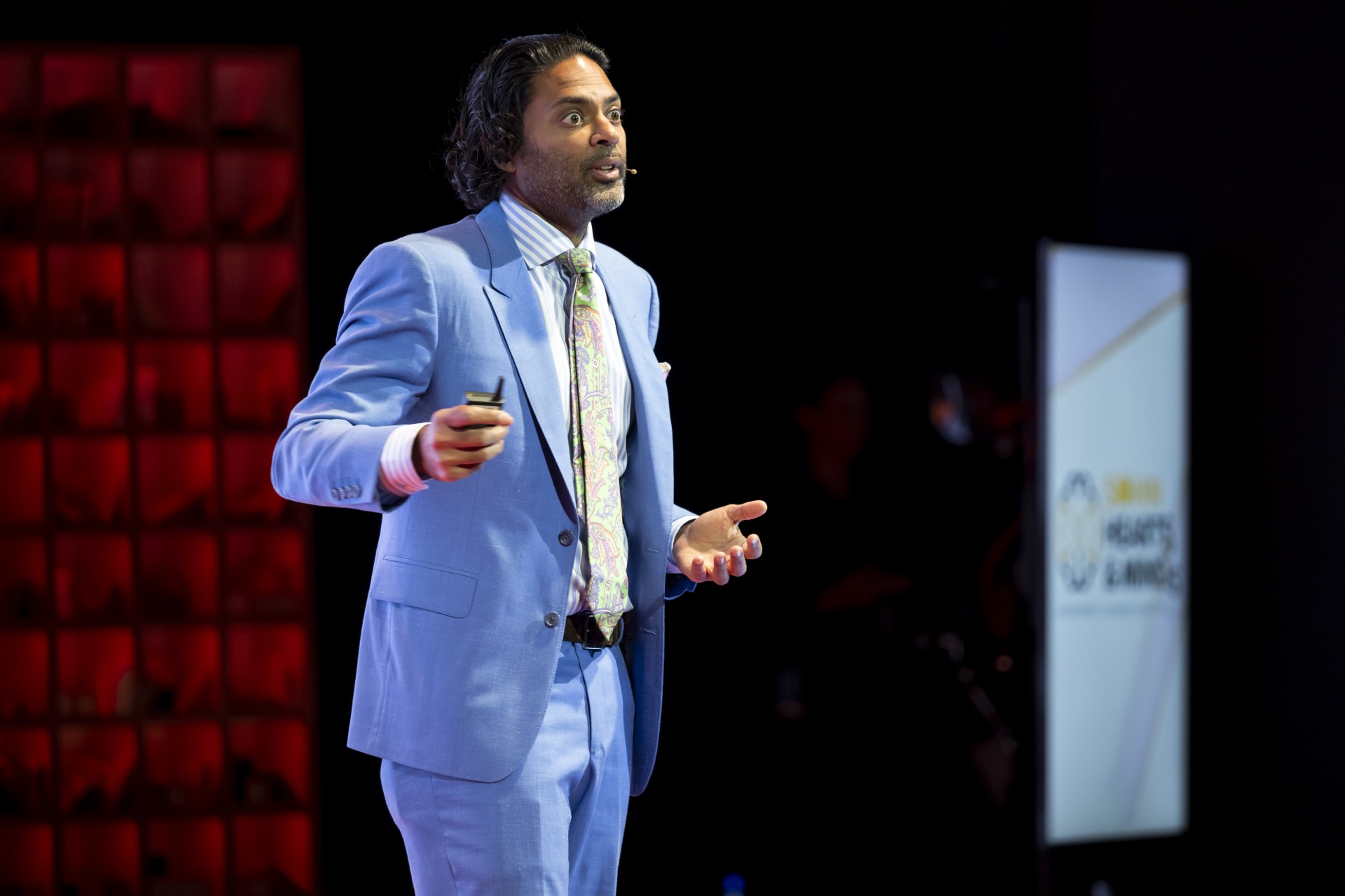

When Ravi Chopra last travelled from his base in Miami to Australia, back in 2023, the US banking system was in turmoil.
The Silicon Valley Bank crisis had triggered a crisis of confidence and a wave of shotgun deals to save lenders at risk of deposit runs. Chopra's financials-focused hedge fund, Azora Capital, had bet against SVB in its own version of a big short.
Three years later, Chopra is returning to the region to pitch a stock at the Sohn Hearts & Minds investment conference in Queenstown, New Zealand. This time the US banking sector has never been stronger.
His 2023 conference pick, Webster Bank, doubled in value and has been bought by Santander, while high interest rates and low loan losses have lifted profitability across the sector to record highs. It was a backdrop Chopra described as ‘‘better than nirvana''.
Azora, which has US2.5billion (3.6 billion) of assets under management, switched from a short position in US banks to a long position. Now, it's more neutral, and if Chopra has one big prediction, it's that a wave of mergers and acquisitions in the banking sector awaits. ‘‘In the last 15 years, we've seen bank CEOs pushing well past retirement age,'' he explains. They'd been through a pandemic, zero interest rates, a regional banking crisis and tough regulation, and now with projected profits above their peaks, he reckons they'll decide ‘‘it's time for me to hit the bid and go play some golf''.
The generational shift in corporate ownership extends beyond the banks. Chopra says the sector faces challenges relevant to the big Australian banks, including higher funding costs as depositors chase better deals driven in part by neo-bank competitors. The other is a peak in favourable regulationa reminder that changes in the political environment can have a bearing on the operating backdrop for banks.
So why are deposit costs likely to trend higher in the US? Chopra says it's a mixture of ‘‘technology, awareness and competition'' that will force more savers to be more proactive in getting the highest rates on their savings.
The threat of artificial intelligence driving this trend is making headlines. Chopra says he has mixed views on the potential for AI agents to encourage more switching among US savers into higher-yielding deposits. He points to JPMorgan chairman Jamie Dimon's comments that responsibility switches from the bank to the customer if they hand power to robots to manage their cash.
A far more relevant and near-term threat is neo-bank or digital competitors such as Revolut, which operate with lower costs and overheads compared with their larger rivals. ‘‘They don't have a back book [of deposits] to reprice, and so they can be very aggressive. That's definitely one of the reasons I see a deposit cost going up over time.''
Those comments can be applied to the battle between Macquarie and Commonwealth Bank, as the former's deposit competitiveness drives its market share grab. That in turn has led to a political debate about whether Macquarie and other digital banks should compensate the broader banking sector, which services the public through expensive national branch networks.
On the matter of branches, Chopra has actually noticed an interesting and counter-intuitive development: the big US banks are actually opening, not closing, branches, reversing a decadelong trend.
‘‘What banks have found is that a large swath of customers like the idea of knowing there's a bank branch they can go to, even if they're not going to go to it, and even if it's a little far away,'' he says. ‘‘The bank branch does provide some amount of advertising, and a feeling of trust and confidence.''
That banks would ultimately realise that branches were far more valuable than simply the service they provide was predicted by former US Federal Reserve governor Jeremy Stein in a speech titled ‘‘Banks as patient debt investors'', way back in 2014.
In that address, Stein explained that even though branches cost about 1.3 per cent of the value of deposits gathered, they could also be considered ‘‘a deliberate effort to build loyalty'' and foster ‘‘deposit stickiness'', which is the underrated secret sauce of a profitable bank.
A bank with sticky deposits wins in two crucial ways: it has lower funding costs than its peers and, crucially, it has more flexibility to write, and hold on to, longer-term profitable loans because the capital source is stable.
‘‘This is a truism [in finance] that it's easy to give money away. On the asset side, you can always make loans, and you can always buy securities,'' says Chopra. ‘‘The hard part, and the true value, of the bank is on the deposit side.''
That brings us to the next big topic in US and global finance: private credit. It turns out the sector was doing the easy part of finance in giving money away as it grew by $US1 trillion in five years.
‘‘If you are growing materially faster than the market, you are almost always taking some unintended credit risk,'' Chopra said. ‘‘You're mispricing risk in some way, and that often ends in a credit issue.''
The growth of private credit ate into the lending share of US banks as borrowers accepted higher rates in exchange for faster approval times and looser terms. The banks, however, are sitting pretty.
‘‘The upside is that the banking industry as a whole actually kept their noses clean. They had to follow regulatory guidelines, and credit, as a consequence, has proven to be quite surprisingly strong for a long period of time.''
Now, the banks have been telling the market they're regaining market share from the private credit players who are learning that it's easy to give money away but much harder to secure stable financing.
‘‘The retail products have seen outflows from the private credit industry, and perhaps, as a consequence of that, they're being a bit less aggressive as it relates to competing for loans.''
The Australian Financial Review is a media partner of Sohn Hearts & Minds.
This article was originally posted by The Australian Financial Review here. Licensed by Copyright Agency. You must not copy this work without permission.


