
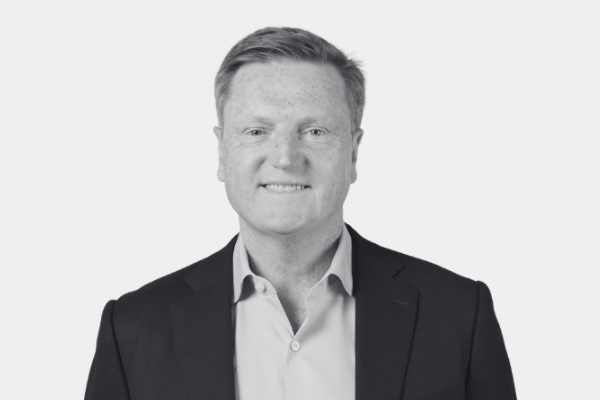

When fund manager John Pinkel tells people at dinner parties that he is buying SK Hynix, he knows what is coming.
“Five people would immediately tell you all the reasons it's a bad idea,” he says.
“That's usually a necessary, but not sufficient, condition for a good investment idea.”
It is a line that sums up his style. Pinkel is a partner and portfolio manager at Indus Capital, an Asia-Pacific equities manager with about $US6bn ($8.6bn) under management. He has run the firm's pan-Asia Select Fund since 2009. His concentrated, long-only portfolio of roughly 35 stocks covers about half the world's population, a third of global output and a quarter of global market capitalisation.
Pinkel's conviction in Hynix goes back to 2019, when Indus made a deliberate call to build a long-term position based on the growing strategic importance of memory chips, long before artificial intelligence became a buzzword on every trading desk.
Indus deliberately avoided Samsung Electronics, despite its index weight.
“We just wanted pure memory exposure,” Pinkel says.
That patience paid off last year and into mid-2025, as AI infrastructure spending drove memory prices higher. Indus took profits in May and June, then became a buyer again as the stock slid. Pinkel says that, using smoothed two-year forward earnings, Hynix peaked in June at about seven times earnings and now trades at roughly three times.
“There's a lot for people to worry about, and that worry is exactly what creates the opportunity,” he says.
Pinkel's path to Indus began in 1989, when he moved to Taiwan for intensive Mandarin training, then spent time in mainland China in the aftermath of the Tiananmen Square crackdown. Stints followed in Hong Kong, Shanghai, Seoul and Taipei, including running Citigroup's equities business in Taiwan. He joined Indus 24 years ago.
Along the way, he married a lawyer from Brisbane's southern suburbs, in the same electorate once held by former prime minister Kevin Rudd, a fellow Mandarin speaker.
The couple later owned a cattle property outside Gympie in the Sunshine Coast hinterland. Thirteen years ago they moved to Silicon Valley, a decision Pinkel calls “serendipitous”.
Living near the headquarters of companies such as Apple, Nvidia and Netflix has given his Asia-focused team a key vantage point. Pinkel finds senior Asian executives are often easier to meet in San Francisco or New York than in Tokyo. And R&D heads often have sharper insight into a company's future than its chief executive.
Pinkel's dinner party test - that good ideas usually attract scepticism - shows up repeatedly in his best-performing positions.
One is E Ink, an obscure Taiwanese company making the epaper display technology used in e-readers such as Kindles. Indus found it about a decade ago, well before wider adoption. “They have wonderful display technology that uses about 1 per cent of the power of TFT LCD,” Pinkel says. The firm expects it to spread into more products over time.
Another is ASICS, the Japanese sportswear brand. Indus bought in when the North American business was widely seen as broken, drawing on two New York-based analysts who understood exactly what had gone wrong there in 2015 and 2016 - and that it was fixable.
Indus also backed the revival of the brand's heritage “Onitsuka Tiger” fashion line.
The position has returned six times Indus's money over six years.
“We're Asia-based, but we're able to look at things from a global perspective,” Pinkel says.
Japanese conglomerate Hitachi fits the same pattern.
“A totally different company” to 15 years ago, it is now driven significantly by a power grid business bought from Switzerland's ABB, feeding growing demand from renewables and data centres.
Indus is also the largest shareholder, as a firm, in regional lender Suruga Bank, alongside a stake in Mizuho.
Medical technology group Olympus has been a repeat trade: Indus bought heavily after an accounting scandal resulted in the shares sinking about 80 per cent in 2012, sold out, then returned this year after a fresh slump.
“We've swooped in twice to buy Olympus on the lows,” Pinkel says of a business now built around endoscopes and surgical devices.
A similar story applies to Fujitsu, where Indus became a shareholder nine years ago, betting on Japan's historic under-investment in corporate technology.
A colleague now sits on Fujitsu's board, reflecting an “engagement” style of investing rather than public activism.
“We can be tough,” Pinkel says. “We're just not going to be public about it.”
On resources, Pinkel says Indus prefers Australian miners such as BHP over emerging market rivals, citing governance standards.
“Australia probably has the highest standards in the world for environmental concern and engagement with local communities,” he says.
Pinkel's connection to the conference at which he was interviewed, Sohn Hearts & Minds, runs far deeper than investing. His father, Donald Pinkel, was the founding medical director of St Jude Children's Research Hospital in Memphis. At the time, childhood leukaemia was considered close to a death sentence. Donald Pinkel pioneered a combined treatment approach that turned it into a curable disease, a breakthrough that became the template for leukaemia treatment worldwide.
The 2026 Sohn Hearts & Minds Investment Leaders Conference will be held in Queenstown, New Zealand on Friday, November 6. It will be the first time the event has been staged outside of Australia.
The Australian is a media partner. Tickets can be purchased at sohnheartsandminds.com.au
This article was originally posted by The Australian here. Licensed by Copyright Agency. You must not copy this work without permission.


