How MONA’s David Walsh shocked our top stock pickers

Professional gambler and arts impresario David Walsh had a brutal message for successful top money managers – you may just be lucky.

How MONA’s David Walsh shocked our top stock pickers

November 18, 2022
Professional gambler and arts impresario David Walsh had a brutal message for successful top money managers – you may just be lucky.
Read Transcript

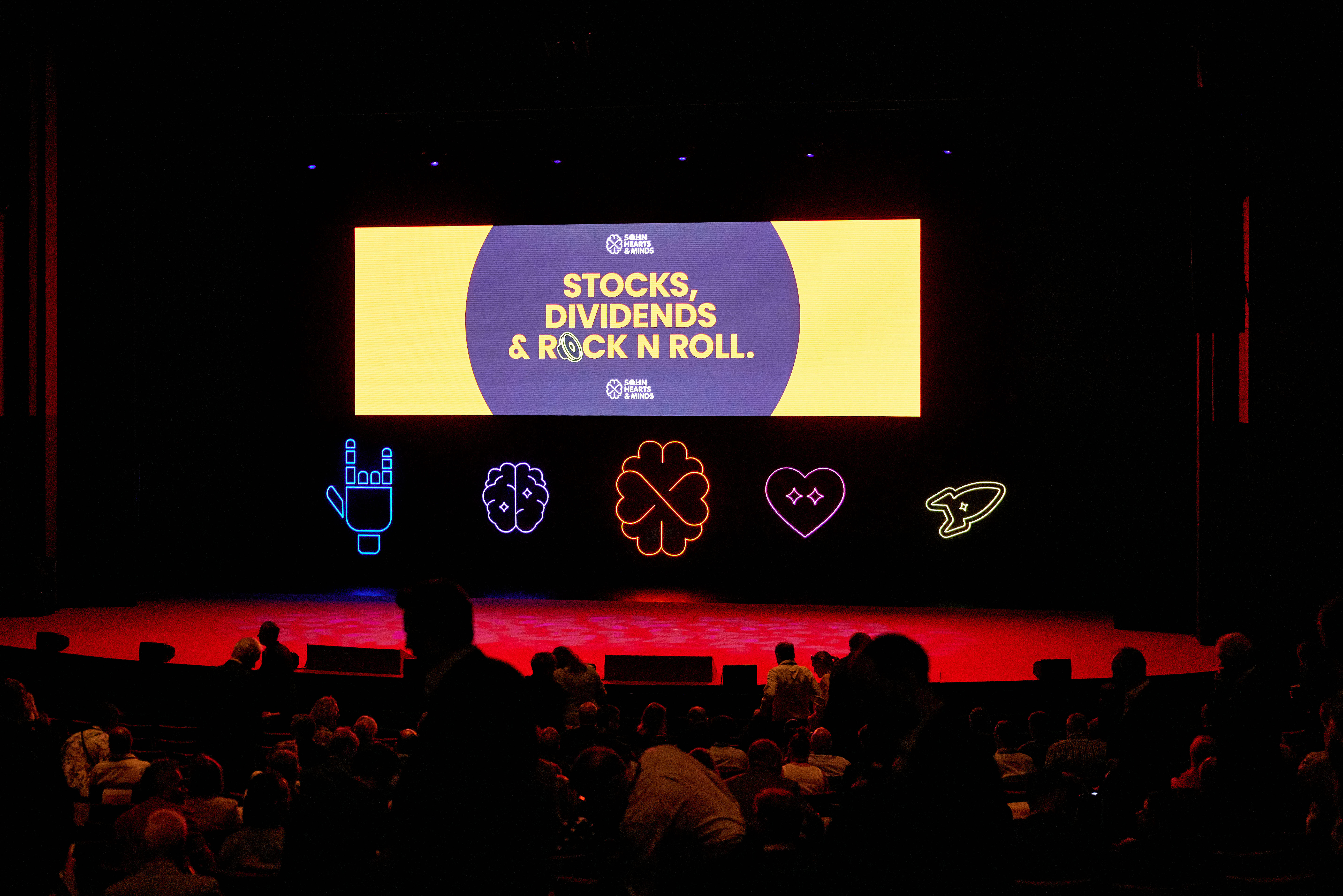
There’s something magnetic about David Walsh, the professional gambler and owner of the iconic Museum of Old & New Art, who stole the show at the Sohn Hearts & Minds Conference in Hobart.

Anyone who has visited MONA (which hosted Thursday night’s pre-conference welcome) knows that the mercurial and mischievous Walsh loves to provoke a reaction. And he was quite happy to pour a bucket of cold water on the stock pickers, investment bankers and business people who would justifiably consider themselves the cream of Australia’s financial sector.

Walsh’s message to the 600-strong audience at the seventh annual Sohn conference? You’ve probably just been lucky.

Over the course of a fascinating 35-minute conversation with Andrew Denton – which was unquestionably the thought-provoking moment of the event – Walsh recounted the fascinating story of MONA’s establishment with what he considers the ill-gotten gains of his gambling career.

“All I do is redistribute money, and there’s no sense of accomplishment in it,” Walsh archly told the room full of money managers, sipping from a foaming Campari.

But it was Walsh’s career as a gambler that most fascinated the room full of professional risk-takers.

He explained how he dropped out of studying maths at university in Hobart and fell in with what he described as a bad, but fun crowd.

“They wanted me because I could do sums. And I wanted them because they could talk to girls.”

This enterprise, which is led by Rich Lister and Walsh’s great friend, Zeljko Ranogajec, started counting cards while playing blackjack at the Hobart casino and eventually took its act on the road. Walsh told the audience how he and his crew loved to visit Las Vegas for what was called the “Gorilla Big Play” on the nights when big boxing matches would be held, stationing card counters across the floor of a casino to take advantage of the increase in bet limits.

Walsh revealed that the syndicate, which Ranogajec still leads, bets about $10 billion a year across horse racing, sports betting and even lotteries. One of their biggest wins was a $63 million haul from a big horse race run in Tokyo on Christmas Eve, but Walsh said the crew won even more about six months ago betting on a German lottery that had jackpotted several times. The syndicate bought $11 million worth of tickets.

He only found out about the Tokyo win a week after the race was run.

“If you have to worry about whether your bets are winning, your bets are not going to win if you haven’t already got the system resolved to the point where it’s real.”

What makes Walsh so engaging is his ability to be brutally honest about his own strengths and weaknesses – not because of some sense of modesty, but because of logic and maths.

For example, becoming a professional gambler as a young man was silly, given he knew that the world was full of failed professional gamblers.

Walsh joked that he should have ended up in the street or, even worse, in the audience of the Sohn conference.

“If you assess it with the information that was available to me at the time, it was literally the worst decision I’ve ever made. It turned out well.”

This was down to luck, Walsh said. When the syndicate started betting bigger amounts and playing a wider range of games, Walsh went back and checked the maths of the systems it was using. What he found was that the syndicate’s edge over the house was not nearly as strong as they thought it was, and there was an 80 per cent to 90 per cent chance that the whole enterprise would be bankrupted because it was betting too much. So while Walsh thought he had a system that could beat the market, it turned out he was mainly lucky.

“That means nine out of every 10 people with a similar set of skills than me go broke,” Walsh said.

The lesson equally applies to investors, Walsh argued – even the top ones assembled at the Sohn conference.

“Finding a system that works and is stable and works for a long time is extremely difficult. If you’ve had a system that works for 20 years, it’s not as a result of skill. You acquire the system that worked by luck, then once it worked, it might keep working,” Walsh explained.

“The cohort here is probably a cohort who were mostly successful. But there is another cohort [that] would fill a stadium of people, that had similarly realised appropriate strategies, that either overbet them or simply chose strategies that didn’t work in the long run or failed to maintain those strategies. But there’s no difference in the level of skill of those that failed and those that succeeded.”

This was a challenging message for the rapt audience of money managers to hear. The idea that experience, skills and a system can deliver solid returns over time is central to everything professional investors do.

But Walsh’s underlying message was that hubris is a dangerous thing – your “edge” over the market may well be an illusion.

Walsh said he was currently pouring resources and energy into finding ways to protect the income of his syndicate from artificial intelligence. He’s some way off, but believes having data sets with unique observations that are not widely available could provide a way to tilt markets to the syndicate’s benefits.

But don’t expect to see him playing in financial markets. Walsh said 40 years studying equity markets had suggested that while they do rise over time in a random way, the other side of the equation worried him.

“What is not clear to me is whether the variance, the amount of risk, isn’t also going up. If it is, and if that variance is expanding faster than the growth of the market, then one day it will all turn to shit.”

Using artificial intelligence to predict flash crashes in markets, and trading the other side of those events, might be one way to use algorithmic trading in financial markets.

Walsh has plenty of incentive to protect his gambling income – he revealed MONA’s annual losses had blown out to $25 million.

And while the museum has been a boon for Tasmanian tourism, Walsh warned his Sohn hosts that there can be side-effects to philanthropy. The explosion of tourism numbers had led to an explosion in the number of Hobart properties on Airbnb.

“I created a homelessness problem, or I co-created it. It’s really hard to do good without side-effects.”

It’s not the worst problem to have, of course. The Sohn event, the brainchild of a group that includes Barrenjoey founders Matthew Grounds and Guy Fowler, veteran investor Gary Weiss and counts key supporters including Premier Investments’ Solomon Lew, Wilson Asset Management’s Geoff Wilson, Chris Cuffe and UBS veteran Michael Walsh, has raised over $40 million for medical research over the last six years, and was set to make a big addition to that after Friday’s event.

You might think Walsh has enough to keep him occupied, including what he described as an eternal battle with the Australian Taxation Office.

“Every 10 years I lose. And in between I do not win,” he joked.

But he’s also taking aim at a curious but common problem: queuing. He and a team is working on technology that will use location services to try to eliminate queues in settings such as restaurants. It’s a little example of how one of Australia’s most fascinating minds keeps whirring, and looking forward.

“The future is foreign country, but I think it’s worth visiting,” Walsh said. “The future is worth the risk.”


This article was originally posted by The Australian Financial Review here.

Licensed by Copyright Agency. You must not copy this work without permission.

Disclaimer: This material has been prepared by AFR, published on 18 November 2022. HM1 is not responsible for the content of linked websites or content prepared by third party. The inclusion of these links and third-party content does not in any way imply any form of endorsement by HM1 of the products or services provided by persons or organisations who are responsible for the linked websites and third-party content. This information is for general information only and does not consider the objectives, financial situation or needs of any person. Before making an investment decision, you should read the relevant disclosure document (if appropriate) and seek professional advice to determine whether the investment and information is suitable for you.
There’s something magnetic about David Walsh, the professional gambler and owner of the iconic Museum of Old & New Art, who stole the show at the Sohn Hearts & Minds Conference in Hobart.

Anyone who has visited MONA (which hosted Thursday night’s pre-conference welcome) knows that the mercurial and mischievous Walsh loves to provoke a reaction. And he was quite happy to pour a bucket of cold water on the stock pickers, investment bankers and business people who would justifiably consider themselves the cream of Australia’s financial sector.

Walsh’s message to the 600-strong audience at the seventh annual Sohn conference? You’ve probably just been lucky.

Over the course of a fascinating 35-minute conversation with Andrew Denton – which was unquestionably the thought-provoking moment of the event – Walsh recounted the fascinating story of MONA’s establishment with what he considers the ill-gotten gains of his gambling career.

“All I do is redistribute money, and there’s no sense of accomplishment in it,” Walsh archly told the room full of money managers, sipping from a foaming Campari.

But it was Walsh’s career as a gambler that most fascinated the room full of professional risk-takers.

He explained how he dropped out of studying maths at university in Hobart and fell in with what he described as a bad, but fun crowd.

“They wanted me because I could do sums. And I wanted them because they could talk to girls.”

This enterprise, which is led by Rich Lister and Walsh’s great friend, Zeljko Ranogajec, started counting cards while playing blackjack at the Hobart casino and eventually took its act on the road. Walsh told the audience how he and his crew loved to visit Las Vegas for what was called the “Gorilla Big Play” on the nights when big boxing matches would be held, stationing card counters across the floor of a casino to take advantage of the increase in bet limits.

Walsh revealed that the syndicate, which Ranogajec still leads, bets about $10 billion a year across horse racing, sports betting and even lotteries. One of their biggest wins was a $63 million haul from a big horse race run in Tokyo on Christmas Eve, but Walsh said the crew won even more about six months ago betting on a German lottery that had jackpotted several times. The syndicate bought $11 million worth of tickets.

He only found out about the Tokyo win a week after the race was run.

“If you have to worry about whether your bets are winning, your bets are not going to win if you haven’t already got the system resolved to the point where it’s real.”

What makes Walsh so engaging is his ability to be brutally honest about his own strengths and weaknesses – not because of some sense of modesty, but because of logic and maths.

For example, becoming a professional gambler as a young man was silly, given he knew that the world was full of failed professional gamblers.

Walsh joked that he should have ended up in the street or, even worse, in the audience of the Sohn conference.

“If you assess it with the information that was available to me at the time, it was literally the worst decision I’ve ever made. It turned out well.”

This was down to luck, Walsh said. When the syndicate started betting bigger amounts and playing a wider range of games, Walsh went back and checked the maths of the systems it was using. What he found was that the syndicate’s edge over the house was not nearly as strong as they thought it was, and there was an 80 per cent to 90 per cent chance that the whole enterprise would be bankrupted because it was betting too much. So while Walsh thought he had a system that could beat the market, it turned out he was mainly lucky.

“That means nine out of every 10 people with a similar set of skills than me go broke,” Walsh said.

The lesson equally applies to investors, Walsh argued – even the top ones assembled at the Sohn conference.

“Finding a system that works and is stable and works for a long time is extremely difficult. If you’ve had a system that works for 20 years, it’s not as a result of skill. You acquire the system that worked by luck, then once it worked, it might keep working,” Walsh explained.

“The cohort here is probably a cohort who were mostly successful. But there is another cohort [that] would fill a stadium of people, that had similarly realised appropriate strategies, that either overbet them or simply chose strategies that didn’t work in the long run or failed to maintain those strategies. But there’s no difference in the level of skill of those that failed and those that succeeded.”

This was a challenging message for the rapt audience of money managers to hear. The idea that experience, skills and a system can deliver solid returns over time is central to everything professional investors do.

But Walsh’s underlying message was that hubris is a dangerous thing – your “edge” over the market may well be an illusion.

Walsh said he was currently pouring resources and energy into finding ways to protect the income of his syndicate from artificial intelligence. He’s some way off, but believes having data sets with unique observations that are not widely available could provide a way to tilt markets to the syndicate’s benefits.

But don’t expect to see him playing in financial markets. Walsh said 40 years studying equity markets had suggested that while they do rise over time in a random way, the other side of the equation worried him.

“What is not clear to me is whether the variance, the amount of risk, isn’t also going up. If it is, and if that variance is expanding faster than the growth of the market, then one day it will all turn to shit.”

Using artificial intelligence to predict flash crashes in markets, and trading the other side of those events, might be one way to use algorithmic trading in financial markets.

Walsh has plenty of incentive to protect his gambling income – he revealed MONA’s annual losses had blown out to $25 million.

And while the museum has been a boon for Tasmanian tourism, Walsh warned his Sohn hosts that there can be side-effects to philanthropy. The explosion of tourism numbers had led to an explosion in the number of Hobart properties on Airbnb.

“I created a homelessness problem, or I co-created it. It’s really hard to do good without side-effects.”

It’s not the worst problem to have, of course. The Sohn event, the brainchild of a group that includes Barrenjoey founders Matthew Grounds and Guy Fowler, veteran investor Gary Weiss and counts key supporters including Premier Investments’ Solomon Lew, Wilson Asset Management’s Geoff Wilson, Chris Cuffe and UBS veteran Michael Walsh, has raised over $40 million for medical research over the last six years, and was set to make a big addition to that after Friday’s event.

You might think Walsh has enough to keep him occupied, including what he described as an eternal battle with the Australian Taxation Office.

“Every 10 years I lose. And in between I do not win,” he joked.

But he’s also taking aim at a curious but common problem: queuing. He and a team is working on technology that will use location services to try to eliminate queues in settings such as restaurants. It’s a little example of how one of Australia’s most fascinating minds keeps whirring, and looking forward.

“The future is foreign country, but I think it’s worth visiting,” Walsh said. “The future is worth the risk.”


This article was originally posted by The Australian Financial Review here.

Licensed by Copyright Agency. You must not copy this work without permission.

Disclaimer: This material has been prepared by AFR, published on 18 November 2022. HM1 is not responsible for the content of linked websites or content prepared by third party. The inclusion of these links and third-party content does not in any way imply any form of endorsement by HM1 of the products or services provided by persons or organisations who are responsible for the linked websites and third-party content. This information is for general information only and does not consider the objectives, financial situation or needs of any person. Before making an investment decision, you should read the relevant disclosure document (if appropriate) and seek professional advice to determine whether the investment and information is suitable for you.

Disclaimer: This material has been prepared by Australian Financial Review, published on Nov 18, 2022. HM1 is not responsible for the content of linked websites or content prepared by third party. The inclusion of these links and third-party content does not in any way imply any form of endorsement by HM1 of the products or services provided by persons or organisations who are responsible for the linked websites and third-party content. This information is for general information only and does not consider the objectives, financial situation or needs of any person. Before making an investment decision, you should read the relevant disclosure document (if appropriate) and seek professional advice to determine whether the investment and information is suitable for you.

facebook
linkedin
All
Thank you! Your submission has been received!
Oops! Something went wrong while submitting the form.
March 14, 2025

$1.4 million boost for SA medical research

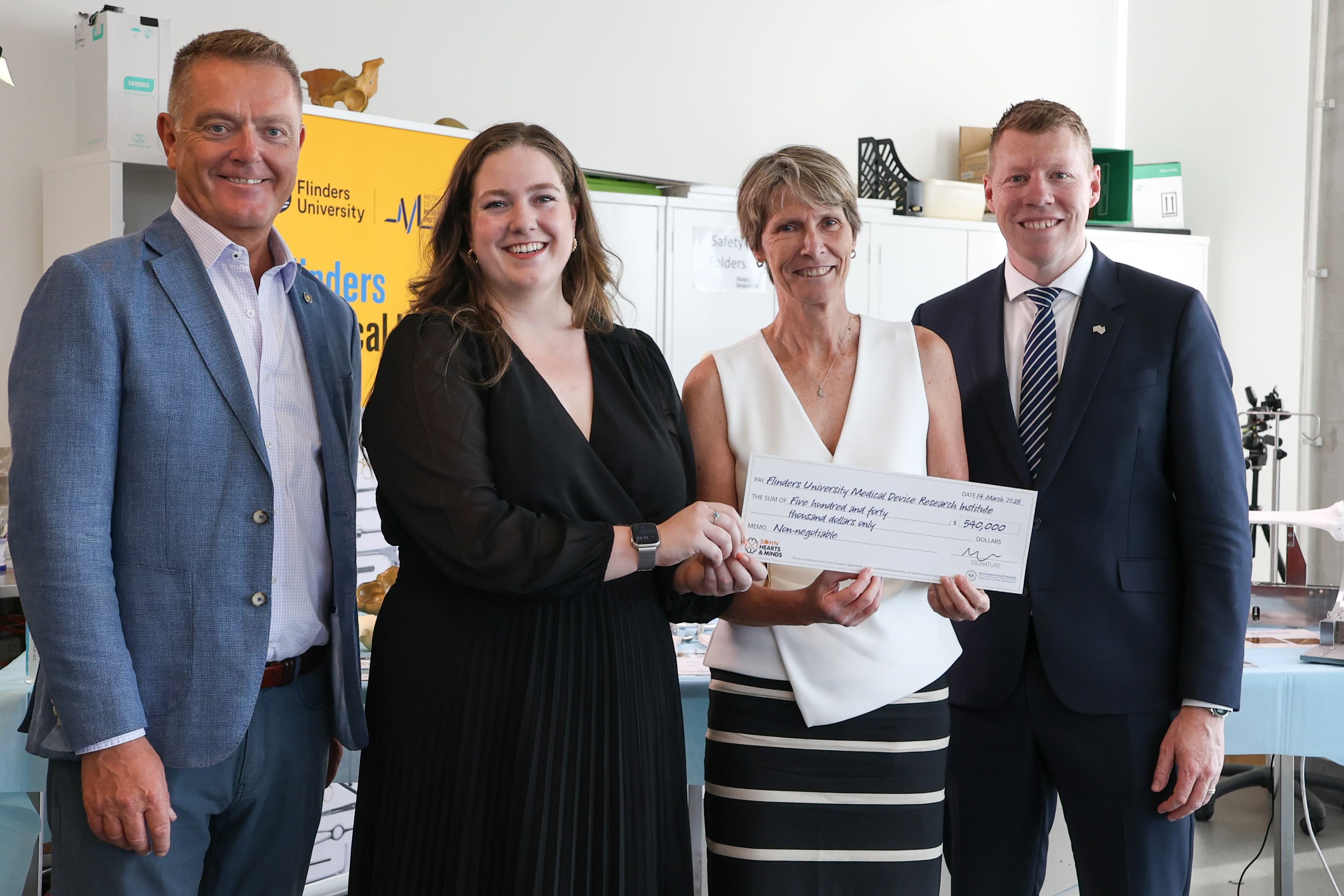
South Australian medical research will receive a $1.4 million cash injection, as a direct result of a major investment and philanthropy conference held in Adelaide.

Read More
Anthony Scaramucci’s time in the White House was brief but memorable. APAnthony Scaramucci’s time in the White House was brief but memorable. APAnthony Scaramucci’s time in the White House was brief but memorable. APAnthony Scaramucci’s time in the White House was brief but memorable. AP
May 19, 2025

Why ‘The Mooch’ thinks Trump is more dangerous this time around

Anthony Scaramucci says Trump has fewer constraints on his worst instincts in his second administration. But he still gets bored easily.

Read More
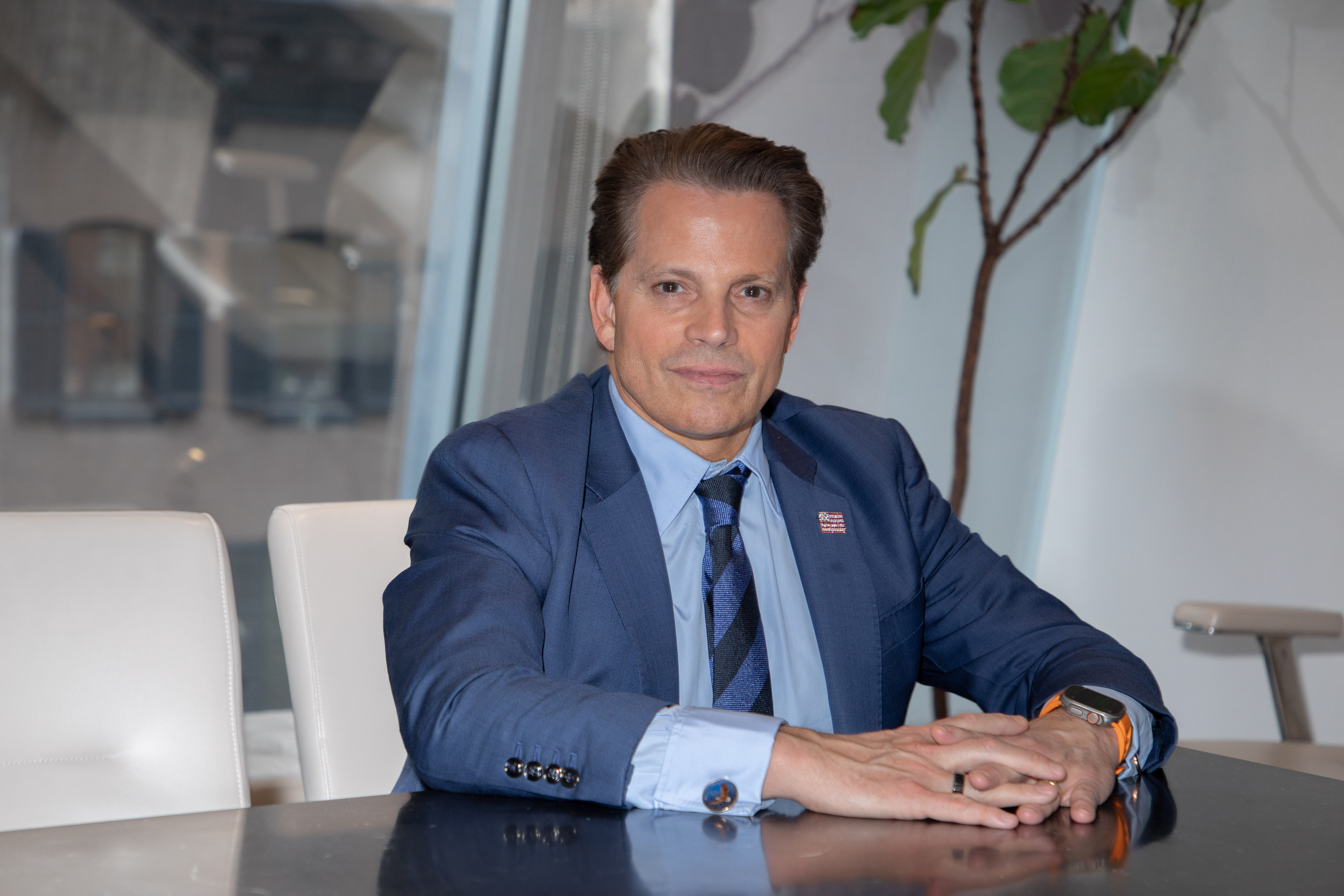
Image caption: Anthony “The Mooch” Scaramucci at the New York headquarters of his SkyBridge Capital last week. Picture: Jaclyn LichtImage caption: Anthony “The Mooch” Scaramucci at the New York headquarters of his SkyBridge Capital last week. Picture: Jaclyn LichtImage caption: Anthony “The Mooch” Scaramucci at the New York headquarters of his SkyBridge Capital last week. Picture: Jaclyn LichtImage caption: Anthony “The Mooch” Scaramucci at the New York headquarters of his SkyBridge Capital last week. Picture: Jaclyn Licht
May 19, 2025

My biggest mistake: Anthony Scaramucci on what makes Donald Trump tick

On Elon Musk, money and the White House, fast-talking Wall Street hedge fund manager and former Trump communications director Anthony Scaramucci tells it as he sees it.

Read More
A bull case for Bitcoin even as it trades near record levels. Picture: AFPA bull case for Bitcoin even as it trades near record levels. Picture: AFPA bull case for Bitcoin even as it trades near record levels. Picture: AFPA bull case for Bitcoin even as it trades near record levels. Picture: AFP
May 19, 2025

Bitcoin ‘on track’ for $US200,000: Anthony Scaramucci

Bitcoin could hit as much as $US200,000 ($311,000) by the end of this year, fuelled by surging inflows into exchange-traded funds and Donald Trump’s erratic policymaking.

Read More
Anthony Scaramucci says America has no choice but to lower tariffs on China further. Jaclyn LichtAnthony Scaramucci says America has no choice but to lower tariffs on China further. Jaclyn LichtAnthony Scaramucci says America has no choice but to lower tariffs on China further. Jaclyn LichtAnthony Scaramucci says America has no choice but to lower tariffs on China further. Jaclyn Licht
May 19, 2025

‘The Mooch’ says Trump will have to cut China tariffs below 10pc

Scaramucci, who is best known as The Mooch, is the first big-name global investor to be confirmed for the Sohn Hearts & Minds conference in Sydney in November.

Read More
Matthew McLennan in his office at First Eagle Investments in New York. Picture: Jaclyn LichtMatthew McLennan in his office at First Eagle Investments in New York. Picture: Jaclyn LichtMatthew McLennan in his office at First Eagle Investments in New York. Picture: Jaclyn LichtMatthew McLennan in his office at First Eagle Investments in New York. Picture: Jaclyn Licht
July 7, 2025

A golden year for Wall Street’s Australian stock picker

Matthew McLennan’s $14.5 billion position in gold bars and miners paid off handsomely for First Eagle this year. But he insists the precious metal still has room to run.

Read More
Stillpoint Investments founder and chief investment officer Eric Wong. Picture: Jaclyn LichtStillpoint Investments founder and chief investment officer Eric Wong. Picture: Jaclyn LichtStillpoint Investments founder and chief investment officer Eric Wong. Picture: Jaclyn LichtStillpoint Investments founder and chief investment officer Eric Wong. Picture: Jaclyn Licht
September 25, 2025

Stillpoint founder Eric Wong reveals major China tech investment strategy

Eric Wong will present his investment case at the Sohn Hearts & Minds conference at the Sydney Opera House on Friday, November 14.

Read More
October 1, 2025

Billionaire hedge fund manager enacts ‘little short’ on the market

Investing veteran Lord Michael Hintze says he’s taking out insurance against expensive debt and equity markets that are being propelled by passive flows.

Read More
October 1, 2025

Hedge fund guru Michael Hintze can't out-trade machines but he can still 'out-invest' them

Billionaire hedge fund manager Michael Hintze says the world is more dangerous than he has ever seen, artificial intelligence is stifling people’s ability to learn and process information.

Read More
Marathon Resource Advisors founder and chief investment officer Robert Mullin in San Francisco.Marathon Resource Advisors founder and chief investment officer Robert Mullin in San Francisco.Marathon Resource Advisors founder and chief investment officer Robert Mullin in San Francisco.Marathon Resource Advisors founder and chief investment officer Robert Mullin in San Francisco.
October 5, 2025

Marathon CIO Robert Mullin reveals why gold stocks are still undervalued

The son of a stockbroker, Mr Mullin has more than 30 years' investing experience and is chief investment officer at Marathon Resource Advisors in San Francisco, a company he founded.

Read More
First Eagle Investments co-head of global value Matthew McLennan. Picture: Jaclyn LichtFirst Eagle Investments co-head of global value Matthew McLennan. Picture: Jaclyn LichtFirst Eagle Investments co-head of global value Matthew McLennan. Picture: Jaclyn LichtFirst Eagle Investments co-head of global value Matthew McLennan. Picture: Jaclyn Licht
October 6, 2025

First Eagle’s Matthew McLennan on the monetary force that could be ‘rocket fuel’ for the Australian dollar

Matthew McLennan, the co-head of the global value team and portfolio manager at the $US161bn ($243bn) First Eagle Investments, stormed the market with a bullish bet on gold.

Read More
October 10, 2025

Anthony Scaramucci’s advice to our PM is to seek his Canadian counterpart’s counsel

Beyond Wall Street, The Mooch is better known for his cutting takes on US politics in the popular podcast The Rest is Politics: US, which he hosts with BBC’s long-term North American correspondent Katty Kay.

Read More
October 19, 2025

Munro Partners' Qiao Ma reveals AI investment strategy

Qiao Ma has a simple test for spotting the investment opportunities that will define the next decade. Take the technology apart and see what’s inside.

Read More
October 21, 2025

Meet the 2025 Conference Managers

Following a global search, the Conference Fund Manager Selection Committee is pleased to share ten new managers for 2025.

Read More
October 31, 2025

The 42pc gain that shows why Sohn is a stock picker’s delight

It turns out you could have outperformed the seemingly unstoppable magnificent seven tech stocks if you simply acted on the 11 stock picks at Sohn last year.

Read More