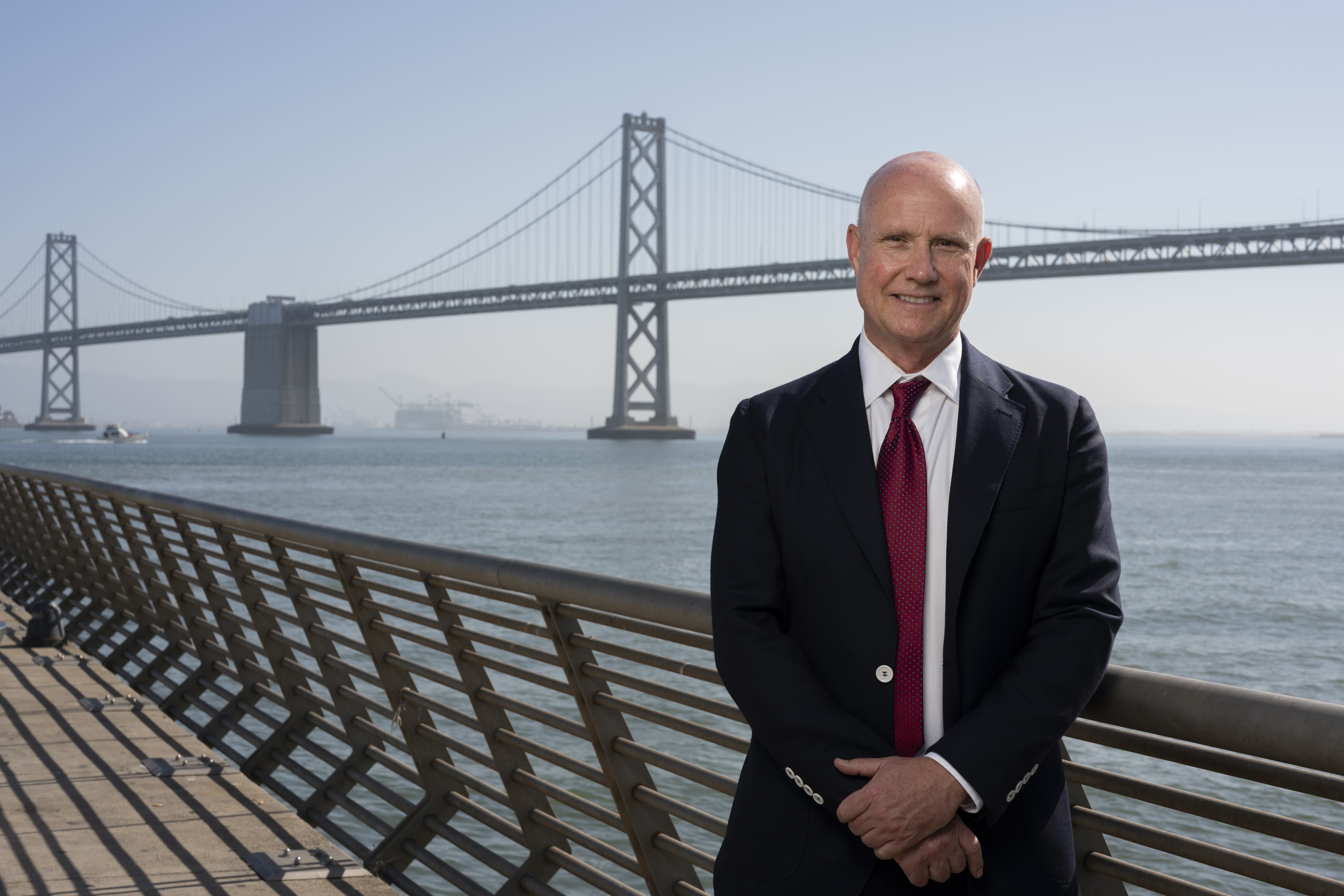

Mullin believes the UK’s increasingly punitive North Sea tax regime, which has driven major oil companies away, has created an opportunity for independent operators to acquire assets “at pennies on the dollar”.
Harbour, with operations across the UK and Norwegian North Sea, as well as the US and Argentina, is generating significantly more cash than previously expected. Mullin estimated free cash flow could reach $3 billion, against a market capitalisation of about $6.5 billion.
Even with oil at US75-US90 a barrel, he expects annual cash generation of $1.5 billion to $2 billion, allowing Harbour to rapidly reduce debt, buy back shares and increase dividends.
A further potential catalyst is a US listing for Harbour’s growing American business. Mullin argues that comparable companies trade at market capitalisations of $20 billion to $40 billion, potentially offering a significant valuation uplift.
“I’m a cash flow pig,” Mullin said, describing the company’s investment appeal.
There is also upside from carbon capture and storage, which could turn depleted North Sea fields from balance-sheet liabilities into “cash generating assets”.
A reduction in UK taxes towards Norway’s 60 per cent rate would provide another catalyst, potentially bringing investors back to the sector.
Mullin sees Harbour shares rising from 270 pence towards 500 pence, implying 85 per cent upside from current levels.
“The best way to make money in my job is to find things that are really bad and invest until they’re a little less bad,” he said.
This article was originally posted by Australian Financial Review here. Licensed by Copyright Agency. You must not copy this work without permission.