‘What is GDP for?’: Strategist Michael Every on the dangers of Australia ignoring economic risks

According to Singapore-based global strategist with Rabobank Michael Every, countries have spent decades optimising for quarterly or annual GDP numbers without asking what growth is actually for: and that is safety, sovereignty and resilience.

Eric Johnston

‘What is GDP for?’: Strategist Michael Every on the dangers of Australia ignoring economic risks

September 23, 2026
According to Singapore-based global strategist with Rabobank Michael Every, countries have spent decades optimising for quarterly or annual GDP numbers without asking what growth is actually for: and that is safety, sovereignty and resilience.
Read Transcript

The one question every Western nation needs to answer is “What is GDP for?”

According to Singapore-based global strategist with Rabobank Michael Every, countries have spent decades optimising for quarterly or annual GDP numbers without asking what growth is actually for: and that is safety, sovereignty and resilience.

But this failure to lock in a mission statement underlines the other economic stresses, whether that be housing dysfunction through to immigration debates or industrial policy. Look at most developed Western economies and the furious policy debates Australia is having are the same.

Every’s day job is to think about the very big risks looming over the market as much as their origins. His clients invest over the long term and he wants them to be well prepared.

He has spoken with The Australian just as two major economic pressure points have hit. The Albanese government has sniffed the direction of political winds, and has blamed a housing shortage for its pledge to cut immigration in the coming years. The second pressure point is Treasury’s release of the intergenerational review, which shows Australia will be stuck in a low-growth, ageing economic cycle; although the assumptions are underpinned by some bullish predictions about productivity supported by AI.

“What is GDP is for?” Every asks. “What are we trying to be? What’s the goal? To what end?”

Every says that as you watch countries – from Australia, New Zealand, the US, Canada, to Europe or the UK – start asking themselves that question rather than just focusing on the quarter-by-quarter number of GDP “you get radically transformative outcomes in geopolitics, in geo-economics, in markets, and dare I say, in the housing market”.

The focus is on hitting a GDP number, which in Australia’s case is the obsession about hitting top-line growth. But that masks underlying stains like GDP per capita. (It has stalled since Covid-19). Then there’s the GDP per median income in real terms (it’s been going backwards).

“Great – your economy grew 2.5 per cent. What did it do for the average person? It’s negative,” Every says.

“When global norms are threatened, global security is threatened supply chains are insecure; In what world does it make sense to then have so much mental and physical energy tied up with ‘we won this quarter’?”.

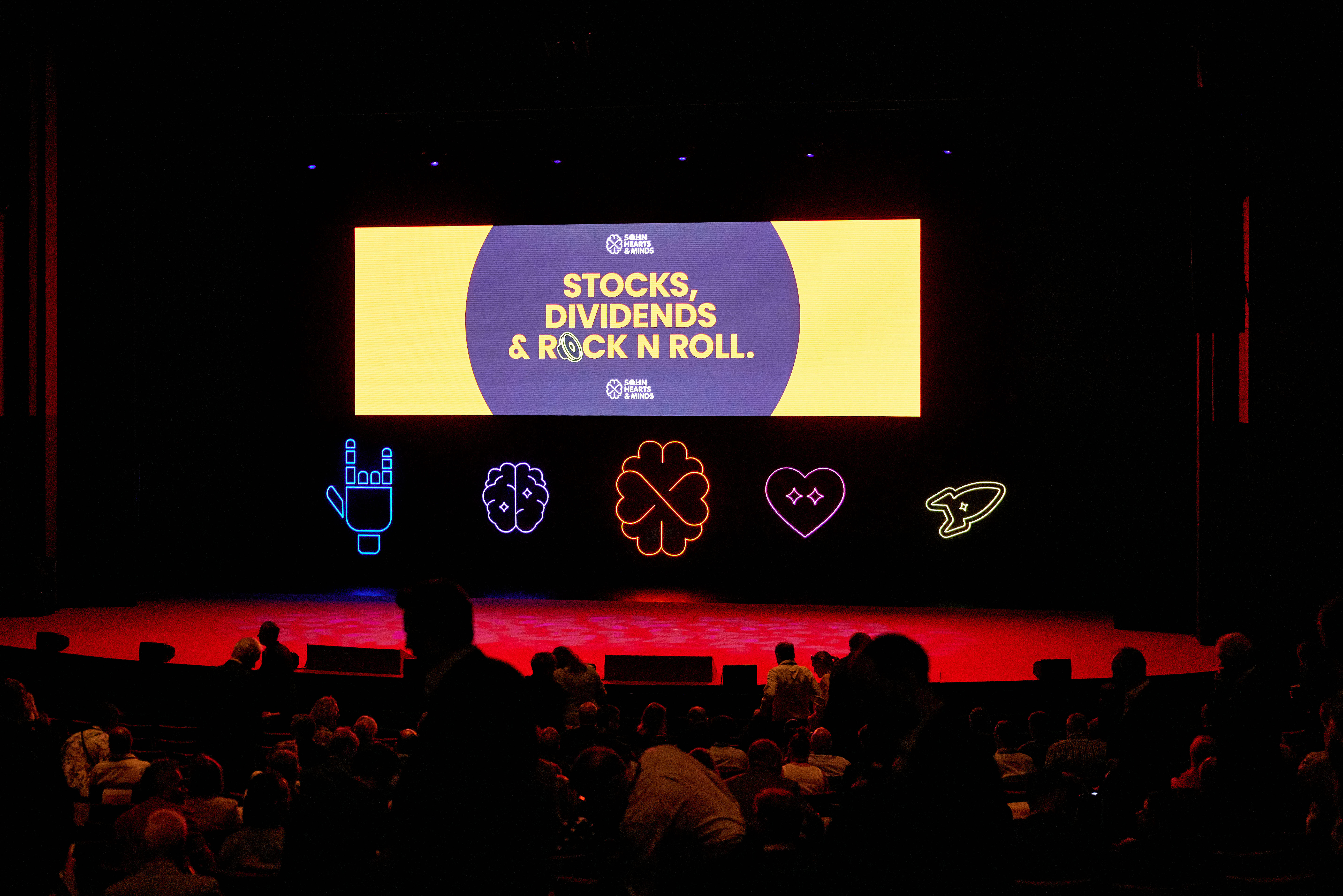
Every is among speakers at the 11th Sohn Hearts & Minds Investment Leaders Conference on November 6, to be held in Queenstown, New Zealand – the first time the conference has been staged outside Australia.

He frames the past five decades – which has been characterised by globalisation, free trade and deregulation – as the exception in human economic history, not the normality.

Here, it is snapping back to the baseline: bare-knuckle trade, resource leverage and the rise of empires. It’s no coincidence Donald Trump and “America first” has emerged from this.

“I tell my clients for 99.9 per cent of human history, that was reality. You didn’t sit there thinking: ‘I have complete freedom and independence to do whatever I want. No, you don’t’,” Every says.

“Most of empire, most of human history was empires and conquering and fighting to get any little sliver of sovereignty or autonomy. We’ve had a 45-year window in which post-World War II, post-Cold War, under an American security umbrella, everyone – big or small – dreamed they had it and planned accordingly. We’re going back to the way things were. At which point, everything else needs to change.”

It’s no surprise, but Every says commodities and supply chains are the new geopolitical battleground.

The control of energy, critical minerals, food and industrial inputs will determine who has real leverage. He frames Trump’s strategy (Middle East, Venezuela, Panama Canal, Canadian resources) as an attempt to lock down the world’s two oil “centres of gravity” (Middle East and the Americas) to squeeze commodity dependent rivals like China.

Even Australia had its own recent taste of trade nationalism. He points out Prime Minister Anthony Albanese’s whistlestop tour through Asia earlier this year that took in Singapore, Brunei and South Korea, used LNG exports and critical minerals as bargaining chips to secure the flow of petrol.

That situation, which went around existing trade deals was “bare knuckle”.

“It was a case of ‘we’ve got something you need. You’ve got something we need. Do we have an understanding?’ A lot more of that kind of thing will have to emerge,” Every says.

His broader point is that countries which let market logic dismantle their strategic leverage – such as Australia not seeing the strategic issues in allowing its fuel refineries to close – lose their bargaining power exactly when they need it most.

In a 2019 paper titled “The Age of Rage” he predicted the far right would become a major force and argued the pursuit of centralism creates far more losers on the fringe – which pushes more people to the extreme left and right.

Every says that markets are still reading events through a “line-on-a-screen” lens (interest rates, quarterly GDP) rather than the strategic frame he uses, and that this gap is where volatility and surprises (Brexit, Trump, bond yields) keep reoccurring.

Even Canada’s recent efforts to potentially join or become more alignment with the EU is essentially symbolic politics, not a realistic option. This still creates lessons for Australia. If Canada pursued it seriously this would ultimately be dangerous, if at the very least as a trading threat to the US.

He nominates energy as the most serious medium-term risk for Australia. There’s a possibility the conflicts in the Middle East and Russia-Ukraine could merge. The problem is our energy system was built for a world of free trade and which assumed it would always be there.

“For Australia, the biggest risk is that you’re living with that pressure, but it’s starting to bleed down here because of lack of resilience in the economy,” Every says.

Despite the grim outlook, Every insists he’s ultimately an optimist over the medium to long term. He believes a period of stability can emerge, much like the post-World War II era, but only after a difficult transition, and only if societies collectively answer the question of what GDP is for. This way the gains will be spread more broadly.

The 2026 Sohn Hearts & Minds Investment Leaders Conference will be held in New Zealand on November 6. 

This article was originally posted by The Australian here. Licensed by Copyright Agency. You must not copy this work without permission.

The one question every Western nation needs to answer is “What is GDP for?”

According to Singapore-based global strategist with Rabobank Michael Every, countries have spent decades optimising for quarterly or annual GDP numbers without asking what growth is actually for: and that is safety, sovereignty and resilience.

But this failure to lock in a mission statement underlines the other economic stresses, whether that be housing dysfunction through to immigration debates or industrial policy. Look at most developed Western economies and the furious policy debates Australia is having are the same.

Every’s day job is to think about the very big risks looming over the market as much as their origins. His clients invest over the long term and he wants them to be well prepared.

He has spoken with The Australian just as two major economic pressure points have hit. The Albanese government has sniffed the direction of political winds, and has blamed a housing shortage for its pledge to cut immigration in the coming years. The second pressure point is Treasury’s release of the intergenerational review, which shows Australia will be stuck in a low-growth, ageing economic cycle; although the assumptions are underpinned by some bullish predictions about productivity supported by AI.

“What is GDP is for?” Every asks. “What are we trying to be? What’s the goal? To what end?”

Every says that as you watch countries – from Australia, New Zealand, the US, Canada, to Europe or the UK – start asking themselves that question rather than just focusing on the quarter-by-quarter number of GDP “you get radically transformative outcomes in geopolitics, in geo-economics, in markets, and dare I say, in the housing market”.

The focus is on hitting a GDP number, which in Australia’s case is the obsession about hitting top-line growth. But that masks underlying stains like GDP per capita. (It has stalled since Covid-19). Then there’s the GDP per median income in real terms (it’s been going backwards).

“Great – your economy grew 2.5 per cent. What did it do for the average person? It’s negative,” Every says.

“When global norms are threatened, global security is threatened supply chains are insecure; In what world does it make sense to then have so much mental and physical energy tied up with ‘we won this quarter’?”.

Every is among speakers at the 11th Sohn Hearts & Minds Investment Leaders Conference on November 6, to be held in Queenstown, New Zealand – the first time the conference has been staged outside Australia.

He frames the past five decades – which has been characterised by globalisation, free trade and deregulation – as the exception in human economic history, not the normality.

Here, it is snapping back to the baseline: bare-knuckle trade, resource leverage and the rise of empires. It’s no coincidence Donald Trump and “America first” has emerged from this.

“I tell my clients for 99.9 per cent of human history, that was reality. You didn’t sit there thinking: ‘I have complete freedom and independence to do whatever I want. No, you don’t’,” Every says.

“Most of empire, most of human history was empires and conquering and fighting to get any little sliver of sovereignty or autonomy. We’ve had a 45-year window in which post-World War II, post-Cold War, under an American security umbrella, everyone – big or small – dreamed they had it and planned accordingly. We’re going back to the way things were. At which point, everything else needs to change.”

It’s no surprise, but Every says commodities and supply chains are the new geopolitical battleground.

The control of energy, critical minerals, food and industrial inputs will determine who has real leverage. He frames Trump’s strategy (Middle East, Venezuela, Panama Canal, Canadian resources) as an attempt to lock down the world’s two oil “centres of gravity” (Middle East and the Americas) to squeeze commodity dependent rivals like China.

Even Australia had its own recent taste of trade nationalism. He points out Prime Minister Anthony Albanese’s whistlestop tour through Asia earlier this year that took in Singapore, Brunei and South Korea, used LNG exports and critical minerals as bargaining chips to secure the flow of petrol.

That situation, which went around existing trade deals was “bare knuckle”.

“It was a case of ‘we’ve got something you need. You’ve got something we need. Do we have an understanding?’ A lot more of that kind of thing will have to emerge,” Every says.

His broader point is that countries which let market logic dismantle their strategic leverage – such as Australia not seeing the strategic issues in allowing its fuel refineries to close – lose their bargaining power exactly when they need it most.

In a 2019 paper titled “The Age of Rage” he predicted the far right would become a major force and argued the pursuit of centralism creates far more losers on the fringe – which pushes more people to the extreme left and right.

Every says that markets are still reading events through a “line-on-a-screen” lens (interest rates, quarterly GDP) rather than the strategic frame he uses, and that this gap is where volatility and surprises (Brexit, Trump, bond yields) keep reoccurring.

Even Canada’s recent efforts to potentially join or become more alignment with the EU is essentially symbolic politics, not a realistic option. This still creates lessons for Australia. If Canada pursued it seriously this would ultimately be dangerous, if at the very least as a trading threat to the US.

He nominates energy as the most serious medium-term risk for Australia. There’s a possibility the conflicts in the Middle East and Russia-Ukraine could merge. The problem is our energy system was built for a world of free trade and which assumed it would always be there.

“For Australia, the biggest risk is that you’re living with that pressure, but it’s starting to bleed down here because of lack of resilience in the economy,” Every says.

Despite the grim outlook, Every insists he’s ultimately an optimist over the medium to long term. He believes a period of stability can emerge, much like the post-World War II era, but only after a difficult transition, and only if societies collectively answer the question of what GDP is for. This way the gains will be spread more broadly.

The 2026 Sohn Hearts & Minds Investment Leaders Conference will be held in New Zealand on November 6. 

This article was originally posted by The Australian here. Licensed by Copyright Agency. You must not copy this work without permission.

Disclaimer: This material has been prepared by The Australian, published on September 23, 2026. HM1 is not responsible for the content of linked websites or content prepared by third party. The inclusion of these links and third-party content does not in any way imply any form of endorsement by HM1 of the products or services provided by persons or organisations who are responsible for the linked websites and third-party content. This information is for general information only and does not consider the objectives, financial situation or needs of any person. Before making an investment decision, you should read the relevant disclosure document (if appropriate) and seek professional advice to determine whether the investment and information is suitable for you.

facebook
linkedin
All
Thank you! Your submission has been received!
Oops! Something went wrong while submitting the form.
March 14, 2025

$1.4 million boost for SA medical research

South Australian medical research will receive a $1.4 million cash injection, as a direct result of a major investment and philanthropy conference held in Adelaide.

Read More
May 19, 2025

Why ‘The Mooch’ thinks Trump is more dangerous this time around

Anthony Scaramucci says Trump has fewer constraints on his worst instincts in his second administration. But he still gets bored easily.

Read More
Image caption: Anthony “The Mooch” Scaramucci at the New York headquarters of his SkyBridge Capital last week. Picture: Jaclyn LichtImage caption: Anthony “The Mooch” Scaramucci at the New York headquarters of his SkyBridge Capital last week. Picture: Jaclyn LichtImage caption: Anthony “The Mooch” Scaramucci at the New York headquarters of his SkyBridge Capital last week. Picture: Jaclyn LichtImage caption: Anthony “The Mooch” Scaramucci at the New York headquarters of his SkyBridge Capital last week. Picture: Jaclyn Licht
May 19, 2025

My biggest mistake: Anthony Scaramucci on what makes Donald Trump tick

On Elon Musk, money and the White House, fast-talking Wall Street hedge fund manager and former Trump communications director Anthony Scaramucci tells it as he sees it.

Read More
May 19, 2025

Bitcoin ‘on track’ for $US200,000: Anthony Scaramucci

Bitcoin could hit as much as $US200,000 ($311,000) by the end of this year, fuelled by surging inflows into exchange-traded funds and Donald Trump’s erratic policymaking.

Read More
Anthony Scaramucci says America has no choice but to lower tariffs on China further. Jaclyn LichtAnthony Scaramucci says America has no choice but to lower tariffs on China further. Jaclyn LichtAnthony Scaramucci says America has no choice but to lower tariffs on China further. Jaclyn LichtAnthony Scaramucci says America has no choice but to lower tariffs on China further. Jaclyn Licht
May 19, 2025

‘The Mooch’ says Trump will have to cut China tariffs below 10pc

Scaramucci, who is best known as The Mooch, is the first big-name global investor to be confirmed for the Sohn Hearts & Minds conference in Sydney in November.

Read More
Matthew McLennan in his office at First Eagle Investments in New York. Picture: Jaclyn LichtMatthew McLennan in his office at First Eagle Investments in New York. Picture: Jaclyn LichtMatthew McLennan in his office at First Eagle Investments in New York. Picture: Jaclyn LichtMatthew McLennan in his office at First Eagle Investments in New York. Picture: Jaclyn Licht
July 7, 2025

A golden year for Wall Street’s Australian stock picker

Matthew McLennan’s $14.5 billion position in gold bars and miners paid off handsomely for First Eagle this year. But he insists the precious metal still has room to run.

Read More
Stillpoint Investments founder and chief investment officer Eric Wong. Picture: Jaclyn LichtStillpoint Investments founder and chief investment officer Eric Wong. Picture: Jaclyn LichtStillpoint Investments founder and chief investment officer Eric Wong. Picture: Jaclyn LichtStillpoint Investments founder and chief investment officer Eric Wong. Picture: Jaclyn Licht
September 25, 2025

Stillpoint founder Eric Wong reveals major China tech investment strategy

Eric Wong will present his investment case at the Sohn Hearts & Minds conference at the Sydney Opera House on Friday, November 14.

Read More
October 1, 2025

Billionaire hedge fund manager enacts ‘little short’ on the market

Investing veteran Lord Michael Hintze says he’s taking out insurance against expensive debt and equity markets that are being propelled by passive flows.

Read More
October 1, 2025

Hedge fund guru Michael Hintze can't out-trade machines but he can still 'out-invest' them

Billionaire hedge fund manager Michael Hintze says the world is more dangerous than he has ever seen, artificial intelligence is stifling people’s ability to learn and process information.

Read More
Marathon Resource Advisors founder and chief investment officer Robert Mullin in San Francisco.Marathon Resource Advisors founder and chief investment officer Robert Mullin in San Francisco.Marathon Resource Advisors founder and chief investment officer Robert Mullin in San Francisco.Marathon Resource Advisors founder and chief investment officer Robert Mullin in San Francisco.
October 5, 2025

Marathon CIO Robert Mullin reveals why gold stocks are still undervalued

The son of a stockbroker, Mr Mullin has more than 30 years' investing experience and is chief investment officer at Marathon Resource Advisors in San Francisco, a company he founded.

Read More
First Eagle Investments co-head of global value Matthew McLennan. Picture: Jaclyn LichtFirst Eagle Investments co-head of global value Matthew McLennan. Picture: Jaclyn LichtFirst Eagle Investments co-head of global value Matthew McLennan. Picture: Jaclyn LichtFirst Eagle Investments co-head of global value Matthew McLennan. Picture: Jaclyn Licht
October 6, 2025

First Eagle’s Matthew McLennan on the monetary force that could be ‘rocket fuel’ for the Australian dollar

Matthew McLennan, the co-head of the global value team and portfolio manager at the $US161bn ($243bn) First Eagle Investments, stormed the market with a bullish bet on gold.

Read More
October 10, 2025

Anthony Scaramucci’s advice to our PM is to seek his Canadian counterpart’s counsel

Beyond Wall Street, The Mooch is better known for his cutting takes on US politics in the popular podcast The Rest is Politics: US, which he hosts with BBC’s long-term North American correspondent Katty Kay.

Read More
October 19, 2025

Munro Partners' Qiao Ma reveals AI investment strategy

Qiao Ma has a simple test for spotting the investment opportunities that will define the next decade. Take the technology apart and see what’s inside.

Read More
October 21, 2025

Meet the 2025 Conference Managers

Following a global search, the Conference Fund Manager Selection Committee is pleased to share ten new managers for 2025.

Read More
October 31, 2025

The 42pc gain that shows why Sohn is a stock picker’s delight

It turns out you could have outperformed the seemingly unstoppable magnificent seven tech stocks if you simply acted on the 11 stock picks at Sohn last year.

Read More