Inside Lightspeed’s Anthropic bet that woke Silicon Valley from its slumber

It seems hard to believe, but just a little over two years ago an investment in frontier artificial-intelligence play Anthropic was considered a contrarian bet. Today the start-up behind the Claude model is on the cusp of a $US2 trillion ($2.7 trillion) stockmarket listing.
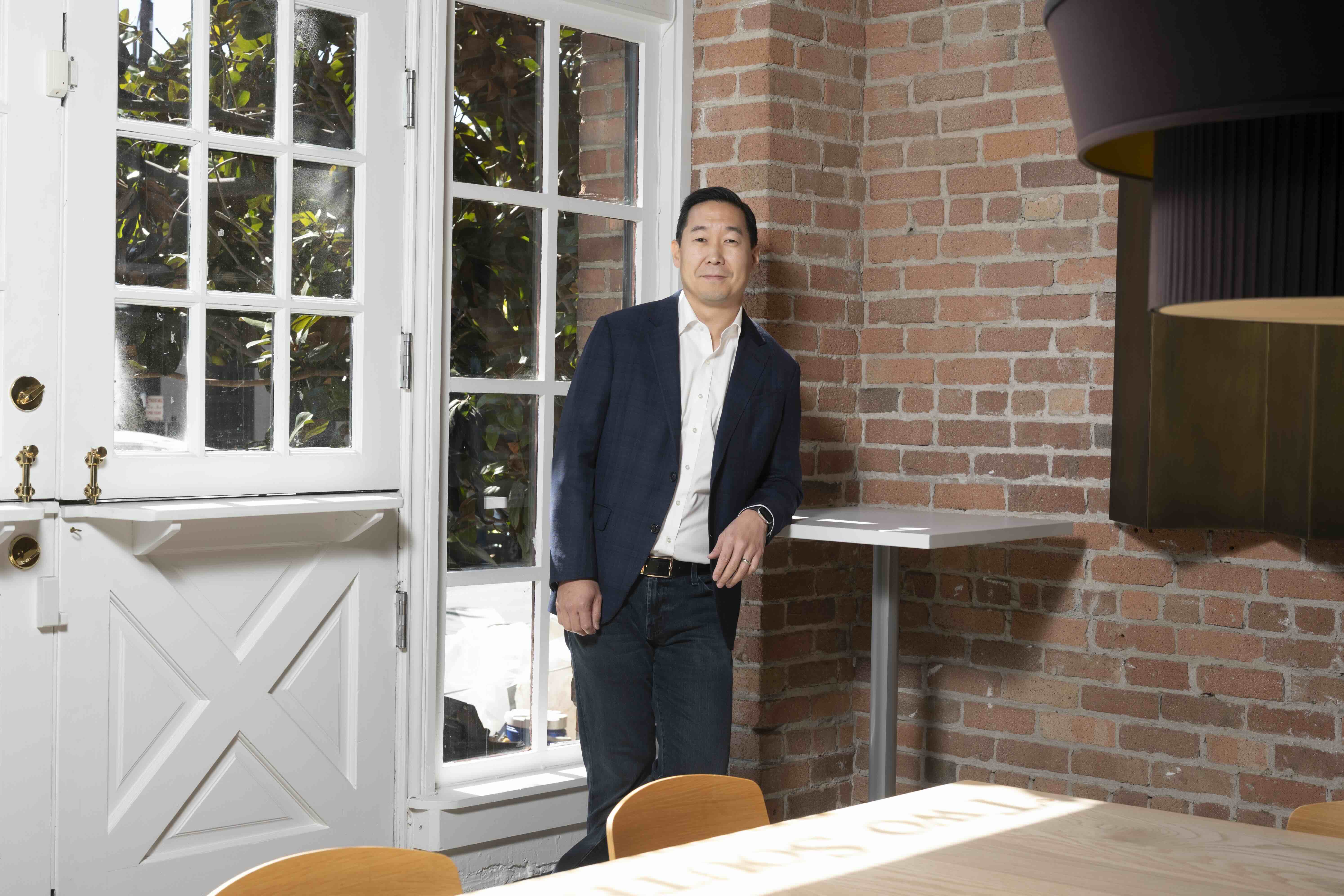
Photo: Isaac Kim (Laure Andrillon)

Eric Johnston

Inside Lightspeed’s Anthropic bet that woke Silicon Valley from its slumber

September 11, 2026
It seems hard to believe, but just a little over two years ago an investment in frontier artificial-intelligence play Anthropic was considered a contrarian bet. Today the start-up behind the Claude model is on the cusp of a $US2 trillion ($2.7 trillion) stockmarket listing.
Read Transcript

It seems hard to believe, but just a little over two years ago an investment in frontier artificial-intelligence play Anthropic was considered a contrarian bet. Today the start-up behind the Claude model is on the cusp of a $US2 trillion ($2.7 trillion) stockmarket listing.

Lightspeed Venture Partners, among Silicon Valley’s most influential venture funds, made an early call that the powerful models Anthropic was building wouldn’t stand still and that they’d only become more valuable over time. This went against the prevailing view that the likes of Anthropic or OpenAI were just one slice of the AI infrastructure chain, with the real value likely to sit in the cloud applications sitting on top of the models.

Lightspeed’s Isaac Kim instead poured billions into financing for Anthropic across multiple funding rounds, upping the firm’s exposure each time. Last September the fund co-led the bumper $US13bn Series F round. Today it is one of the biggest institutional investors in Anthropic.

“We made a contrarian bet that this was different,” Kim says in an interview with The Australian. “This was not just infrastructure. These were the research houses building the intelligence that would drive the AI wave going forward.”

That means Lightspeed’s investors are in line for a likely windfall coming out of what is expected to be the world’s most valuable IPO – edging out Elon Musk’s SpaceX. Anthropic has already filed confidential IPO paperwork with the US Securities and Exchange Commission, and The Wall Street Journal has reported a listing raising as much as $US100bn could take place as early as October, depending on market conditions.

Kim can’t talk about confidential discussions with Anthropic, including around the timing of any IPO. In fact, he won’t even be drawn on whether the float is actually on. But if the October reports prove correct, Kim will be well placed to reveal all when he appears as a headline speaker at the 11th Sohn Hearts & Minds Investment Leaders Conference on November 6, to be held in Queenstown, New Zealand – the first time the conference has been staged outside Australia.

Sohn Hearts & Minds raises funds for medical research and including this year’s conference, total donations are expected to pass $100m. (The Australian is a media partner of the Sohn Hearts & Mind conference).

Kim recalls Lightspeed’s second investment round into Anthropic, when it led the $US3.5bn Series E financing in March last year. It happened the very same week the Chinese open-source model DeepSeek burst onto the scene, threatening to up-end premium, closed models like Anthropic’s and OpenAI’s. Shockwaves from DeepSeek ripped through Silicon Valley as much as through markets, with fears the AI revolution was heading toward commoditisation before it had even properly started.

But Kim – and in particular Lightspeed co-founder Ravi Mhatre – held their nerve. “We had high conviction because we’d done our work,” he says.

Even today, open-source models that compete purely on price have made only modest inroads with business customers. Kim believes what actually matters for enterprise buyers is cost per successful outcome, not cost per token. If an open-weight model needs four attempts to get a task right, while a frontier model delivers it on the first try, the frontier model is actually cheaper in practice – despite a higher headline price per token.

Anthropic focused its early development almost entirely on business customers, on the basis that the right AI tools represent a genuine competitive edge.

“If you’re Coke versus Pepsi, and it’s a mission-critical technology use case, are you going to use the second-tier model, or are you going to use the frontier model for that use case?”

Still, he’s careful not to dismiss open-weight models outright. Lightspeed has active bets in the space too – Mistral in Europe, and Reflection as a US-aligned open-weight play.

“There are use cases for both,” he says.

Silicon Valley awakens

The AI revolution is changing the entire nature of Silicon Valley, after a region that had grown comfortable dominated for years by half a dozen big tech names that were heavily consumer-focused and starting to push middle age. Kim says AI has turned all that on its head, including the investment component, spurring a wave of companies built around science rather than social media.

“I’ve been in the Valley for 20 years,” Kim says. “It’s back.”

He says AI start-ups have reintroduced dynamism across Silicon Valley.

“You see people voting with their feet” – a reference to top talent leaving established majors to join, or found, new ventures. He points out that the region’s centre of gravity is returning, with more than 500 AI start-ups now based across Silicon Valley, by far the largest of any US city.

Perhaps the most significant shift, Kim says, is that businesses are now hitting $US100m in revenue within months rather than a decade, and reaching billion-dollar – even trillion-dollar – valuations within a few years. Previously that kind of scale took generations to build. It has completely reset what founders, employees and investors believe is possible, and it’s why more capital is being funnelled into early-stage investing, private credit, and a new wave of specialist digital infrastructure funds.

We’re speaking as the issue of AI safety has flared up again – a former Anthropic engineer warned this week of the potential for AI to wipe out humanity. Kim won’t be drawn on that specific claim, but says that as an investor he’s constantly thinking about the issue, and is comfortable Anthropic has the right guardrails in place.

Anthropic itself was founded only in 2021, by a string of engineers who left OpenAI wanting to build AI with a stronger eye on safety.

“One of the reasons why we invested in Anthropic in the first place is the focus on safety – and enterprise scalability and security. So we do think about it,” he says.

Safety is one of several emerging themes beyond the frontier models themselves that Kim is chasing for new investments. Lightspeed recently participated in a funding round for a start-up founded by Palo Alto Networks billionaire founder Nir Zuk, designed specifically to tackle AI-driven cyber threats. “There needs to be a new way of thinking about cyber defence,” Kim says.

Other frontier areas ripe for early-stage investment include technologies aimed at more efficient energy use, along with defence tech and robotics. More recently, Kim has been drawn to a different kind of theme entirely – dusting off businesses that have run the same way for 30, 40, even 50 years. “Can you reinvent them with AI?” he asks.

From his view, demand for AI services is real, which means the biggest constraint isn’t demand at all – it’s supply: access to computing power, and the upstream inputs of raw materials and energy. That, he says, is the driver behind the eye-watering global spend on digital infrastructure.

Any listing of Anthropic would come hot on the heels of June’s $US1.75 trillion SpaceX IPO. OpenAI, meanwhile, is slated to push ahead with its own multitrillion-dollar listing early next year. SpaceX is now trading back above its $US135-a-share offer price, but its listing represented an early test of whether public markets can digest mega-IPOs of this scale.

“I think the answer to that is yes,” Kim says.

This article was originally posted by The Australian here.

Licensed by Copyright Agency. You must not copy this work without permission.

It seems hard to believe, but just a little over two years ago an investment in frontier artificial-intelligence play Anthropic was considered a contrarian bet. Today the start-up behind the Claude model is on the cusp of a $US2 trillion ($2.7 trillion) stockmarket listing.

Lightspeed Venture Partners, among Silicon Valley’s most influential venture funds, made an early call that the powerful models Anthropic was building wouldn’t stand still and that they’d only become more valuable over time. This went against the prevailing view that the likes of Anthropic or OpenAI were just one slice of the AI infrastructure chain, with the real value likely to sit in the cloud applications sitting on top of the models.

Lightspeed’s Isaac Kim instead poured billions into financing for Anthropic across multiple funding rounds, upping the firm’s exposure each time. Last September the fund co-led the bumper $US13bn Series F round. Today it is one of the biggest institutional investors in Anthropic.

“We made a contrarian bet that this was different,” Kim says in an interview with The Australian. “This was not just infrastructure. These were the research houses building the intelligence that would drive the AI wave going forward.”

That means Lightspeed’s investors are in line for a likely windfall coming out of what is expected to be the world’s most valuable IPO – edging out Elon Musk’s SpaceX. Anthropic has already filed confidential IPO paperwork with the US Securities and Exchange Commission, and The Wall Street Journal has reported a listing raising as much as $US100bn could take place as early as October, depending on market conditions.

Kim can’t talk about confidential discussions with Anthropic, including around the timing of any IPO. In fact, he won’t even be drawn on whether the float is actually on. But if the October reports prove correct, Kim will be well placed to reveal all when he appears as a headline speaker at the 11th Sohn Hearts & Minds Investment Leaders Conference on November 6, to be held in Queenstown, New Zealand – the first time the conference has been staged outside Australia.

Sohn Hearts & Minds raises funds for medical research and including this year’s conference, total donations are expected to pass $100m. (The Australian is a media partner of the Sohn Hearts & Mind conference).

Kim recalls Lightspeed’s second investment round into Anthropic, when it led the $US3.5bn Series E financing in March last year. It happened the very same week the Chinese open-source model DeepSeek burst onto the scene, threatening to up-end premium, closed models like Anthropic’s and OpenAI’s. Shockwaves from DeepSeek ripped through Silicon Valley as much as through markets, with fears the AI revolution was heading toward commoditisation before it had even properly started.

But Kim – and in particular Lightspeed co-founder Ravi Mhatre – held their nerve. “We had high conviction because we’d done our work,” he says.

Even today, open-source models that compete purely on price have made only modest inroads with business customers. Kim believes what actually matters for enterprise buyers is cost per successful outcome, not cost per token. If an open-weight model needs four attempts to get a task right, while a frontier model delivers it on the first try, the frontier model is actually cheaper in practice – despite a higher headline price per token.

Anthropic focused its early development almost entirely on business customers, on the basis that the right AI tools represent a genuine competitive edge.

“If you’re Coke versus Pepsi, and it’s a mission-critical technology use case, are you going to use the second-tier model, or are you going to use the frontier model for that use case?”

Still, he’s careful not to dismiss open-weight models outright. Lightspeed has active bets in the space too – Mistral in Europe, and Reflection as a US-aligned open-weight play.

“There are use cases for both,” he says.

Silicon Valley awakens

The AI revolution is changing the entire nature of Silicon Valley, after a region that had grown comfortable dominated for years by half a dozen big tech names that were heavily consumer-focused and starting to push middle age. Kim says AI has turned all that on its head, including the investment component, spurring a wave of companies built around science rather than social media.

“I’ve been in the Valley for 20 years,” Kim says. “It’s back.”

He says AI start-ups have reintroduced dynamism across Silicon Valley.

“You see people voting with their feet” – a reference to top talent leaving established majors to join, or found, new ventures. He points out that the region’s centre of gravity is returning, with more than 500 AI start-ups now based across Silicon Valley, by far the largest of any US city.

Perhaps the most significant shift, Kim says, is that businesses are now hitting $US100m in revenue within months rather than a decade, and reaching billion-dollar – even trillion-dollar – valuations within a few years. Previously that kind of scale took generations to build. It has completely reset what founders, employees and investors believe is possible, and it’s why more capital is being funnelled into early-stage investing, private credit, and a new wave of specialist digital infrastructure funds.

We’re speaking as the issue of AI safety has flared up again – a former Anthropic engineer warned this week of the potential for AI to wipe out humanity. Kim won’t be drawn on that specific claim, but says that as an investor he’s constantly thinking about the issue, and is comfortable Anthropic has the right guardrails in place.

Anthropic itself was founded only in 2021, by a string of engineers who left OpenAI wanting to build AI with a stronger eye on safety.

“One of the reasons why we invested in Anthropic in the first place is the focus on safety – and enterprise scalability and security. So we do think about it,” he says.

Safety is one of several emerging themes beyond the frontier models themselves that Kim is chasing for new investments. Lightspeed recently participated in a funding round for a start-up founded by Palo Alto Networks billionaire founder Nir Zuk, designed specifically to tackle AI-driven cyber threats. “There needs to be a new way of thinking about cyber defence,” Kim says.

Other frontier areas ripe for early-stage investment include technologies aimed at more efficient energy use, along with defence tech and robotics. More recently, Kim has been drawn to a different kind of theme entirely – dusting off businesses that have run the same way for 30, 40, even 50 years. “Can you reinvent them with AI?” he asks.

From his view, demand for AI services is real, which means the biggest constraint isn’t demand at all – it’s supply: access to computing power, and the upstream inputs of raw materials and energy. That, he says, is the driver behind the eye-watering global spend on digital infrastructure.

Any listing of Anthropic would come hot on the heels of June’s $US1.75 trillion SpaceX IPO. OpenAI, meanwhile, is slated to push ahead with its own multitrillion-dollar listing early next year. SpaceX is now trading back above its $US135-a-share offer price, but its listing represented an early test of whether public markets can digest mega-IPOs of this scale.

“I think the answer to that is yes,” Kim says.

This article was originally posted by The Australian here.

Licensed by Copyright Agency. You must not copy this work without permission.

Disclaimer: This material has been prepared by The Australian, published on September 11, 2026. HM1 is not responsible for the content of linked websites or content prepared by third party. The inclusion of these links and third-party content does not in any way imply any form of endorsement by HM1 of the products or services provided by persons or organisations who are responsible for the linked websites and third-party content. This information is for general information only and does not consider the objectives, financial situation or needs of any person. Before making an investment decision, you should read the relevant disclosure document (if appropriate) and seek professional advice to determine whether the investment and information is suitable for you.

facebook
linkedin
All
Thank you! Your submission has been received!
Oops! Something went wrong while submitting the form.
October 21, 2024

Chris Kourtis is on a winning streak. Here’s his next ASX pick

Chris Kourtis of Ellerston Capital thinks he’s found another winner and thinks it’s the last chance to have a bite at the cherry before the strategy plays out.

Read More
Ellerston Capital portfolio manager Chris Kourtis. Picture: Britta CampionEllerston Capital portfolio manager Chris Kourtis. Picture: Britta CampionEllerston Capital portfolio manager Chris Kourtis. Picture: Britta CampionEllerston Capital portfolio manager Chris Kourtis. Picture: Britta Campion
October 21, 2024

Why Ellerston Capital’s Chris Kourtis plans to back a ‘hated’ stock

Chris Kourtis of Ellerston Capital plans to tip one of the “most hated” stocks in Australia when he presents at the 2024 Sohn Hearts & Minds Conference.

Read More
October 14, 2024

Alex Pollak champions rewards of disruptive investment

Alex Pollak’s funds management company Loftus Peak rode the Nvidia wave and he is now looking at more opportunities in disruptive industry stocks.

Read More
September 30, 2024

Missed out on Nvidia and Ozempic? This fundie says it’s never too late

Northcape Capital’s Fleur Wright is still kicking herself for not owning market darlings Nvidia and Novo Nordisk, the maker of the weight loss wonder drug Ozempic, before shares of those companies rocketed in 2023.

Read More
September 23, 2024

Scalar Gauge Fund founder Sumit Gautam cautious about over-hyped AI

Tech investor Sumit Gautam carefully avoids the word bubble when describing the investor frenzy surrounding the rise of artificial intelligence, but warns there are dangers of getting caught up in the hype.

Read More
September 9, 2024

The Wellcome Trust’s Nick Moakes made a 100-year bet. It’s paying off

Chief Investment Officer, Nick Moakes raised almost $3 billion at ultra-low rates. Sometimes the long view can be the most profitable.

Read More
September 5, 2024

Honesty the only policy that matters, says Wellcome Trust’s Nicholas Moakes

The chief investment officer of the London-based $71bn Wellcome Trust, Nick Moakes, has a simple rule for the trust’s investment team: “Never invest with anyone who is or has been or should have been in prison.”

Read More
September 5, 2024

Why Howard Marks says you’re making a big mistake

Howard Marks says investors must ignore manic depressive markets and focus on the bigger picture. Rates will be higher for longer and that will bring pain – and opportunity.

Read More
July 21, 2024

Investors ‘comfortable’ about a Trump presidency, despite volatility

Economists and market experts say the outcome of the US presidential election has been largely priced in by investors as softening inflation helps to buoy sharemarkets both globally and locally.

Read More
January 24, 2024

How To Master The Art Of Winning The Room

Jonathan Pease, the creative director behind the Sohn Hearts & Minds Conference and author of the book, Winning the Room, recently sat down for a chat with Mark Bouris on Straight Talk.

Read More
November 17, 2023

‘I Know It Sounds Crazy’: Cathie Wood’s Next Big Idea

Speaking from Ark’s headquarters in Florida ahead of her appearance at the Sohn Hearts & Minds Conference on Friday, Wood says she believes disinflation is now just around the corner in the US.

Read More
November 17, 2023

ARK Founder Wood Backs Bitcoin, Banking On Spot ETF Approval

Tech investment guru Cathie Wood is still a big believer in bitcoin, so it was fitting that she chose Grayscale Bitcoin Trust as her stock pick for the 2023 Sohn Hearts & Minds Investment Leaders Conference.

Read More
IFM Investors small cap specialist Rikki Bannan addresses the Sohn Hearts & Minds Investment Leaders Conference at Sydney Opera House. Picture: Renee NowytargerIFM Investors small cap specialist Rikki Bannan addresses the Sohn Hearts & Minds Investment Leaders Conference at Sydney Opera House. Picture: Renee NowytargerIFM Investors small cap specialist Rikki Bannan addresses the Sohn Hearts & Minds Investment Leaders Conference at Sydney Opera House. Picture: Renee NowytargerIFM Investors small cap specialist Rikki Bannan addresses the Sohn Hearts & Minds Investment Leaders Conference at Sydney Opera House. Picture: Renee Nowytarger
November 17, 2023

Hot Stocks To Ride The Next Healthcare Trends

Healthcare stocks – from sleep apnoea giant ResMed, to cancer diagnostic biotech Telix Pharmaceuticals – were recommended at the Sohn Hearts & Minds Investment Leaders Conference on Friday.

Read More
November 17, 2023

How Daniel Loeb, The Real Bobby Axelrod, Made His Wall Street Billions

When Damian Lewis, the actor who plays the ruthless hedge fund boss in the drama series Billions was looking for inspiration, he sat down with Daniel Loeb.

Read More
November 17, 2023

Investors Sound Warning On Private Equity Timebomb

Institutional investors such as super and pension funds are investing in private equity at “exactly the wrong time,” a top hedge fund manager has warned, as sharply higher interest rates threaten a wave of bankruptcies.

Read More
December 10, 2024

Professor Jane Butler: Sparking Hope for Spinal Cord Injuries

In this episode of the Hearts & Minds Podcast, we sit down with Professor Jane Butler to discuss her groundbreaking research into spinal cord injuries.

Read More
impact-podcasts
September 24, 2024

Asian Market Potential with Tom Naughton of Prusik

CIO Charlie Lanchester sits down with Tom Naughton, CIO of Prusik Investment Mgmt. Tom shares his investment philosophy, the opportunities and challenges in Asian markets, and how his 2023 conference stock pick, Swire Pacific (0019.HK), delivered an impressive 30% return.

Read More
investing
September 4, 2024

Building Hearts and Minds with Co-Founders Matthew Grounds and Guy Fowler

In this episode, co-founders Matthew Grounds AM and Guy Fowler OAM discuss their journey in building Hearts & Minds and its philanthropic model that has donated over $70 million to medical research.

Read More
investing
June 25, 2024

Navigating the Resource Sector with Jeremy Bond of Terra Capital

In this episode, we chat with Jeremy Bond, Founder of Terra Capital and HM1 Conference Fund Manager. Tune in for insights into the world of resource investments and the exciting opportunities that lie ahead.

Read More
investing
June 11, 2024

Prof. Nadia Badawi on Cerebral Palsy Breakthroughs and Neonatal Care

Dive deep into the groundbreaking work of Professor Nadia Badawi, an internationally recognised neonatologist and expert in Cerebral Palsy.

Read More
impact-podcasts
May 28, 2024

Investment Insights: Rikki Bannan on Top Picks and Trends

Join us for an engaging episode featuring Rikki Bannan, Portfolio Manager of IFM Investors and HM1 Conference Fund Manager. This episode explores Rikki's career journey, investment strategies, and her 2023 conference stock pick, Telix Pharmaceuticals (ASX.TLX).

Read More
investing
December 6, 2023

Peter Cooper talks building and instilling a culture of humility and excellence

In this episode, our guest is the renowned investor, Peter Cooper, founder and Chief Investment Officer of Cooper Investors (Core Fund Manager). A founding supporter of Hearts and Minds, Peter is a staunch advocate of our model and its philanthropic purpose, actively engaging in every facet of Hearts and Minds.

Read More
investing
November 28, 2023

Jun Bei Liu on her high conviction investment strategy

In this episode, HM1 Chief Investment Officer Charlie Lanchester is joined by Jun Bei Liu. Jun Bei is the Portfolio Manager of Tribeca’s Alpha Plus Fund and since taking over managing the Fund, she has quadrupled AUM.

Read More
investing
November 21, 2023

The world of rare genetic disease research

In this episode, we speak to Associate Professor Gina Ravenscroft. Gina is an Associate Professor in Neurogenetics at the Harry Perkins Institute of Medical Research in Perth. Her research interests are in rare genetic diseases, with a particular focus on neurogenetic diseases in babies and children.

Read More
impact-podcasts
November 14, 2023

Learn what makes a high conviction investment and how to avoid short-term noise

In this episode, our Core Fund Manager Magellan shares how they select top stocks for the HM1 portfolio.

Read More
investing
November 7, 2023

Delve into the world of kids critical care and trauma research

In thie episode, we are joined by Dr. Marino Festa, or Rino for short. He is the Medical Director of NSW Kids ECMO Referral Service and a senior specialist in Paediatric Intensive Care at Children’s Hospital at Westmead.

Read More
impact-podcasts
October 31, 2023

Where Regal's Phil King is searching for opportunities

HM1's CIO, Charlie Lanchester, talks to Phil King of Regal Funds about his passion for stocks, his ongoing search for opportunities, and some of the sectors he’s excited by right now. Phil King of Regal Funds, has been a tremendous supporter of Hearts & Minds since the beginning.

Read More
investing
October 24, 2023

Preventing recurrent miscarriages and birth defects

In this episode, CEO Paul Rayson is joined by renowned biomedical researcher Professor Sally Dunwoodie. Prof. Dunwoodie's groundbreaking work has revolutionised clinical practices and enabled genetic diagnostic tests worldwide. In 2017, her team achieved a double breakthrough with the potential to prevent recurrent miscarriages and various birth defects.

Read More
impact-podcasts
October 17, 2023

Nick Griffin on how he finds global winners

In this episode, CIO Charlie Lanchester chats with Nick Griffin, the founding partner and CIO of Munro Partners, one of HM1's Core Fund Managers. They go over his career to date, reflect on the lessons he’s learned, and trace the decisions that led to him starting Munro.

Read More
investing
October 10, 2023

How A/Prof Matt Call is teaching our body to kill cancer

In this episode, CEO Paul Rayson is joined by WEHI’s Associate Professor Matt Call to talk about his incredible research. Matt’s team teaches and trains the body's own immune cells to target and kill cancer cells.

Read More
impact-podcasts

No results found.

Please try a different search keyword or filter.