
One of the world’s largest venture capital firms says investors are underestimating the carnage artificial intelligence will create for software companies, warning their pivots towards AI are likely just marketing.
Lightspeed Venture Partners partner Isaac Kim said software investors were changing their narratives to justify support for companies clearly being disrupted by sophisticated AI tools. He said his firm, which oversees a portfolio worth about $70 billion, was now shunning traditional software businesses in funding rounds.
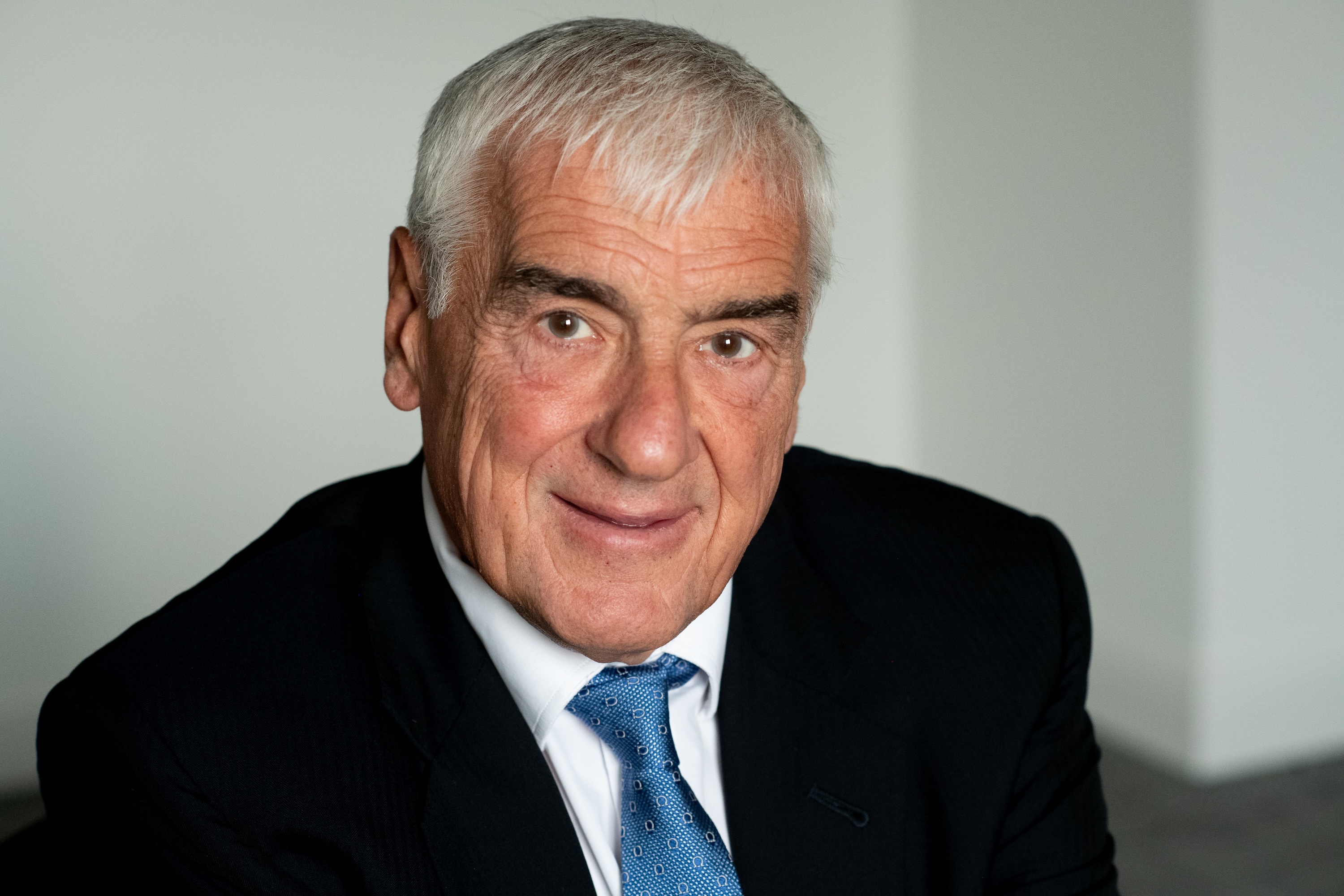
Isaac Kim, partner of Lightspeed Venture Partners, says investors are underestimating product disruption, as the $70b fund pivots capital away from legacy tech.
“When AI [first] came out, a lot of software investors were like, ‘Don’t look over there, don’t worry about it,’” said Kim, who will be a headline speaker at the Sohn Hearts & Minds investor conference in Queenstown this year.
“Then the SaaSpocalypse hit, and people were on their heels and had to say, don’t worry about it; we’re going to take care of this; it’s fine; nothing is happening in our portfolio; we’re not seeing any revenue degradation or retention degradation. Now you see some good prints in the public market for software, and people are like, AI is the accelerator for software.
“Disruption takes time. If you have an entrenched customer base, they’re not necessarily going anywhere in a year or two years, but I guarantee you they’re planning to for two to three years down the line as it relates to AI.”
Over a period now known as the SaaSpocalypse, software stocks on Wall Street and the ASX were rapidly sold off earlier this year amid concerns that AI tools would reduce their growth and even replace their products. The sharp drop in valuations was widespread, pushing down the market capitalisations of companies as varied as Xero and REA Group. It also hurt the valuations of unlisted companies such as design software giant Canva.
Kim spent his formative years in private equity at Elliott Investment Management and Golden Gate Capital before joining Lightspeed in 2024. The firm is best known for its support of Anthropic, the developer behind Claude, one of the world’s most advanced AI platforms, along with start-ups such as Harvey, a legal platform, and Wiz, a cloud computing cybersecurity business that was acquired by Google this year for $US32 billion.
Lightspeed is among a growing list of venture capital firms that are no longer interested in investing in software businesses. Kim said another American private equity giant – Clayton, Dubilier & Rice – “doesn’t have a software team any more” while KKR is also reworking its team.
Last month, The Australian Financial Review reported that Airtree had told investors that it “would be remiss to pretend” AI was not hurting older start-ups, and said it was “pressure-testing whether our portfolio companies have a credible AI story, not as marketing, but as a genuine product”.
“If the answer is no, that’s a strategic gap that needs to be addressed quickly,” the Australian venture capital giant wrote to investors in May.
Asked how Lightspeed would approach older software businesses in its portfolio, Kim said it was “really hard”, and often a scramble for engineering talent that would be able to transform the company quickly.
“The talent game is really tough out there, and a lot of that talent doesn’t want to go into legacy businesses,” he said. “It’s a very tough thing to do, but you have to try to pivot, innovate, upgrade your team, get your team working on AI tooling, and you have to bring your customer base along.”
But Kim said venture capital firms were in a better position to deal with the disruption brought on by AI than other private equity firms, even as the sector faced pressure from investors to exit long-held assets.
“There are some massive private equity maturity walls coming up in the next three years,” he said. “When you have that looming, you have to either do unnatural things or get out and sell sooner. The good thing about VC is that often VC can be more patient, as long as you have the correct cash runway, and you can play for the option of being able to make that pivot.”
Kim said investors should scrutinise listed software stocks for claims they were pivoting to AI, adding that they could “obfuscate things pretty easily”.
“[Companies could] say, ‘we need to renew you’ ... you’re not going to get off in the short term of the software you bought before, but on the renewal, [they] want you to split that renewal up such that 20 per cent of it goes to a new AI product, and 80 per cent to the old product,” he said.
“All of a sudden, you split where the money’s coming from and going, and you can bolster your AI revenue. It doesn’t mean that it’s in production and being used.”
This article was originally posted by The Australian Financial Review here.
Licensed by Copyright Agency. You must not copy this work without permission.