This Silicon Valley VC giant has a warning for software stocks

One of the world’s largest venture capital firms says investors are underestimating the carnage artificial intelligence will create for software companies, warning their pivots towards AI are likely just marketing.
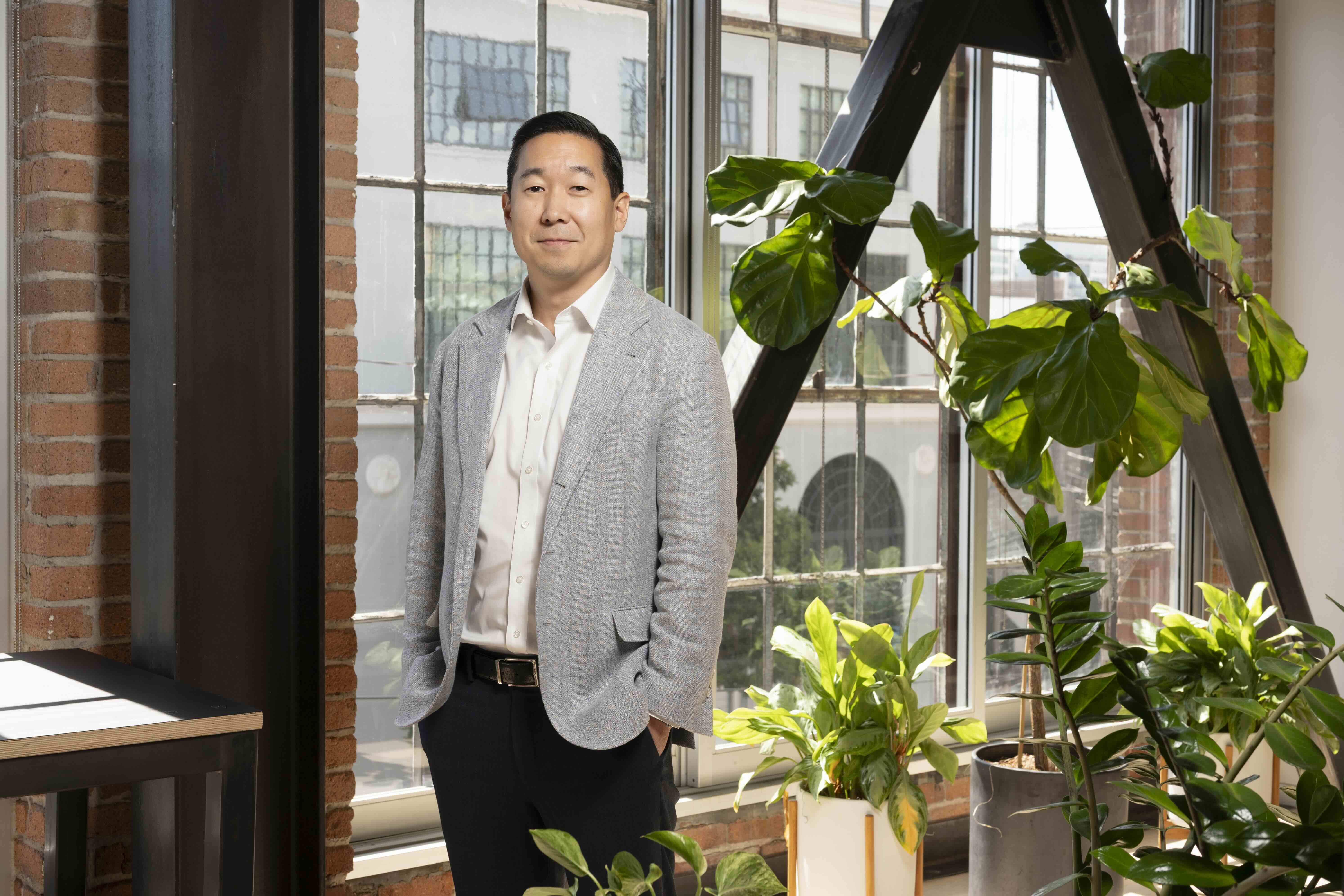
Photo: Isaac Kim (Laure Andrillon)

Emma Rapaport

This Silicon Valley VC giant has a warning for software stocks

September 11, 2026
One of the world’s largest venture capital firms says investors are underestimating the carnage artificial intelligence will create for software companies, warning their pivots towards AI are likely just marketing.
Read Transcript

One of the world’s largest venture capital firms says investors are underestimating the carnage artificial intelligence will create for software companies, warning their pivots towards AI are likely just marketing.

Lightspeed Venture Partners partner Isaac Kim said software investors were changing their narratives to justify support for companies clearly being disrupted by sophisticated AI tools. He said his firm, which oversees a portfolio worth about $70 billion, was now shunning traditional software businesses in funding rounds.

Isaac Kim, partner of Lightspeed Venture Partners, says investors are underestimating product disruption, as the $70b fund pivots capital away from legacy tech. 

“When AI [first] came out, a lot of software investors were like, ‘Don’t look over there, don’t worry about it,’” said Kim, who will be a headline speaker at the Sohn Hearts & Minds investor conference in Queenstown this year.

“Then the SaaSpocalypse hit, and people were on their heels and had to say, don’t worry about it; we’re going to take care of this; it’s fine; nothing is happening in our portfolio; we’re not seeing any revenue degradation or retention degradation. Now you see some good prints in the public market for software, and people are like, AI is the accelerator for software.

“Disruption takes time. If you have an entrenched customer base, they’re not necessarily going anywhere in a year or two years, but I guarantee you they’re planning to for two to three years down the line as it relates to AI.”

Over a period now known as the SaaSpocalypse, software stocks on Wall Street and the ASX were rapidly sold off earlier this year amid concerns that AI tools would reduce their growth and even replace their products. The sharp drop in valuations was widespread, pushing down the market capitalisations of companies as varied as Xero and REA Group. It also hurt the valuations of unlisted companies such as design software giant Canva.

Kim spent his formative years in private equity at Elliott Investment Management and Golden Gate Capital before joining Lightspeed in 2024. The firm is best known for its support of Anthropic, the developer behind Claude, one of the world’s most advanced AI platforms, along with start-ups such as Harvey, a legal platform, and Wiz, a cloud computing cybersecurity business that was acquired by Google this year for $US32 billion.

Lightspeed is among a growing list of venture capital firms that are no longer interested in investing in software businesses. Kim said another American private equity giant – Clayton, Dubilier & Rice – “doesn’t have a software team any more” while KKR is also reworking its team.

Last month, The Australian Financial Review reported that Airtree had told investors that it “would be remiss to pretend” AI was not hurting older start-ups, and said it was “pressure-testing whether our portfolio companies have a credible AI story, not as marketing, but as a genuine product”.

“If the answer is no, that’s a strategic gap that needs to be addressed quickly,” the Australian venture capital giant wrote to investors in May.

Asked how Lightspeed would approach older software businesses in its portfolio, Kim said it was “really hard”, and often a scramble for engineering talent that would be able to transform the company quickly.

“The talent game is really tough out there, and a lot of that talent doesn’t want to go into legacy businesses,” he said. “It’s a very tough thing to do, but you have to try to pivot, innovate, upgrade your team, get your team working on AI tooling, and you have to bring your customer base along.”

But Kim said venture capital firms were in a better position to deal with the disruption brought on by AI than other private equity firms, even as the sector faced pressure from investors to exit long-held assets.

“There are some massive private equity maturity walls coming up in the next three years,” he said. “When you have that looming, you have to either do unnatural things or get out and sell sooner. The good thing about VC is that often VC can be more patient, as long as you have the correct cash runway, and you can play for the option of being able to make that pivot.”

Kim said investors should scrutinise listed software stocks for claims they were pivoting to AI, adding that they could “obfuscate things pretty easily”.

“[Companies could] say, ‘we need to renew you’ ... you’re not going to get off in the short term of the software you bought before, but on the renewal, [they] want you to split that renewal up such that 20 per cent of it goes to a new AI product, and 80 per cent to the old product,” he said.

“All of a sudden, you split where the money’s coming from and going, and you can bolster your AI revenue. It doesn’t mean that it’s in production and being used.”

This article was originally posted by The Australian Financial Review here.

Licensed by Copyright Agency. You must not copy this work without permission.

One of the world’s largest venture capital firms says investors are underestimating the carnage artificial intelligence will create for software companies, warning their pivots towards AI are likely just marketing.

Lightspeed Venture Partners partner Isaac Kim said software investors were changing their narratives to justify support for companies clearly being disrupted by sophisticated AI tools. He said his firm, which oversees a portfolio worth about $70 billion, was now shunning traditional software businesses in funding rounds.

Isaac Kim, partner of Lightspeed Venture Partners, says investors are underestimating product disruption, as the $70b fund pivots capital away from legacy tech. 

“When AI [first] came out, a lot of software investors were like, ‘Don’t look over there, don’t worry about it,’” said Kim, who will be a headline speaker at the Sohn Hearts & Minds investor conference in Queenstown this year.

“Then the SaaSpocalypse hit, and people were on their heels and had to say, don’t worry about it; we’re going to take care of this; it’s fine; nothing is happening in our portfolio; we’re not seeing any revenue degradation or retention degradation. Now you see some good prints in the public market for software, and people are like, AI is the accelerator for software.

“Disruption takes time. If you have an entrenched customer base, they’re not necessarily going anywhere in a year or two years, but I guarantee you they’re planning to for two to three years down the line as it relates to AI.”

Over a period now known as the SaaSpocalypse, software stocks on Wall Street and the ASX were rapidly sold off earlier this year amid concerns that AI tools would reduce their growth and even replace their products. The sharp drop in valuations was widespread, pushing down the market capitalisations of companies as varied as Xero and REA Group. It also hurt the valuations of unlisted companies such as design software giant Canva.

Kim spent his formative years in private equity at Elliott Investment Management and Golden Gate Capital before joining Lightspeed in 2024. The firm is best known for its support of Anthropic, the developer behind Claude, one of the world’s most advanced AI platforms, along with start-ups such as Harvey, a legal platform, and Wiz, a cloud computing cybersecurity business that was acquired by Google this year for $US32 billion.

Lightspeed is among a growing list of venture capital firms that are no longer interested in investing in software businesses. Kim said another American private equity giant – Clayton, Dubilier & Rice – “doesn’t have a software team any more” while KKR is also reworking its team.

Last month, The Australian Financial Review reported that Airtree had told investors that it “would be remiss to pretend” AI was not hurting older start-ups, and said it was “pressure-testing whether our portfolio companies have a credible AI story, not as marketing, but as a genuine product”.

“If the answer is no, that’s a strategic gap that needs to be addressed quickly,” the Australian venture capital giant wrote to investors in May.

Asked how Lightspeed would approach older software businesses in its portfolio, Kim said it was “really hard”, and often a scramble for engineering talent that would be able to transform the company quickly.

“The talent game is really tough out there, and a lot of that talent doesn’t want to go into legacy businesses,” he said. “It’s a very tough thing to do, but you have to try to pivot, innovate, upgrade your team, get your team working on AI tooling, and you have to bring your customer base along.”

But Kim said venture capital firms were in a better position to deal with the disruption brought on by AI than other private equity firms, even as the sector faced pressure from investors to exit long-held assets.

“There are some massive private equity maturity walls coming up in the next three years,” he said. “When you have that looming, you have to either do unnatural things or get out and sell sooner. The good thing about VC is that often VC can be more patient, as long as you have the correct cash runway, and you can play for the option of being able to make that pivot.”

Kim said investors should scrutinise listed software stocks for claims they were pivoting to AI, adding that they could “obfuscate things pretty easily”.

“[Companies could] say, ‘we need to renew you’ ... you’re not going to get off in the short term of the software you bought before, but on the renewal, [they] want you to split that renewal up such that 20 per cent of it goes to a new AI product, and 80 per cent to the old product,” he said.

“All of a sudden, you split where the money’s coming from and going, and you can bolster your AI revenue. It doesn’t mean that it’s in production and being used.”

This article was originally posted by The Australian Financial Review here.

Licensed by Copyright Agency. You must not copy this work without permission.

Disclaimer: This material has been prepared by Australian Financial Review, published on September 11, 2026. HM1 is not responsible for the content of linked websites or content prepared by third party. The inclusion of these links and third-party content does not in any way imply any form of endorsement by HM1 of the products or services provided by persons or organisations who are responsible for the linked websites and third-party content. This information is for general information only and does not consider the objectives, financial situation or needs of any person. Before making an investment decision, you should read the relevant disclosure document (if appropriate) and seek professional advice to determine whether the investment and information is suitable for you.

facebook
linkedin
All
Thank you! Your submission has been received!
Oops! Something went wrong while submitting the form.
October 21, 2024

Chris Kourtis is on a winning streak. Here’s his next ASX pick

Chris Kourtis of Ellerston Capital thinks he’s found another winner and thinks it’s the last chance to have a bite at the cherry before the strategy plays out.

Read More
Ellerston Capital portfolio manager Chris Kourtis. Picture: Britta CampionEllerston Capital portfolio manager Chris Kourtis. Picture: Britta CampionEllerston Capital portfolio manager Chris Kourtis. Picture: Britta CampionEllerston Capital portfolio manager Chris Kourtis. Picture: Britta Campion
October 21, 2024

Why Ellerston Capital’s Chris Kourtis plans to back a ‘hated’ stock

Chris Kourtis of Ellerston Capital plans to tip one of the “most hated” stocks in Australia when he presents at the 2024 Sohn Hearts & Minds Conference.

Read More
October 14, 2024

Alex Pollak champions rewards of disruptive investment

Alex Pollak’s funds management company Loftus Peak rode the Nvidia wave and he is now looking at more opportunities in disruptive industry stocks.

Read More
September 30, 2024

Missed out on Nvidia and Ozempic? This fundie says it’s never too late

Northcape Capital’s Fleur Wright is still kicking herself for not owning market darlings Nvidia and Novo Nordisk, the maker of the weight loss wonder drug Ozempic, before shares of those companies rocketed in 2023.

Read More
September 23, 2024

Scalar Gauge Fund founder Sumit Gautam cautious about over-hyped AI

Tech investor Sumit Gautam carefully avoids the word bubble when describing the investor frenzy surrounding the rise of artificial intelligence, but warns there are dangers of getting caught up in the hype.

Read More
September 9, 2024

The Wellcome Trust’s Nick Moakes made a 100-year bet. It’s paying off

Chief Investment Officer, Nick Moakes raised almost $3 billion at ultra-low rates. Sometimes the long view can be the most profitable.

Read More
September 5, 2024

Honesty the only policy that matters, says Wellcome Trust’s Nicholas Moakes

The chief investment officer of the London-based $71bn Wellcome Trust, Nick Moakes, has a simple rule for the trust’s investment team: “Never invest with anyone who is or has been or should have been in prison.”

Read More
September 5, 2024

Why Howard Marks says you’re making a big mistake

Howard Marks says investors must ignore manic depressive markets and focus on the bigger picture. Rates will be higher for longer and that will bring pain – and opportunity.

Read More
July 21, 2024

Investors ‘comfortable’ about a Trump presidency, despite volatility

Economists and market experts say the outcome of the US presidential election has been largely priced in by investors as softening inflation helps to buoy sharemarkets both globally and locally.

Read More
January 24, 2024

How To Master The Art Of Winning The Room

Jonathan Pease, the creative director behind the Sohn Hearts & Minds Conference and author of the book, Winning the Room, recently sat down for a chat with Mark Bouris on Straight Talk.

Read More
November 17, 2023

‘I Know It Sounds Crazy’: Cathie Wood’s Next Big Idea

Speaking from Ark’s headquarters in Florida ahead of her appearance at the Sohn Hearts & Minds Conference on Friday, Wood says she believes disinflation is now just around the corner in the US.

Read More
November 17, 2023

ARK Founder Wood Backs Bitcoin, Banking On Spot ETF Approval

Tech investment guru Cathie Wood is still a big believer in bitcoin, so it was fitting that she chose Grayscale Bitcoin Trust as her stock pick for the 2023 Sohn Hearts & Minds Investment Leaders Conference.

Read More
IFM Investors small cap specialist Rikki Bannan addresses the Sohn Hearts & Minds Investment Leaders Conference at Sydney Opera House. Picture: Renee NowytargerIFM Investors small cap specialist Rikki Bannan addresses the Sohn Hearts & Minds Investment Leaders Conference at Sydney Opera House. Picture: Renee NowytargerIFM Investors small cap specialist Rikki Bannan addresses the Sohn Hearts & Minds Investment Leaders Conference at Sydney Opera House. Picture: Renee NowytargerIFM Investors small cap specialist Rikki Bannan addresses the Sohn Hearts & Minds Investment Leaders Conference at Sydney Opera House. Picture: Renee Nowytarger
November 17, 2023

Hot Stocks To Ride The Next Healthcare Trends

Healthcare stocks – from sleep apnoea giant ResMed, to cancer diagnostic biotech Telix Pharmaceuticals – were recommended at the Sohn Hearts & Minds Investment Leaders Conference on Friday.

Read More
November 17, 2023

How Daniel Loeb, The Real Bobby Axelrod, Made His Wall Street Billions

When Damian Lewis, the actor who plays the ruthless hedge fund boss in the drama series Billions was looking for inspiration, he sat down with Daniel Loeb.

Read More
November 17, 2023

Investors Sound Warning On Private Equity Timebomb

Institutional investors such as super and pension funds are investing in private equity at “exactly the wrong time,” a top hedge fund manager has warned, as sharply higher interest rates threaten a wave of bankruptcies.

Read More